Wiring landscape lighting transforms a dark yard into a functional, safe outdoor space while highlighting architectural features and pathways. Unlike complex household circuits, low-voltage landscape lighting runs on 12V systems that are safer and easier for DIYers to install. Most municipalities don’t require permits for low-voltage work, though the transformer must plug into a GFCI-protected outlet. This guide walks through the entire wiring process, from planning cable runs to connecting fixtures, so homeowners can tackle the project with confidence and avoid the common mistakes that lead to dim lights or voltage drop.
Table of Contents
ToggleKey Takeaways
- Landscape lighting wiring uses safer 12-volt systems that don’t require most permits and allow DIY installation without complex electrical knowledge.
- Voltage drop is the primary technical challenge when wiring landscape lights—use 12-gauge wire for runs over 50 feet and keep cable distance under 100 feet to maintain consistent brightness.
- Always wire landscape lighting fixtures in parallel, not series, so individual light failures don’t affect other fixtures and troubleshooting becomes easier.
- Select a transformer sized to your total fixture wattage plus a 20% buffer, and use waterproof gel-filled wire connectors instead of standard wire nuts to prevent outdoor corrosion.
- Test your entire wiring layout with a multimeter before burying cable to catch voltage drop issues, and always ensure the transformer plugs into a GFCI-protected outlet for safety.
Understanding the Basics of Landscape Lighting Wiring
Landscape lighting operates on a low-voltage system, typically 12 volts, that steps down from standard 120V household current through a transformer. This lower voltage is safer to work with, reduces shock hazards, and allows for direct burial of cables without conduit in most jurisdictions, though local codes should always be checked.
The system has three main components: the transformer (mounted near an outdoor GFCI outlet), the main cable (usually 12- or 14-gauge wire), and the light fixtures themselves. The transformer capacity must match the total wattage of all fixtures, typically ranging from 150 to 900 watts for residential setups.
Voltage drop is the primary technical challenge. As electricity travels through wire, resistance causes voltage to decrease. A fixture 100 feet from the transformer may receive only 10.5V instead of 12V, resulting in dim output. Cable gauge and run length determine voltage drop, heavier gauge wire (lower numbers) carries power farther with less loss. For runs over 50 feet, 12-gauge wire is recommended: 14-gauge works for shorter distances.
Most systems use parallel wiring rather than series. In a series setup, if one light fails, the entire circuit goes dark. Parallel wiring connects each fixture independently to the main cable, so individual failures don’t affect other lights. This configuration also allows for easier troubleshooting and future expansion.
Essential Tools and Materials You’ll Need
Materials:
- Low-voltage transformer (sized to total fixture wattage plus 20% capacity buffer)
- 12- or 14-gauge direct-burial landscape cable (enough to run from transformer to farthest fixture with some slack)
- Landscape light fixtures (matched voltage ratings)
- Waterproof wire connectors (silicone-filled or gel-filled capsule type, not standard wire nuts)
- Cable clips or stakes (to secure wire above ground during testing)
- Timer or photocell control (many transformers include these)
Tools:
- Wire strippers (essential for clean conductor exposure)
- Flat-blade spade or edge trimmer (for burying cable)
- Voltage tester or multimeter (to check output at fixtures)
- Diagonal cutters or cable shears (for cutting landscape wire)
- Screwdriver set (for transformer and fixture terminals)
- Measuring tape (for spacing fixtures and calculating cable runs)
- Safety glasses (when cutting or stripping wire)
Optional but Helpful:
- Cable locator or tracer (for future reference if burying deep)
- Drill with bits (if mounting transformer to structure)
- Garden stakes and string (for laying out fixture positions before wiring)
Most homeowners can complete the project with basic hand tools. Power tools aren’t necessary unless mounting the transformer to siding or masonry requires drilling.
Planning Your Landscape Lighting Layout
Proper planning prevents voltage drop, overloaded circuits, and wasted materials. Start by sketching the yard and marking desired fixture locations, pathways, plant beds, architectural features, and tree uplights. Walk the property at night to identify dark zones and tripping hazards.
Calculate total wattage by adding up all fixture ratings. Most LED landscape lights draw 3 to 7 watts: older halogen bulbs can pull 20 watts or more. The transformer must handle the total load plus a 20% buffer. For example, ten 5-watt LED fixtures (50 watts total) require at least a 60-watt transformer, though a 150-watt unit provides room for future additions.
Map cable runs to minimize distance from the transformer. Long runs increase voltage drop, keeping the main line under 100 feet is ideal. If the layout requires longer distances, consider splitting into two circuits or using a multi-tap transformer that allows separate wire runs at different voltage outputs.
Spacing fixtures depends on their purpose. Path lights typically sit 8 to 10 feet apart: accent lights focus on single features. Avoid over-lighting, landscape lighting should create depth and shadow, not floodlight brightness.
Check local codes for burial depth requirements. Many areas require direct-burial cable to sit at least 6 inches deep, though some allow shallower placement if the wire is rated for it. Mark sprinkler lines, utility lines, and irrigation before digging. Call 811 for free utility location services.
Finally, confirm the transformer location has GFCI protection. If the outdoor outlet lacks GFCI, install one before proceeding, this is code in most jurisdictions and critical for safety.
Step-by-Step Wiring Process for Landscape Lights
-
Mount the transformer near the GFCI outlet, following manufacturer instructions. Most units hang on an exterior wall or post. Keep it at least 12 inches above ground to prevent water damage. Do not plug it in yet.
-
Lay out the main cable along the planned route without burying. Uncoil carefully to avoid kinks. Leave extra slack at the transformer and each fixture location, about 6 inches per connection point. Use cable clips or stakes to hold the wire in place temporarily.
-
Position fixtures at marked locations. Don’t install them fully yet: just place them where they’ll eventually go. This allows adjustments before committing to burial.
-
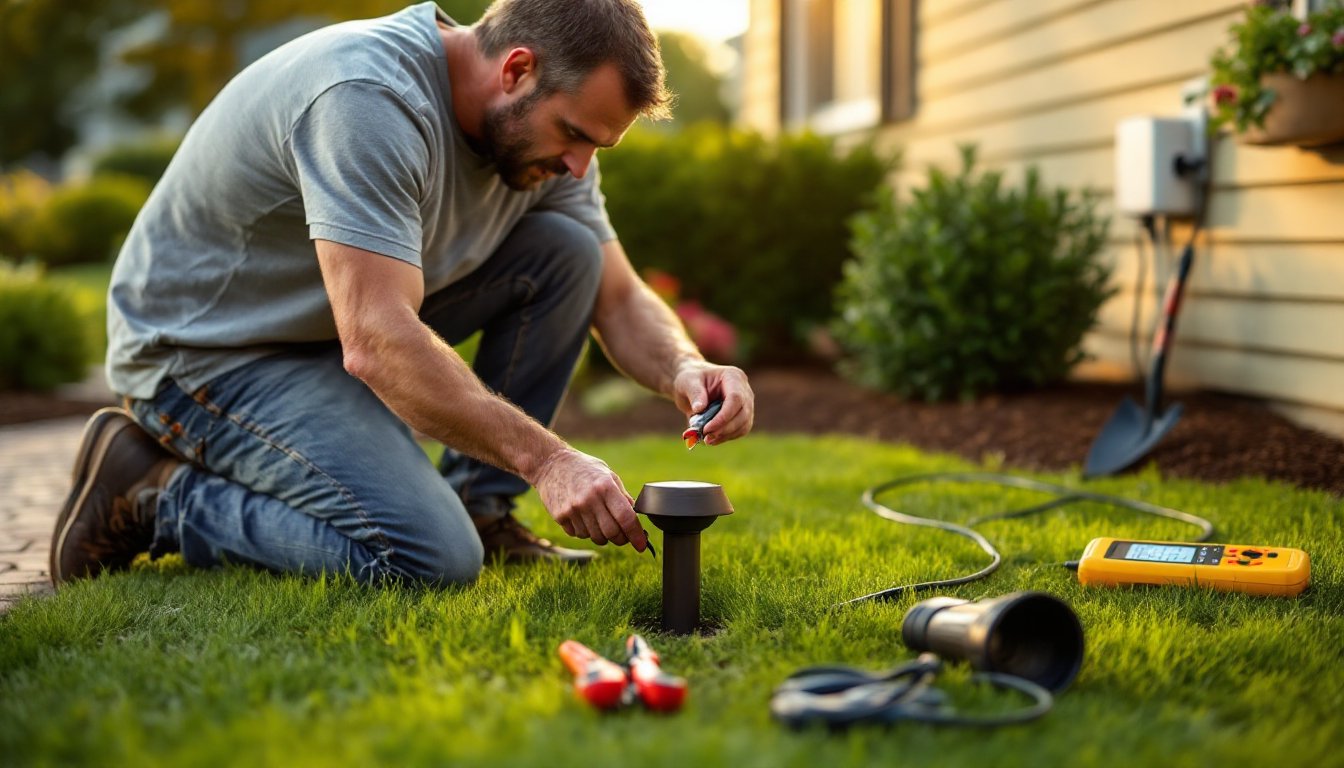
Test the layout by connecting the main cable to the transformer terminals (follow polarity markings, usually red for positive, black for negative). Plug in the transformer. Use a multimeter to check voltage at the farthest fixture location. If it reads below 10.8V, the run is too long or the wire gauge is too light. Adjust by shortening the run, upgrading to heavier wire, or splitting into two circuits.
-
Connect fixtures (see subsection below).
-
Bury the cable once everything tests correctly. Use a flat spade to cut a narrow trench 6 to 8 inches deep (or per local code). Lay the cable in the trench, avoiding sharp bends. Backfill carefully, tamping soil to eliminate air pockets. Leave a few inches of cable exposed at each fixture for future access.
-
Set the timer or photocell on the transformer. Most units include a built-in timer for automatic on/off scheduling.
-
Final test: Plug in the transformer at dusk or in darkness. Walk the circuit to verify all fixtures light up at expected brightness. Adjust fixture angles as needed.
Connecting Fixtures to the Main Cable
Most landscape fixtures use one of two connection methods: quick-connect clamps or pigtail wires.
Quick-connect clamps (also called piercing connectors) attach directly to the main cable without cutting. Open the clamp, place the main cable in the bottom slot and the fixture lead wire in the top slot, then close. Internal teeth pierce both wires to make contact. These are fast but can create weak connections if not fully seated. Test each connection with a gentle tug.
Pigtail wires require splicing. Strip about 1/2 inch of insulation from the main cable (without cutting it) and the fixture lead. Twist the conductors together, then secure with a silicone-filled wire connector. Standard wire nuts aren’t waterproof and will corrode. Gel-filled capsule connectors create a moisture-proof seal, critical for outdoor wiring.
Connect each fixture to the main cable in parallel, not series. This means each fixture taps directly into the main line rather than daisy-chaining from one light to the next. Parallel wiring ensures consistent voltage and isolates failures.
Common Wiring Mistakes to Avoid
Undersizing the transformer is the most frequent error. Adding fixtures later may overload the system, tripping internal breakers or causing dim output. Always buy a transformer with extra capacity.
Ignoring voltage drop leads to uneven brightness. Fixtures near the transformer shine brightly while distant ones barely glow. Use a multimeter during testing and upgrade wire gauge or shorten runs if voltage at the end drops below 10.8V.
Using indoor-rated wire connectors causes corrosion and connection failure. Only waterproof, gel-filled connectors are suitable for outdoor use. Standard wire nuts will fail within months.
Burying cable too shallow exposes it to damage from garden tools, foot traffic, or freeze-thaw cycles. Follow local code for depth, typically 6 inches minimum. Mark the cable route on a property sketch for future reference.
Daisy-chaining fixtures in series creates a voltage drop at each connection and makes troubleshooting difficult. Always wire in parallel.
Skipping GFCI protection is a code violation and safety hazard. The transformer must plug into a GFCI-protected outlet. If the outlet lacks GFCI, install one before starting the project.
Over-tightening quick-connect clamps can damage wire insulation and create shorts. Tighten just until resistance is felt.
Mixing fixture voltages on the same circuit causes failures. Ensure all lights are rated for the transformer output, typically 12V for residential systems.
Conclusion
Wiring landscape lighting is a manageable DIY project when approached with proper planning and attention to voltage drop. By sizing the transformer correctly, using the right wire gauge, and making waterproof connections, homeowners can create a reliable lighting system that enhances safety and curb appeal. Test thoroughly before burying cable, and don’t hesitate to consult a licensed electrician if the project expands beyond low-voltage work or requires modifications to household circuits.