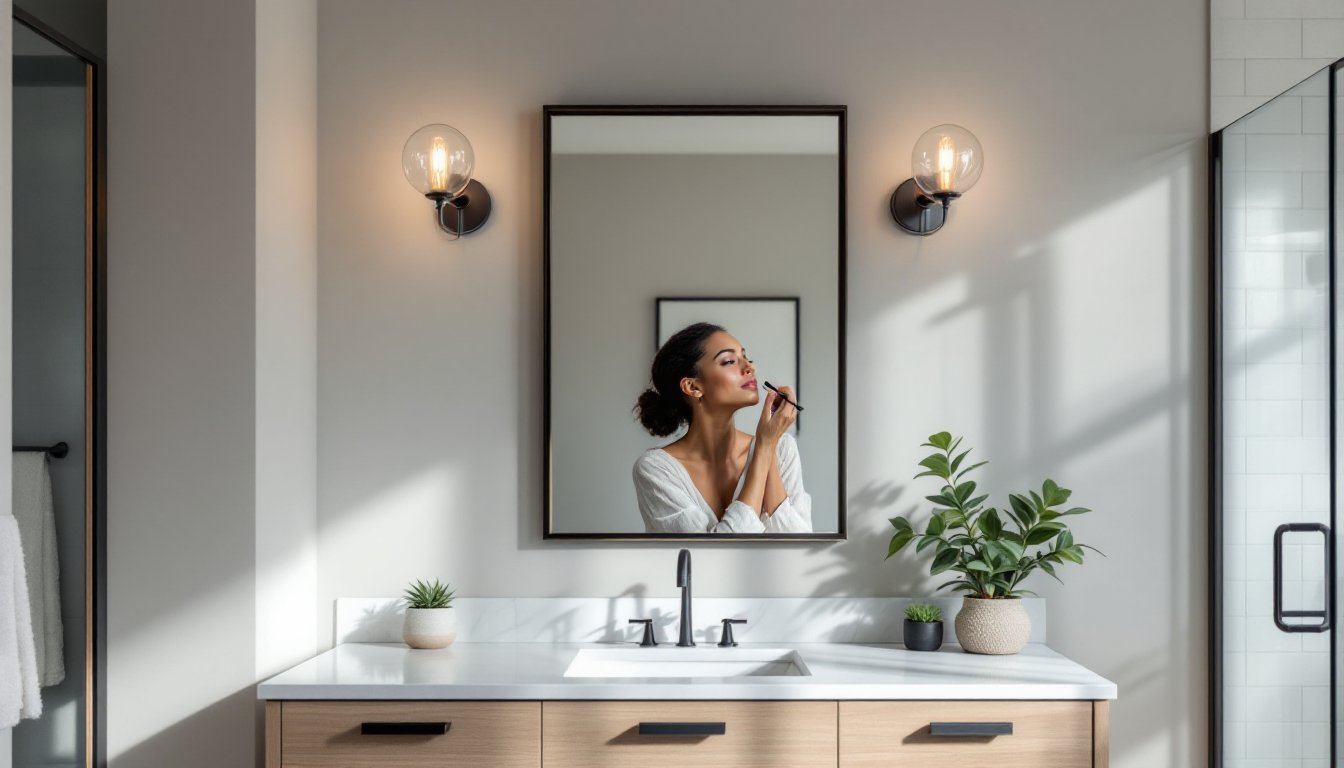
Poor vanity lighting turns every morning into a guessing game. Shadows fall across the face, makeup looks flawless at home but patchy in daylight, and shaving becomes an exercise in optimism. The culprit? A single overhead fixture that casts harsh shadows instead of even, usable light. Vanity lighting installed above or around a bathroom mirror solves this problem by directing light where it’s actually needed, on the person using the space. Whether upgrading a builder-grade fixture or designing a full bath remodel, the right lighting transforms function and style. This guide covers practical options from classic bar lights to modern LED systems, plus the technical details that ensure a successful install.
Table of Contents
ToggleKey Takeaways
- Vanity lighting over the mirror eliminates harsh shadows on the face by directing horizontal light across facial planes, making grooming tasks more accurate and makeup application more reliable.
- Bar lights (24–48 inches) remain the most popular bathroom lighting option and should span about 75% of your mirror width, mounted 6–8 inches above the mirror at a height of 75–80 inches from the floor.
- Modern LED strip and backlit mirror options offer clean, dimmable alternatives with 20,000+ hour lifespans, but prioritize CRI ratings above 90 to ensure accurate color rendering for makeup and shaving.
- Sconces flanking the mirror at eye level (60–70 inches high, 36–40 inches apart) create the most flattering professional-style vanity lighting when layered with overhead fixtures on separate dimmers.
- Choose bulbs with 3,000–3,500K color temperature and 3,000–4,000 lumens for single-sink vanities (or 5,000–7,000 lumens for double-sink setups) to balance accurate color representation with skin-tone-flattering warmth.
- Always verify local electrical codes, ensure GFCI protection for circuits within certain distances of water sources, and hire a licensed electrician for any projects involving new circuits or junction box relocation.
Why Vanity Lighting Over the Mirror Matters
Vanity lighting serves a functional purpose first: eliminating shadows on the face during grooming tasks. Overhead fixtures or recessed cans create downward shadows under the eyes, nose, and chin, exactly where detail work happens. Horizontal light sources positioned above or flanking the mirror cast even illumination across facial planes, reducing shadow and improving visibility.
From a design standpoint, the vanity fixture often anchors the bathroom’s visual style. It’s eye-level, front-and-center, and typically the first fixture noticed when entering the space. A well-chosen light ties together finishes like faucets, cabinet hardware, and mirror frames.
Building codes require GFCI protection for bathroom lighting circuits within certain distances of water sources, and fixtures must be rated for damp or wet locations depending on proximity to showers or tubs. Always verify local electrical codes before installation, some jurisdictions require permits for new circuits or fixture replacements that involve rewiring. If the project involves moving junction boxes or adding circuits, hire a licensed electrician.
Classic Bar Light Fixtures for Timeless Appeal
Bar lights, linear fixtures with multiple bulbs housed in a single frame, remain the most common vanity lighting solution. They mount directly above the mirror and distribute light evenly across a wide horizontal plane.
Standard sizing: Most bar lights range from 24 to 48 inches in length. A fixture should span roughly 75% of the mirror width for balanced coverage. For a 36-inch mirror, a 24- to 30-inch fixture works well. Oversized mirrors (60+ inches) often benefit from two shorter fixtures or a single long bar spanning the full width.
Mounting height: Position the fixture 75 to 80 inches above the finished floor, or roughly 6 to 8 inches above the mirror top. This height directs light downward at a slight angle, reducing glare while illuminating the face.
Finishes and styles: Brushed nickel, matte black, and oil-rubbed bronze dominate current trends, but polished chrome and brass offer timeless alternatives. Globe-style bulbs (exposed or frosted) soften the look, while cylindrical shades and industrial cage designs suit modern farmhouse or loft aesthetics.
Bulb configuration: Three- or four-bulb fixtures provide sufficient light for most single-sink vanities. Double-sink setups often require two separate fixtures or a five- to six-bulb bar spanning the full counter.
Modern LED Strip and Backlit Mirror Options
Integrated LED strips and backlit mirrors deliver seamless, contemporary lighting without visible bulbs or fixtures. These systems embed LEDs behind or around the mirror perimeter, creating a halo effect or diffused glow.
Backlit mirrors come with pre-installed LED strips bonded to the mirror back. Light diffuses through a frosted or sandblasted edge, producing even illumination without hot spots. Most models include touch controls for dimming and color temperature adjustment (warm to cool white). Expect 3,000 to 5,000 lumens for a standard 36-inch mirror, sufficient for grooming tasks.
Installation requires a dedicated electrical junction box behind the mirror location. Some models plug into a standard outlet, but hardwired versions offer cleaner aesthetics. A qualified electrician should handle hardwiring to ensure code compliance and proper GFCI protection.
Adhesive LED strips offer a budget-friendly DIY alternative. These low-voltage strips mount to the mirror back or wall perimeter using adhesive backing and connect to a plug-in transformer. Look for CRI (Color Rendering Index) ratings above 90 to ensure accurate color representation, critical for makeup application. Cheaper strips with CRI below 80 distort skin tones and make color matching difficult.
Pros: Clean lines, dimmable, energy-efficient, and long lifespan (20,000+ hours).
Cons: Difficult to repair if LEDs fail, higher upfront cost for quality units, and limited style flexibility once installed.
Statement Pendant and Chandelier Styles
Pendants and chandeliers introduce drama and personality, especially in powder rooms or primary baths with high ceilings. These fixtures hang from the ceiling rather than mount flush, creating vertical visual interest.
Scale and clearance: A pendant should hang with its bottom edge 30 to 36 inches above the countertop. This provides clearance for the mirror while keeping the fixture within the functional light zone. For chandeliers, ensure at least 7 feet of clearance from the finished floor to the bottom of the fixture to meet code and avoid head strikes.
Single vs. multiple pendants: One large pendant works over a centered mirror in a powder room. Double-sink vanities look balanced with two matching pendants, each centered over its respective sink. Space them 30 to 36 inches apart on-center for even coverage.
Style considerations: Glass globe pendants and drum shades suit transitional spaces, while geometric cages and Edison bulbs lean industrial. Mini-chandeliers with crystal or beaded details add elegance to traditional baths.
Functional trade-off: Pendants provide ambiance but often lack the broad, shadow-free coverage of bar lights or sconces. Pair them with recessed lights or sconces for adequate task lighting.
Sconce Placement and Layered Lighting Techniques
Flanking the mirror with wall sconces creates the most flattering vanity lighting by eliminating side shadows. This setup mimics professional makeup lighting and distributes light evenly across the face.
Mounting specs: Position sconces 60 to 70 inches above the floor, roughly at eye level. Space them 36 to 40 inches apart on-center, or 18 to 20 inches from the mirror’s vertical centerline. For mirrors wider than 40 inches, increase spacing proportionally.
Sconce styles: Adjustable swing-arm sconces offer flexibility for shared vanities with different user heights. Fixed-arm sconces with frosted or fabric shades diffuse light and reduce glare. Vertical cylinder sconces provide clean, modern lines.
Layered approach: Combine sconces with an overhead fixture or recessed lights for optimal illumination. Sconces handle task lighting, while overhead fixtures provide ambient light and reduce contrast. Install both circuits on separate dimmer switches to adjust lighting for different times of day or tasks.
Electrical considerations: Sconces require individual junction boxes, typically installed during rough-in framing or added during remodel work. Fishing wire through finished walls is possible but often requires patching drywall. Budget extra labor time if boxes aren’t already in place.
Safety note: Wear safety glasses when drilling tile or drywall to mount sconces, and use a stud finder or voltage detector to avoid cutting into electrical lines or plumbing.
Choosing the Right Bulb Color and Brightness
Bulb selection directly impacts how effectively vanity lighting performs. The wrong color temperature or brightness turns even the best fixture into poor task lighting.
Color temperature (Kelvin): Measured in Kelvin (K), color temperature ranges from warm yellow to cool blue. For vanities, 3000K to 3500K (warm white) offers a balance between flattering skin tones and accurate color rendering. Bulbs below 2700K skew too yellow for detail work, while those above 4000K cast a harsh, clinical tone.
Brightness (lumens): Total lumens needed depends on vanity size and fixture placement. A single-sink vanity requires 3,000 to 4,000 lumens for adequate task lighting. Double-sink setups need 5,000 to 7,000 lumens distributed across multiple fixtures.
Divide total lumens by the number of bulbs to determine per-bulb output. A four-bulb fixture over a single sink should use bulbs rated 750 to 1,000 lumens each.
CRI (Color Rendering Index): Choose bulbs with CRI 90 or higher for accurate color representation. This metric measures how true colors appear under artificial light compared to natural daylight. Low-CRI bulbs distort reds and blues, making makeup and clothing choices difficult.
Bulb types: LED bulbs offer the best efficiency and lifespan (15,000 to 25,000 hours). They’re available in dimmable versions compatible with most residential dimmers. Avoid CFLs in vanity fixtures, they flicker, take time to reach full brightness, and contain mercury.
Dimmer compatibility: Not all LED bulbs dim smoothly. Check packaging for “dimmable” labels and match bulbs to compatible dimmer switches. Incompatible pairings cause flickering, buzzing, or limited dimming range.
Conclusion
Vanity lighting above the mirror improves daily routines by delivering even, shadow-free illumination where it counts. Whether opting for a classic bar fixture, modern LED mirror, or layered sconce arrangement, prioritize proper placement, adequate brightness, and high-CRI bulbs. Verify electrical codes and safety ratings before starting any install, and don’t hesitate to call a licensed electrician for projects involving new circuits or junction box relocation. With the right fixture and setup, a well-lit vanity becomes the most functional, and best-looking, spot in the bathroom.