Installing outdoor lighting shouldn’t mean remembering to flip a switch every evening or paying for power all night long. Dusk to dawn motion sensor outdoor lighting LED fixtures solve both problems by turning on automatically at nightfall and only staying lit when motion is detected. These smart lights combine photocell technology with passive infrared (PIR) sensors, delivering security and efficiency in one package. With LED technology now standard, homeowners can expect decades of service with minimal energy draw. This guide walks through what these fixtures actually do, how to choose the right one, where to install them, and how to fix the most common issues without calling an electrician.
Table of Contents
ToggleKey Takeaways
- Dusk to dawn motion sensor outdoor lighting LED fixtures automatically activate at nightfall and only draw power when movement is detected, reducing annual energy costs to $3–5 compared to $15–25 for traditional halogen lights.
- These fixtures combine photocell (light sensor) and passive infrared (PIR) motion detection technology, with LEDs lasting 25,000–50,000 hours (15–20 years of nightly use) and consuming 80–90% less electricity than incandescent alternatives.
- Optimal installation requires mounting entry points, driveways, and patios at 8–10 feet high with overlapping coverage zones, while avoiding placements near heat sources, busy sidewalks, and artificial light that interferes with the photocell sensor.
- Select fixtures with adjustable sensitivity, detection range of 15–40 feet, dual-brightness modes, and IP65 or higher weather ratings to prevent nuisance triggering and ensure reliability in outdoor environments.
- Common issues like lights staying on all day or motion sensors failing randomly are typically resolved by checking photocell obstructions, verifying power supply, adjusting sensor sensitivity, and inspecting wire connections for proper installation.
- GFCI protection and electrical permits are required for new outdoor wiring installations; always use a non-contact voltage tester and prioritize safety when working with live circuits or hire a licensed electrician.
What Is Dusk to Dawn Motion Sensor LED Lighting?
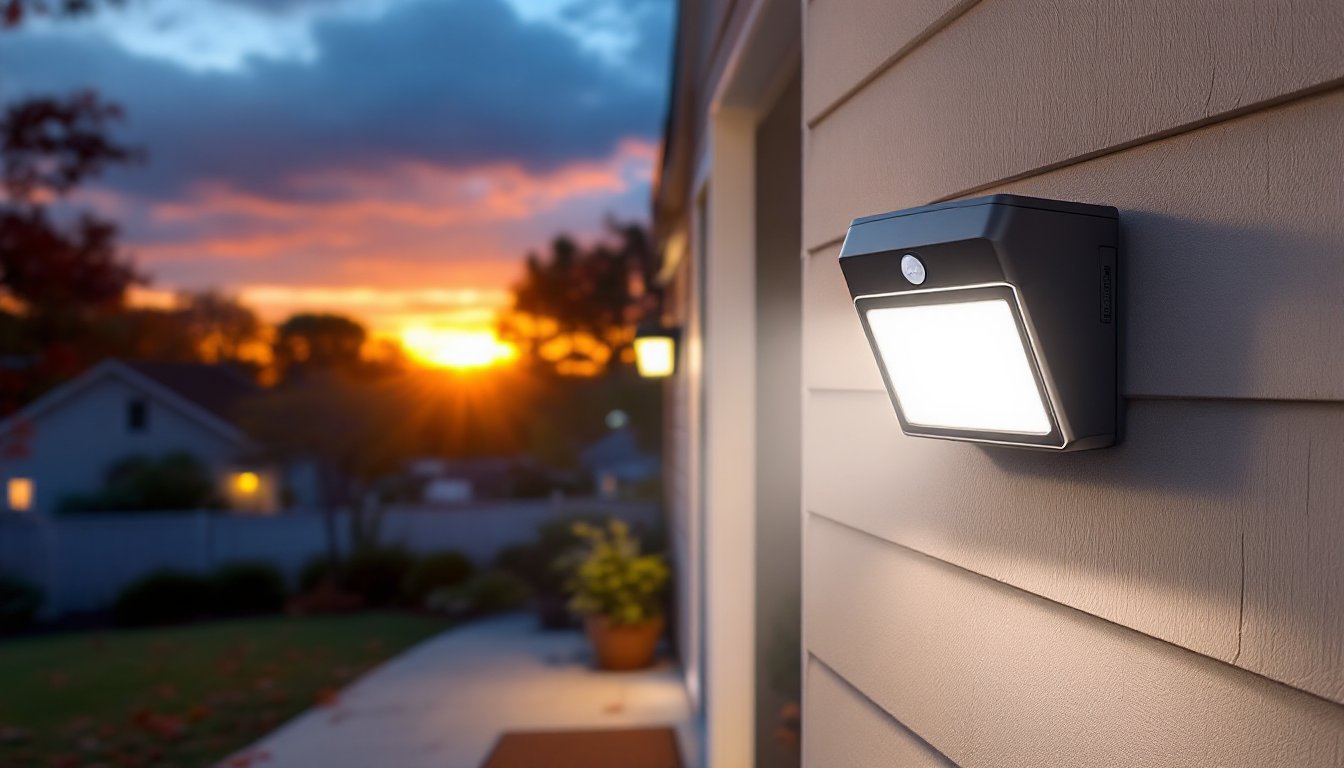
A dusk to dawn motion sensor light combines two technologies in one fixture. The photocell (or light sensor) detects ambient light levels and powers the fixture on when daylight fades, typically around 10-20 foot-candles, roughly equivalent to twilight. Once active, the passive infrared (PIR) motion sensor monitors for heat signatures from moving objects within its detection zone, usually 15-40 feet depending on the model.
When motion is detected, the LED bulb or integrated LED array switches to full brightness. After motion stops, the light either dims to a lower security setting or turns off completely after a preset delay, usually 30 seconds to 10 minutes, adjustable on most units.
The LED component refers to the light source itself. Unlike incandescent or halogen bulbs, LEDs convert electricity to light with minimal heat loss, drawing 80-90% less power and lasting 25,000-50,000 hours. Most outdoor motion sensor fixtures now use integrated LED arrays rather than replaceable bulbs, which means the entire fixture is replaced when the LED eventually fails, but that’s typically 15-20 years of nightly use.
These fixtures run on standard 120V household current (some solar models exist but perform inconsistently in cloudy climates). Most mount to a standard outdoor junction box and connect via wire nuts, black to black (hot), white to white (neutral), and green or bare copper to ground.
Key Benefits of LED Motion Sensor Outdoor Lights
The primary advantage is security without the power bill. A 20-watt LED motion light running 4 hours per night costs roughly $3-5 annually, compared to $15-25 for an equivalent halogen fixture left on continuously. Because the light only reaches full brightness when triggered, it also draws attention to movement rather than becoming background lighting that neighbors and passersby ignore.
Energy efficiency goes beyond cost savings. LED motion lights qualify for utility rebates in many areas, and their low draw makes them viable for off-grid or solar-supplemented homes. They also produce far less heat, reducing fire risk when mounted near soffits, siding, or overgrown landscaping.
Convenience is another selling point. No more forgetting to turn on the porch light or fumbling with keys in the dark. The photocell handles on/off timing automatically, adjusting to seasonal sunrise and sunset variations without reprogramming.
Finally, longevity means fewer ladder trips. A quality LED motion sensor fixture installed today may not need replacement until 2040 or beyond, assuming the photocell and sensor electronics hold up, which most do when protected from direct water intrusion.
How Dusk to Dawn Sensors Work
The photocell is a simple cadmium sulfide (CdS) resistor that changes resistance based on light exposure. In bright daylight, resistance is low and the circuit stays open. As light fades, resistance increases until it crosses a threshold and closes the circuit, powering the fixture.
Most photocells sit in a small plastic dome on top of or beside the fixture. They need an unobstructed view of the sky, mounting under a deep eave or porch roof can confuse the sensor, causing lights to stay on all day or never turn on at all.
The motion sensor uses a pyroelectric element that detects changes in infrared radiation. When a person, animal, or vehicle moves across the detection field, the sensor registers a spike and triggers the light. Detection range and sensitivity are usually adjustable via dials on the fixture body. Some models include “pet immunity” settings to ignore small animals under 40-50 pounds, though results vary.
Both sensors operate independently but work in series: the photocell must activate first, then the motion sensor takes over. This prevents the light from triggering during daylight hours, even if someone walks past.
Essential Features to Look for When Buying
Start with detection range and coverage angle. Most PIR sensors cover 180-270 degrees horizontally, but effective range varies. A fixture rated for 30-foot detection works well for driveways and yards: tighter spaces like doorways or walkways need only 15-20 feet. Check whether the sensor head is adjustable, being able to tilt or rotate it after installation is crucial for fine-tuning coverage.
Adjustable sensitivity and timer settings prevent nuisance triggering. Sensitivity controls how much infrared change is needed to trip the light (helpful in windy areas where branches move constantly). Timer settings control how long the light stays on after motion stops, 1 minute is typical, but 5-10 minutes is better for task lighting like unloading groceries.
Weather resistance matters more than most buyers realize. Look for a wet location rating (not just “damp”) if the fixture will be exposed to rain or sprinkler overspray. The junction box and wire connections should have gaskets or sealed conduit entries. Check the IP (Ingress Protection) rating if listed, IP65 or higher means dust-tight and protected against water jets.
Adjustable photocell sensitivity is less common but valuable. Some fixtures let users set the lux level at which the light activates, preventing premature turn-on from streetlights or headlights.
Finally, consider whether you want a fixture with a manual override switch. This allows the light to stay on continuously when needed, useful during parties or when working outside after dark.
Lumens, Color Temperature, and Energy Efficiency
Lumens measure light output, not watts. For security and task lighting, aim for 700-1,500 lumens. Lower output (300-700 lumens) works for pathway or accent lighting. Avoid fixtures that list only wattage equivalence (“60-watt equivalent”), that’s marketing, not a measurement.
Color temperature is measured in Kelvin (K). Most outdoor LED motion lights fall between 3000K (warm white) and 5000K (daylight). Warm white blends better with traditional porch lights and landscaping, while daylight temperatures improve visibility and color rendering for security purposes. Avoid anything above 5500K unless the goal is a clinical, warehouse look.
Energy efficiency in LEDs is a given, but check the fixture’s total wattage draw. A good LED motion light uses 15-30 watts and delivers 1,000+ lumens. Anything pulling more than 40 watts is either poorly designed or using outdated LED chips.
Also note whether the fixture has a dual-brightness mode, dimming to 10-30% when no motion is detected but staying active all night. This provides ambient security lighting without the full energy draw, though it shortens LED lifespan slightly compared to on/off operation.
Best Installation Locations for Maximum Security and Efficiency
Entry points are the obvious choice: front doors, side doors, garage entries, and basement walkouts. Mount lights 8-10 feet high to maximize detection range and minimize tampering. Aim the sensor head slightly downward to catch motion at ground level rather than watching the sky.
Driveways and walkways benefit from dual fixtures at opposite ends, creating overlapping coverage zones. This eliminates dark spots and ensures motion is detected from either direction. For long driveways, consider staggered placement, one near the street, one near the garage.
Backyards and patios often need multiple fixtures due to obstructions like trees, sheds, and fences. Test the detection pattern before final installation by having someone walk the area while you adjust the sensor. Remember that PIR sensors don’t “see” through glass or solid objects.
Avoid placing fixtures where they’ll trigger constantly: near busy sidewalks, HVAC units, dryer vents, or areas with heavy tree movement. Also keep photocells away from other light sources, porch lights, streetlights, and reflective surfaces can prevent the sensor from activating properly.
If replacing an existing fixture, the junction box is already positioned. For new installations, you’ll need to run 14/2 or 12/2 NM-B cable (Romex) from a nearby circuit, install a weatherproof junction box, and ensure the circuit has GFCI protection per NEC 210.8(A), most outdoor receptacles and some lighting circuits require this. If you’re uncomfortable working with live electrical circuits, hire a licensed electrician. Permits are typically required for new outdoor wiring runs.
Common Problems and Troubleshooting Tips
Light stays on all day: The photocell is either faulty or blocked. Check for obstructions (leaves, spider webs, mounting position under an overhang). If clear, test the photocell by covering it with electrical tape during the day, if the light turns off, the sensor is working backward or wired incorrectly. Some fixtures have a test mode switch that overrides the photocell: make sure it’s in the “auto” position.
Light doesn’t turn on at dusk: First, confirm power is reaching the fixture, check the breaker and test the junction box with a non-contact voltage tester. If power is present, the photocell may be exposed to too much artificial light (streetlights, neighboring fixtures). Reposition or replace the photocell. Some units allow photocell sensitivity adjustment via a small dial.
Motion sensor triggers randomly or not at all: Adjust sensitivity and range settings. Too high, and wind or small animals trigger it: too low, and it misses people. Make sure the detection zone isn’t aimed at heat sources like dryer vents, AC condensers, or sun-heated walls, these cause false triggers. For detection failures, check that the sensor lens is clean and unobstructed.
Light flickers or cycles on and off: This usually indicates a loose wire connection, a failing photocell, or voltage fluctuations. Turn off power at the breaker, remove the fixture, and inspect all wire nut connections. Tighten and wrap with electrical tape if needed. If the problem persists, replace the fixture, internal components may be failing.
Short LED lifespan: LEDs fail prematurely when exposed to excessive heat or moisture. Check that the fixture is rated for wet locations and that ventilation holes (if present) aren’t blocked. Poor-quality fixtures with inadequate heat sinking also cook LEDs faster, stick with brands that publish thermal management specs.
Always wear safety glasses when working overhead and use a non-contact voltage tester to confirm power is off before touching wires.