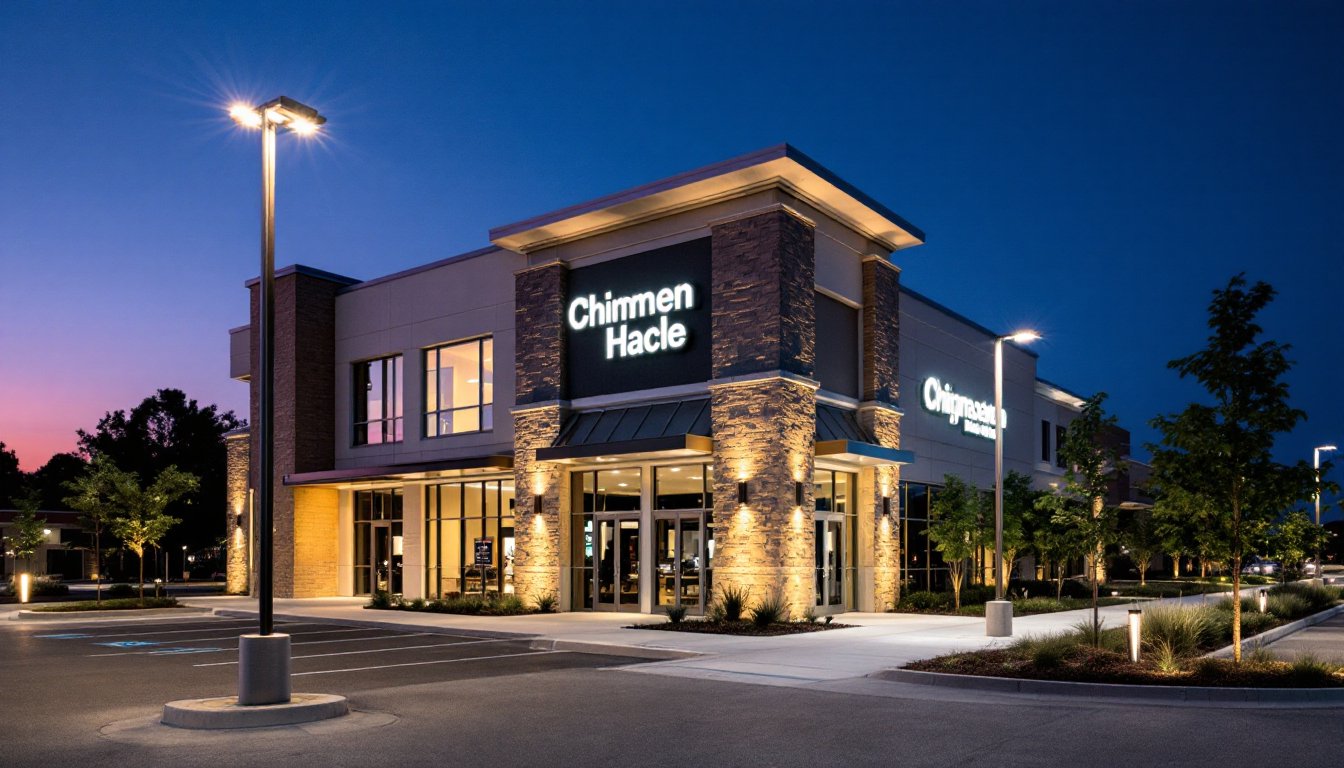
Parking lots bathed in harsh, uneven light. Shadowy building entrances that repel customers after dusk. Façades that disappear into darkness while competitors glow like landmarks. Poor commercial outdoor lighting doesn’t just waste energy, it costs businesses customers, creates liability risks, and undermines brand presence. Strategic lighting design turns property exteriors into functional, secure, and visually compelling assets that work around the clock. Unlike residential projects, commercial installations must balance aesthetics with codes, energy budgets, security needs, and accessibility requirements. Done right, outdoor lighting extends business hours, reduces insurance claims, and transforms buildings into after-dark advertisements.
Table of Contents
ToggleKey Takeaways
- Strategic commercial outdoor lighting design serves multiple critical functions: extending operational hours, improving security, enhancing brand visibility, and ensuring regulatory compliance with local codes and dark sky ordinances.
- Proper lighting uniformity (maintaining a 4:1 maximum-to-minimum brightness ratio) reduces eye strain and eliminates dangerous shadows, while color temperature selection (4000K-5000K for security areas, 2700K-3000K for entries) balances functionality with ambiance.
- LED technology reduces energy consumption by 60-70% compared to metal halide fixtures, generating approximately $260 annual savings per light and qualifying for utility rebates covering 30-50% of retrofit costs.
- Commercial outdoor lighting fixtures must meet IES standards (1-2 foot-candles minimum for parking) and comply with electrical codes, dark sky restrictions, and ADA accessibility requirements to avoid liability and municipal fines.
- Layering different lighting types—ambient for overall visibility, task lighting for specific work areas, and accent lighting for architectural features—creates functional and visually compelling designs without over-lighting or creating light pollution.
- Smart controls and occupancy sensors optimize commercial outdoor lighting efficiency by enabling dimming schedules and motion-triggered operation, reducing energy use 20-30% while extending fixture lifespan through reduced runtime.
Why Strategic Outdoor Lighting Matters for Commercial Properties
Commercial outdoor lighting serves multiple functions that residential systems rarely address simultaneously. First, it extends operational hours, restaurants with well-lit patios generate evening revenue, retail storefronts remain visible past closing, and office complexes accommodate late workers safely. Poor lighting directly impacts foot traffic: studies show customers avoid dimly lit parking areas and entries, particularly women and families.
Security represents another critical layer. Adequate illumination (minimum 1-2 foot-candles for parking areas per IES standards) deters theft, vandalism, and liability claims from slip-and-fall incidents. Insurance carriers often adjust premiums based on lighting adequacy, and municipalities may mandate minimum levels for occupied commercial properties.
Brand visibility matters after dark. Architectural lighting showcases building features, signage, and landscaping, creating visual distinction from competitors. A well-lit property signals professionalism and attention to detail, qualities customers associate with business reliability.
Finally, compliance issues loom large. Local codes govern light trespass (spill onto adjacent properties), dark sky ordinances restrict upward light pollution, and ADA requirements ensure pathway illumination meets accessibility standards. Noncompliance risks fines, retrofit costs, and legal exposure if accidents occur in poorly lit areas.
Essential Design Principles for Commercial Outdoor Lighting
Effective commercial lighting design starts with understanding the property’s functional zones: entry points, pathways, parking areas, building facades, landscaping, and security perimeters. Each zone requires different light levels, beam spreads, and fixture types.
Uniformity prevents the harsh contrast between overly bright spots and dark pockets. Parking lots should maintain at least a 4:1 maximum-to-minimum ratio, no area should be more than four times brighter than the dimmest zone. This reduces eye strain and eliminates shadows where hazards hide.
Color temperature selection affects both functionality and ambiance. 4000K-5000K (cool white) works best for parking and security areas, providing clarity and alertness. 2700K-3000K (warm white) suits entry areas and outdoor dining, creating inviting atmospheres without sacrificing visibility.
Glare control matters more in commercial settings than residential ones. Fixtures should shield the light source from direct view at eye level, particularly along roadways where poorly aimed lights distract drivers. Look for fixtures with full cutoff or semi-cutoff classifications to direct light downward.
Layering Light for Functionality and Aesthetics
Layering combines multiple lighting types to serve different purposes simultaneously. Ambient lighting provides overall visibility, think parking lot poles and wall packs. Task lighting addresses specific needs like loading dock work areas or ATM kiosks, delivering higher foot-candle levels (10-20 fc for detailed tasks).
Accent lighting adds architectural drama without contributing much functional illumination. Uplighting highlights columns, trees, or signage: grazing emphasizes textured walls by placing fixtures close to surfaces: silhouetting positions lights behind objects to create dramatic outlines.
The key is balance. A property shouldn’t rely solely on decorative uplights for safety, nor should it blast everything with floodlights that create light pollution and energy waste. Effective designs use ambient layers for safety and circulation, then add accent layers where brand presence matters most, entries, signage, and architectural features visible from streets.
Types of Commercial Outdoor Lighting Fixtures and Applications
Pole-mounted area lights dominate parking lot lighting, typically mounted 15-30 feet high depending on spacing and required foot-candles. LED shoebox fixtures have replaced metal halide and high-pressure sodium as the standard, offering 50,000+ hour lifespans and instant-on operation. Choose fixtures with photocells for automatic dusk-to-dawn operation and consider models with integrated motion sensors for low-traffic areas.
Wall packs mount directly to building exteriors, lighting walkways, service entries, and perimeters. Full-cutoff models prevent upward light spill, critical for dark sky compliance. Many commercial wall packs now offer adjustable wattage (30W-80W range) to dial in appropriate light levels without swapping fixtures.
Bollard lights (short posts, typically 36-42 inches tall) work well for pathways and landscaped areas where tall poles disrupt sightlines. They provide lower-level illumination suitable for pedestrian zones but shouldn’t be the sole lighting for parking areas, they don’t cast enough light for vehicle navigation.
Floodlights serve specific purposes: illuminating building facades, lighting signage, or providing security coverage for vulnerable areas like rear entries and dumpster enclosures. Use narrow beam angles (15-30 degrees) for focused accent lighting and wide beams (90-120 degrees) for general area coverage.
Linear LED strips and recessed step lights handle architectural details, lighting under canopies, within columns, or along stairs and ramps. These fixtures add polish but require weatherproof housings rated IP65 or higher for outdoor exposure.
All commercial fixtures should carry appropriate wet location ratings and impact resistance (vandal-resistant housings for accessible areas). Coastal properties need additional corrosion protection: look for marine-grade powder coatings and stainless steel components.
Energy Efficiency and Smart Lighting Technologies
LED technology has transformed commercial outdoor lighting economics. A 150W LED area light replaces a 400W metal halide fixture while delivering equivalent or better illumination, cutting energy use by 60-70%. At $0.12/kWh running 12 hours nightly, that’s roughly $260 annual savings per fixture, meaningful when properties have dozens of lights.
Many utilities offer rebates for LED retrofits, sometimes covering 30-50% of material costs. These programs typically require fixtures meet minimum efficacy standards (100+ lumens per watt) and carry DLC (DesignLights Consortium) certification, which qualifies products for commercial rebates.
Smart controls add another efficiency layer. Photocells handle basic on/off scheduling, but networked systems allow dimming schedules, zone-specific control, and remote monitoring. A parking lot might run at 100% until 10 PM, then dim to 60% overnight when traffic drops, reducing energy use by another 20-30% versus all-night full brightness.
Occupancy sensors work well for side entrances, loading docks, and low-traffic pathways, lights stay dim (or off) until motion triggers full brightness, then return to reduced levels after 5-10 minutes. This extends fixture life by reducing runtime while maintaining safety when needed.
Some systems integrate with building management platforms, allowing facility managers to monitor fixture health, track energy use, and receive maintenance alerts when fixtures fail. This beats waiting for complaints about dark spots and reduces night patrols to check which lights are out.
When calculating payback, factor in maintenance savings too. LED fixtures often go 10+ years between replacements versus 2-3 years for HID lamps, eliminating bucket truck rental costs and labor for hard-to-reach locations.
Safety, Security, and Compliance Considerations
Commercial properties face legal exposure if inadequate lighting contributes to accidents or crime. Courts have found property owners liable for assaults in poorly lit parking structures and trip-and-fall injuries on dark walkways. Minimum illumination standards exist for good reason.
The Illuminating Engineering Society (IES) publishes recommended foot-candle levels by property type: retail parking needs 1-2 fc minimum, office complexes 0.5-1 fc, and high-activity areas like shopping center entries should hit 5 fc. These aren’t just suggestions, insurance carriers and building codes often reference IES standards.
Dark sky compliance restricts upward light waste and glare. Many municipalities prohibit fixtures that emit more than 10% of lumens above horizontal. This protects astronomical observations, reduces skyglow, and prevents light trespass onto neighboring properties. Non-compliant installations face retrofit orders and daily fines.
Electrical work requires permits and licensed contractors in most jurisdictions. Running new circuits for outdoor lighting involves NEC (National Electrical Code) compliance: GFCI protection for outdoor receptacles, proper burial depth for underground conduit (typically 18-24 inches depending on wiring method), and adequate circuit sizing. A 20-amp circuit at 120V handles roughly 1,920W, figure 10-12 LED area lights max before needing another circuit.
Safety during installation matters too. Anyone working near poles or lifts needs fall protection, and digging requires calling 811 before breaking ground to locate buried utilities. Hitting a gas line or fiber optic cable turns a lighting project into a catastrophe.
For occupied properties, schedule disruptive work during off-hours, maintain temporary lighting during transitions, and post clear signage about ongoing work. Customers tripping over cables or stumbling through dark areas create liability regardless of the project’s ultimate quality.
Common Design Mistakes to Avoid
Over-lighting wastes energy and creates glare problems. More fixtures don’t automatically mean better visibility, improperly aimed bright lights cause harsh shadows and eye fatigue. Design for appropriate foot-candle levels, not maximum brightness.
Ignoring light trespass angers neighbors and violates ordinances. A parking lot fixture aimed too high spills light into adjacent residential windows or offices. Use shielded fixtures and aim carefully, especially near property lines.
Mixing color temperatures creates visual chaos. A building façade lit with 3000K accent lights clashes with 5000K parking lot fixtures, looking amateurish. Stick to one color family per property, or at least per distinct zone.
Neglecting maintenance access causes headaches later. Fixtures mounted 30 feet up require bucket trucks for service, if landscaping or infrastructure blocks vehicle access, simple bulb changes become expensive ordeals. Plan maintenance routes during design.
Skipping photometric studies for large projects leads to dark spots and uneven coverage. Professional lighting designers use software to model light distribution before installation, identifying issues when they’re still lines on paper, not installed fixtures. For properties over 10,000 square feet, the modeling cost pays for itself by preventing expensive do-overs.
Choosing the cheapest fixtures guarantees replacement headaches. Commercial environments demand durability, fixtures face weather extremes, vibration, temperature swings, and sometimes vandalism. Bargain-bin products fail quickly: specify fixtures with robust housings, proven track records, and accessible replacement parts. A fixture that costs 20% more but lasts three times longer represents better value than constant replacements.