Potomac, Maryland’s mix of wooded estates, historic properties, and modern architecture creates stunning landscapes, but after sunset, even the most carefully designed outdoor spaces disappear into shadow. Landscape lighting changes that equation entirely, extending usability, improving safety, and dramatically boosting curb appeal and property value. Done right, it transforms driveways, gardens, and architectural features into nighttime focal points while adding functional illumination where it’s needed most. For homeowners in this area, where properties often sit on larger lots with mature trees and varied terrain, strategic outdoor lighting isn’t a luxury, it’s an investment that pays dividends in security, aesthetics, and year-round enjoyment of outdoor spaces.
Table of Contents
ToggleKey Takeaways
- Landscape lighting in Potomac, MD enhances safety, security, and property value while extending outdoor usability year-round on estates with mature trees and varied terrain.
- Low-voltage LED systems (12V or 24V) are the industry standard for Potomac installations, offering superior energy efficiency, durability (25,000+ hours), and simpler installation compared to older halogen alternatives.
- Strategic lighting placement—including path lights 8–12 feet apart, uplighting for mature trees, and well lights for grade changes—creates functional safety while dramatically improving nighttime aesthetics.
- Quality landscape lighting systems require commercial-grade fixtures with sealed brass or copper bodies, professional design consultation, and proper cable sizing (12-gauge minimum) to prevent voltage drop and corrosion.
- Professional installers familiar with Potomac’s clay soils, dense root systems, and local permitting requirements deliver superior results compared to DIY kits, with maintenance plans ensuring long-term performance.
Why Potomac Homeowners Invest in Landscape Lighting
The decision to add landscape lighting typically stems from a combination of practical and aesthetic motivations. Safety ranks high, Potomac’s tree-lined properties and sloped yards create tripping hazards along pathways, steps, and uneven terrain that standard porch lights can’t adequately cover. Well-placed fixtures eliminate dark zones where visitors might stumble, particularly during winter months when sun sets before 5 PM.
Security follows closely. Properly lit exteriors deter opportunistic trespassers and eliminate hiding spots near entry points, garages, and ground-floor windows. Motion-activated fixtures work well near service areas, but constant low-level illumination along perimeters and driveways provides better overall deterrence without the false-alarm fatigue of security lights that trigger with every passing deer.
Property value sees measurable impact. Real estate professionals consistently note that quality landscape lighting increases perceived home value and speeds sales in competitive markets. It signals attention to detail and allows evening showings to make full impact, critical in areas where homes routinely list above $1 million.
Finally, there’s extended usability. Potomac’s mild spring and fall evenings are ideal for outdoor entertaining, but without adequate lighting, patios and gardens become unusable after dark. Thoughtful illumination lets homeowners maximize their outdoor investments year-round, from Memorial Day cookouts to October dinner parties.
Popular Landscape Lighting Styles for Potomac Properties
Potomac’s architectural diversity, from Georgian colonials to contemporary designs, means lighting styles vary widely, but several approaches dominate.
Traditional or classical lighting pairs well with brick colonials and historic homes. These systems use path lights with lantern-style fixtures, warm 2700K color temperature bulbs, and often incorporate copper or bronze finishes that develop patina over time. Fixtures typically mount on 18- to 24-inch stakes for pathway illumination, with taller 36-inch bollards near driveways and entries.
Modern or minimalist styles suit contemporary homes and clean-lined landscapes. Fixtures feature simple geometric shapes, matte black or brushed nickel finishes, and integrated LED modules that eliminate bulb changes. Many use recessed well lights for uplighting trees and walls, keeping hardware nearly invisible during daylight hours.
Natural or low-profile designs work best on wooded properties where homeowners want illumination without visible hardware. These systems rely heavily on well lights, hardscape lights recessed into retaining walls or steps, and small bullet fixtures tucked into planting beds. The goal is for light sources to disappear, leaving only the illuminated elements visible.
Regardless of style, most professional installations in this region now use low-voltage (12V or 24V) LED systems. They’re dramatically more energy-efficient than older halogen systems, produce less heat (important near plantings), and offer 25,000+ hour lifespans. Line-voltage (120V) installations still appear on older properties but require licensed electricians and electrical permits in Montgomery County, low-voltage systems typically don’t.
Key Features to Illuminate in Your Potomac Landscape
Effective landscape lighting balances functional needs with aesthetic highlights. The best systems layer different lighting techniques to create depth and visual interest after dark.
Pathways and Driveways
Path lighting serves dual purposes: safe navigation and visual guidance. Fixtures should space 8 to 12 feet apart along walkways, positioned to wash light across the path surface rather than shine directly into eyes. For Potomac’s common bluestone or flagstone paths, this typically means 3- to 5-watt LED fixtures mounted 12 to 18 inches off the ground.
Driveways present unique challenges. Long, curved driveways common in this area need enough illumination for safe vehicle navigation without creating glare for drivers. Many installers use low bollards or hardscape lights along edges rather than taller fixtures, supplemented by downlighting from trees that line the drive. This creates ambient illumination without harsh spotlighting.
Steps and grade changes require special attention. Riser lights or step lights recessed into vertical surfaces provide critical safety lighting. Montgomery County building code doesn’t mandate landscape lighting, but the International Residential Code (IRC) requires adequate illumination at exterior stairs serving as building exits, something to discuss with installers if steps connect to primary entries.
Trees, Gardens, and Water Features
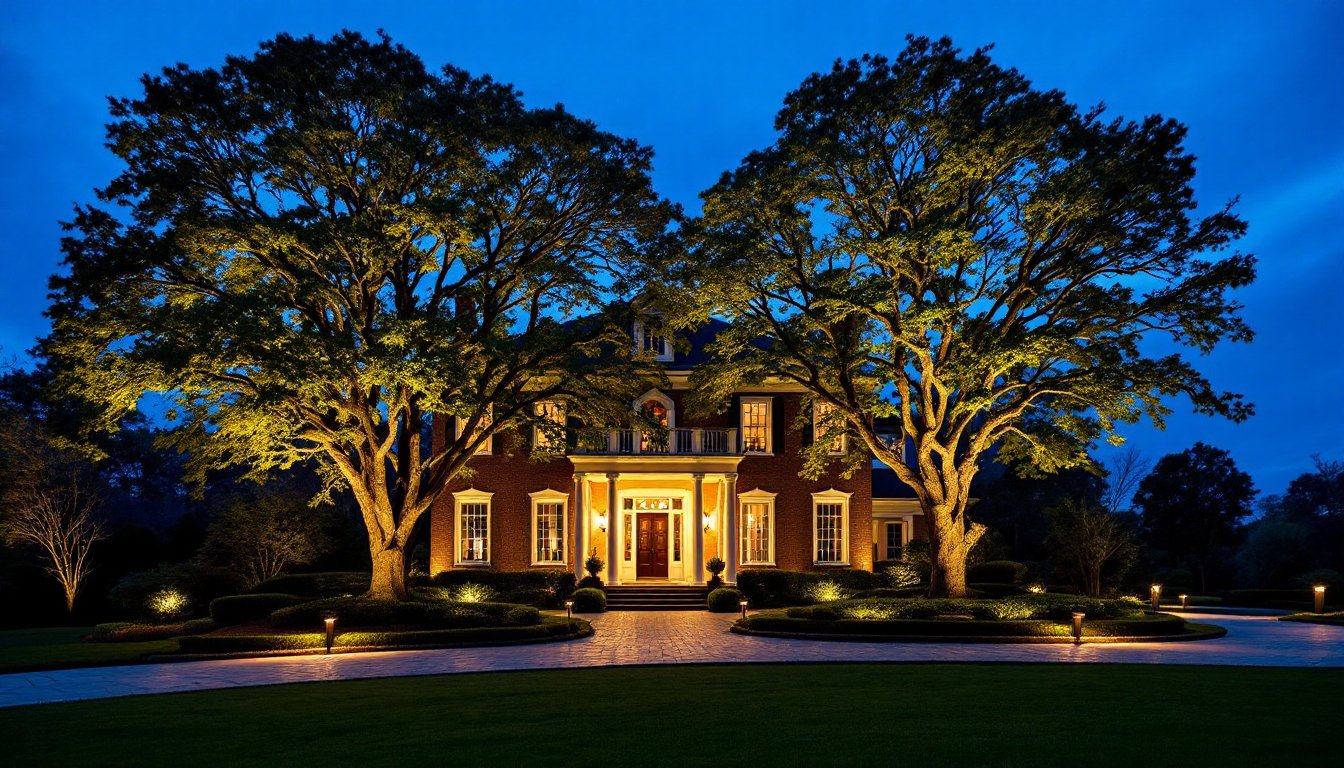
Uplighting remains the most dramatic technique for mature trees. A single well light with a 15- to 20-degree beam spread placed 2 to 3 feet from the trunk base creates striking vertical emphasis. Potomac’s abundant oaks, maples, and sycamores respond particularly well, their branching structure creates interesting shadow play against home facades or the night sky. Use warm white (2700-3000K) for deciduous trees: slightly cooler temperatures work for evergreens.
Garden beds benefit from low-level accent lighting that highlights plantings without washing them out. Small 2- to 3-watt bullet fixtures tucked behind or beneath focal specimens work well. Avoid overlighting, gardens should have pockets of shadow for depth and mystery.
Water features need underwater-rated fixtures if illuminating from within (fountains, pools) or well-placed uplights if illuminating waterfalls or pond edges from outside. For ponds and streams, consider how lighting affects aquatic life, excessive artificial light can disrupt ecosystems. In most cases, subtle accent lighting beats bright floodlighting.
Architectural features like columns, stonework, and interesting building elements deserve attention too. Grazing (placing lights close to textured surfaces at sharp angles) emphasizes dimension in brick or stone. Washing (broader, more distant placement) creates even illumination across flat surfaces.
Choosing the Right Landscape Lighting System for Your Home
System selection depends on property size, existing electrical infrastructure, and long-term goals. Most Potomac installations fall into three categories.
Low-voltage LED systems (12V or 24V) dominate residential projects. They run off transformers that step down standard 120V household current, making installation simpler and safer. Quality transformers include photocells (automatic dusk-to-dawn operation), timers, and increasingly, smart controls that integrate with home automation systems. A typical system might use a 300- to 600-watt transformer supporting 20 to 40 fixtures, though multiple transformers often make sense on larger properties to minimize voltage drop on long wire runs.
Line-voltage systems (120V) occasionally make sense for very large properties or when integrating with other electrical work. They require conduit burial, GFCI protection, and licensed electrician installation. The upside: no voltage drop concerns on long runs and compatibility with a wider range of commercial-grade fixtures.
Solar landscape lights have improved dramatically but still face limitations in Potomac’s tree-canopy-heavy environment. They work fine for supplemental path lighting in sunny locations but can’t match the output or reliability of wired systems for primary illumination. Battery life in cold winters remains an issue.
Smart lighting deserves consideration during initial installation. Systems from manufacturers like FX Luminaire, Kichler, or Hunter integrate with apps for scheduling, dimming, and zone control. This flexibility matters when hosting events (full brightness) versus everyday use (softer ambient levels). The upfront cost premium is modest, usually 15 to 25 percent, but retrofit is expensive and disruptive.
Cable sizing matters more than many DIYers realize. 12-gauge wire should be standard for most runs: 10-gauge for longer distances (beyond 100 feet). Undersized wire causes voltage drop that dims fixtures farthest from the transformer, a common issue with budget installations.
What to Look for in a Potomac Landscape Lighting Company
Professional installation makes sense for most homeowners. While DIY kits exist, achieving professional results requires understanding electrical principles, landscape design, and fixture placement strategies that aren’t obvious from product packaging.
Experience with local conditions matters. Potomac’s clay soils, mature root systems, and varied terrain create installation challenges that generic training doesn’t address. Ask how installers handle wire burial near established trees (answer: trenching should stay shallow and avoid major roots) and whether they’ve worked with Montgomery County permitting when required.
Fixture quality separates lasting installations from budget jobs that fail within five years. Commercial-grade fixtures use brass, copper, or marine-grade aluminum bodies with sealed lens assemblies and sealed wire connections. Plastic fixtures and exposed wire nuts corrode quickly in Maryland’s humid climate. Expect quality fixtures to carry 5- to 10-year warranties on housing and 3- to 5-year warranties on LED components.
Design consultation should come standard. The best companies visit properties after dark during initial consultations to understand how spaces are currently used and where light is needed. They should discuss light levels, color temperature, and whether the goal is subtle ambiance or dramatic highlighting. Be wary of companies that quote by fixture count without site evaluation, proper design requires seeing the property.
Maintenance and service deserves upfront discussion. LED systems are low-maintenance but not maintenance-free. Fixtures need periodic cleaning, wire connections eventually corrode even though best efforts, and landscape changes (tree growth, new plantings) may require adjustments. Some companies offer annual service contracts: others provide as-needed service. Clarify response times for repairs and whether the company stocks parts for the fixtures they install.
Finally, verify insurance coverage. Landscape lighting installation involves digging near utility lines (call 811 for Miss Utility locates before any excavation), working with electricity, and potential property damage. Installers should carry both general liability and workers’ compensation insurance.