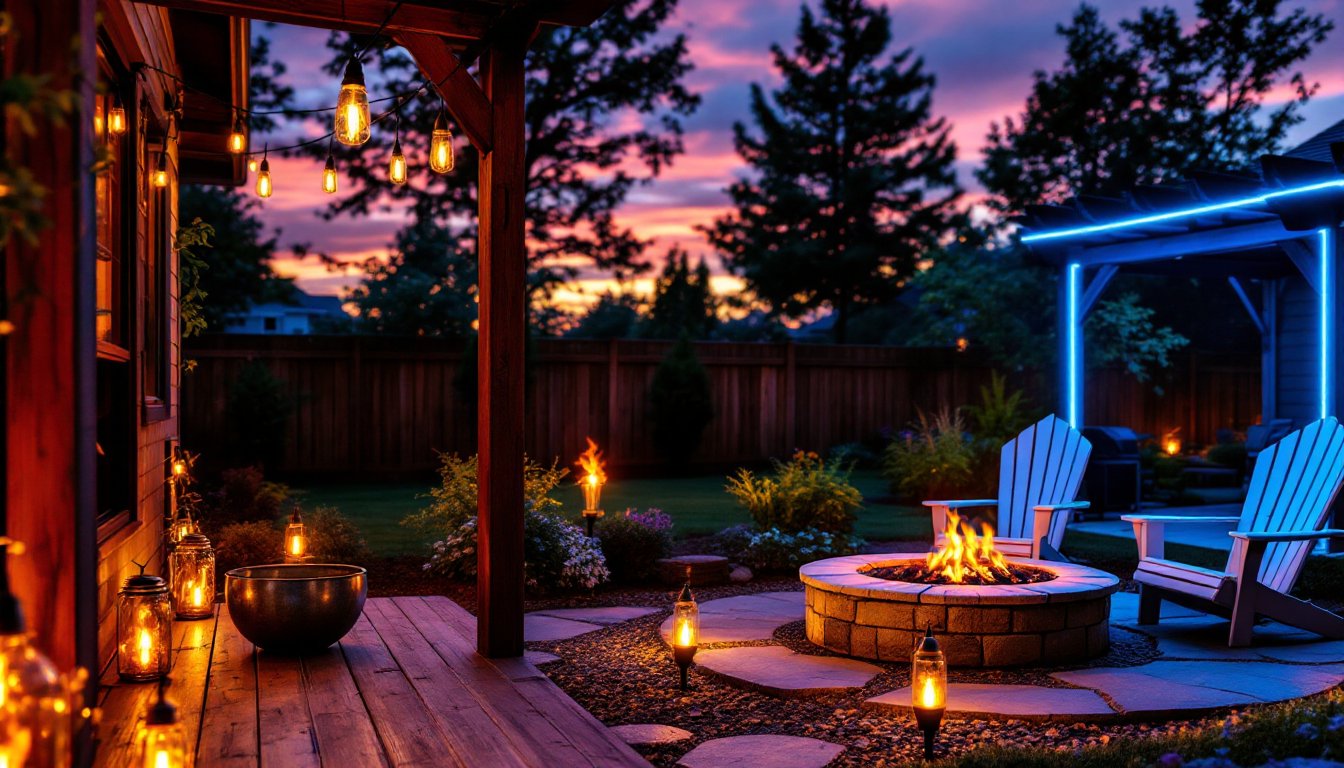
Backyard lighting doesn’t require an electrician’s license or a four-figure budget. With a few basic tools, some creativity, and the right materials, homeowners can transform dark outdoor spaces into functional, inviting areas for evening gatherings or quiet nights under the stars. The key is choosing projects that match skill level, understanding the difference between low-voltage and line-voltage installations, and knowing when to call in a pro. This guide covers practical, tested DIY lighting solutions, from simple string light setups to upcycled pathway markers and fire features that add both illumination and ambiance.
Table of Contents
ToggleKey Takeaways
- DIY backyard lighting ideas can be accomplished without an electrician by choosing projects that match your skill level, from simple string lights to solar and upcycled solutions.
- String lights require minimal tools and no complex wiring—use galvanized steel cable with eye bolts or J-hooks for permanent setups, or shepherd’s hooks for temporary installations.
- Solar-powered lighting eliminates trenching and transformers, but prioritize fixtures with 15-100+ lumens output and 600+ mAh battery capacity for reliable performance beyond basic pathway marking.
- Upcycled materials like wine bottles, PVC pipe, glass globes, and painted rocks create functional, budget-friendly pathway and accent lighting without electrical connections.
- LED and rope light designs offer maximum flexibility and energy efficiency, but require proper IP65+ ratings, waterproof connections, and correctly sized transformers to avoid voltage drop issues.
- Fire features and flame-based lighting (torches, fire bowls, and fire pits) add ambiance but demand strict adherence to safety protocols, local codes, and never-leave-unattended rules.
String Light Installations That Transform Any Yard
String lights remain one of the most versatile and forgiving DIY lighting projects. They require minimal tools, no electrical wiring beyond a standard outdoor outlet, and can be reconfigured seasonally.
For permanent installations, galvanized steel cable (1/8-inch to 3/16-inch diameter) strung between posts or fascia boards creates a sturdy support system. Use turnbuckles on one end to maintain tension as the cable settles. Secure the cable with eye bolts (minimum 3/8-inch lag thread into solid wood) or J-hooks screwed into studs or blocking. Space support points no more than 15 feet apart to prevent excessive sagging.
Commercial-grade string lights with E26 sockets handle weather better than holiday lights. Look for 18 AWG or thicker wire gauge and shatterproof bulbs rated for wet locations. Most standard sets draw 5-7 watts per bulb: a 15-amp circuit can safely handle approximately 20-25 bulbs (accounting for the 80% load rule per NEC guidelines).
For renters or temporary setups, shepherd’s hooks (5 to 7 feet tall) pushed into the ground provide flexible anchor points without permanent fixtures. Use zip ties or cable clips to attach lights to the hooks, keeping connections loose enough to allow slight movement in wind.
Always use a GFCI-protected outlet for outdoor lighting. If the existing outlet lacks GFCI protection, replace it, this is a straightforward swap for anyone comfortable working with a circuit breaker and wire nuts, but if there’s any hesitation, hire a licensed electrician.
Solar-Powered Lighting Solutions for Eco-Friendly Ambiance
Solar lights eliminate the need for trenching, conduit, or low-voltage transformers, making them ideal for DIYers who want light without the wiring headaches. But, not all solar fixtures are created equal.
Lumens matter. Budget solar path lights often produce 1-5 lumens, enough to mark a walkway but barely functional for task lighting. Quality solar fixtures output 15-100+ lumens and use monocrystalline solar panels for better efficiency in partial shade. Check the battery capacity (measured in mAh): anything below 600 mAh won’t hold a charge through a full night.
For DIY solar projects, separate solar panel kits paired with 12V LED strip lights offer more flexibility than all-in-one units. Mount the panel in full sun (south-facing in the northern hemisphere, angled at approximately the site’s latitude), then run low-voltage wire to lights positioned in shadier areas. Use direct-burial wire rated for wet locations if running cable underground, even at low voltage.
Solar post caps work well on existing 4×4 or 6×6 fence posts and deck rails. Measure the post dimension carefully, nominal 4×4 posts are actually 3.5×3.5 inches. Secure caps with construction adhesive or small finishing nails to prevent wind displacement.
Solar string lights have improved significantly, but expect 4-6 hours of runtime (not the 8-10 hours advertised). They’re best for accent lighting, not primary illumination. Position the panel where it receives at least 6 hours of direct sunlight daily and clean it monthly, dust and pollen reduce charging efficiency by 20-30%.
Mason Jar and Lantern Projects for Rustic Charm
Mason jar lights combine vintage aesthetics with straightforward assembly. They work particularly well for table lighting, hanging fixtures, or clustered patio arrangements.
For battery-operated versions, use wide-mouth quart jars (easier to access the battery compartment) and LED fairy lights or puck lights. Avoid traditional incandescent bulbs in sealed jars, they generate heat that can crack glass and create a fire hazard. Drill a small 1/8-inch vent hole in the lid if using any battery-powered light that generates warmth.
Hanging jar lanterns require sturdy support. Wrap 16-gauge galvanized wire around the jar’s neck threads (under the band), creating a twisted loop handle. Alternatively, use hose clamps as a collar, tightening them just below the threads and attaching wire or chain to the clamp’s bolt head.
For wired jar fixtures, this enters low-voltage electrical territory. Purchase pre-wired E12 candelabra sockets (easier to fit through jar openings than standard E26 sockets) and cord kits with inline switches. Drill a hole in the jar lid sized for the socket’s threaded base, secure with the included washer and nut, then wire according to the kit instructions, black to brass terminal, white to silver. Use only LED bulbs rated at 5 watts or less to avoid heat buildup.
Tin can lanterns offer a simpler alternative. Fill clean cans with water and freeze solid (prevents denting), then punch decorative patterns with a nail and hammer. Spray with rust-inhibiting primer and paint. Add a wire handle and drop in a battery-powered tea light. They’re lightweight, weatherproof with proper paint, and stack for storage.
Pathway and Garden Lighting Using Upcycled Materials
Pathway lighting doesn’t require expensive solar stakes. With upcycled materials and basic components, DIYers can create custom markers that blend function with landscape design.
Wine bottle torches combine lighting with recycling. Purchase threaded torch adapters designed for bottle necks (standard wine bottles have a ¾-inch opening). Fill the bottle ⅔ with lamp oil or citronella fuel, insert a fiberglass wick, and mount the bottle at a 45-degree angle using a rebar stake (½-inch diameter, 18-24 inches long) driven into the ground. Secure the bottle to the stake with stainless steel hose clamps. These provide genuine flame lighting but require attention, never leave torches burning unattended, and keep them at least 6 feet from structures or flammable materials.
PVC pipe luminaries offer an inexpensive pathway solution. Cut 4-inch diameter PVC into 10-12 inch sections, drill ventilation holes in a pattern, and spray paint with paint formulated for plastic (regular spray paint flakes off PVC). Bury the bottom 2-3 inches in the ground for stability and drop in a solar disk light or battery-powered puck light.
For a softer look, frosted glass globe lights can be DIYed using thrift store glass lampshades or light fixture globes. Mount them on ½-inch galvanized pipe threaded into floor flanges secured to small wood bases or pavers. Drop a solar-powered garden stake light (remove its original stake) into the pipe. The globe diffuses the light while protecting the solar component from direct rain.
Painted rock markers with glow-in-the-dark paint provide no-power pathway guidance. Use outdoor acrylic paint as a base coat and finish with photoluminescent paint rated for exterior use. Charge time in direct sunlight is 4-6 hours for approximately 2-3 hours of visibility, not bright, but enough to define walkways.
Fire Features and Flame-Based Lighting Options
Fire features add light, warmth, and a gathering focal point. They also involve open flame and combustion, so local codes and safety protocols are non-negotiable.
Tabletop fire bowls are the simplest entry point. Use a metal bowl (not ceramic or terra cotta, which can crack from heat) filled ⅔ with pea gravel or lava rock, add isopropyl alcohol-based fuel or a gel fuel canister, and light. Keep these on non-flammable surfaces (stone, concrete, metal) and never on wood decks without a fire-rated mat underneath. Position them at least 3 feet from any overhead structure and never leave them unattended.
DIY concrete fire pits are an afternoon project for anyone comfortable mixing concrete. Use quikrete 5000 for high-heat applications. Cast the bowl using a plastic or metal form (large mixing bowls work), reinforcing with wire mesh or rebar. Once cured (minimum 7 days), line the interior with fire brick secured with refractory mortar (standard mortar fails under heat). Drill weep holes at the base for drainage, trapped water can cause concrete to crack when heated.
For wood-burning fire pits, check local ordinances. Many municipalities restrict open fires or require spark arrestor screens. Permanent installations may need permits and must meet setback requirements (typically 10-25 feet from structures). Use fire pit pavers or retaining wall blocks rated for high heat: standard concrete blocks can crack and spall.
Tiki torches provide classic yard lighting but require responsible fuel handling. Use citronella torch fuel or lamp oil, never gasoline, kerosene, or charcoal lighter fluid. Mount torches in ground stakes designed for the purpose, not improvised holders. Extinguish torches by cutting off the fuel supply with the cap: never blow them out (fuel can splatter).
Creative LED and Rope Light Designs
LED strip lights and rope lights open design possibilities unavailable with traditional fixtures. They’re flexible, energy-efficient, and increasingly affordable, but installation quality separates pro-looking results from obvious DIY.
Outdoor-rated LED strips must have an IP rating of 65 or higher (IP65 is splash-resistant: IP67-68 are submersible). Check whether the strip is cuttable and where cut points are located, most have cut marks every 2-4 inches along copper pads. Use waterproof connectors or solder joints sealed with heat shrink tubing for connections: electrical tape is not weatherproof.
For under-deck or pergola lighting, mount LED strips in aluminum channels with frosted diffuser covers. The channel protects the strip and provides a finished look. Secure channels with stainless steel screws or construction adhesive rated for outdoor use. Run the power supply indoors or in a weatherproof junction box, most LED transformers are not rated for direct weather exposure.
Rope light edging defines pathways, decks, or garden beds. Use mounting clips designed for rope light diameter (⅜-inch or ½-inch are standard). Space clips every 12-18 inches along straight runs, closer on curves. Bury shallow-mount rope light under ½ inch of mulch or along landscape edging for a clean look.
Power management is critical. Low-voltage LED systems (12V DC) require a transformer sized appropriately for the total wattage. Add up the wattage of all connected strips and multiply by 1.2 for overhead: choose a transformer rated at least that high. For example, 50 feet of LED strip drawing 4 watts per foot needs 200 watts × 1.2 = 240 watts minimum transformer capacity.
Avoid daisy-chaining LED strips beyond manufacturer recommendations, voltage drop causes dimming at the far end. For longer runs, use parallel wiring with home-run cables back to the power supply, or use LED amplifiers to boost signal and power midway through the run.
Conclusion
DIY backyard lighting succeeds when the project matches skill level and the plan accounts for safety, power sources, and weather exposure. Start with one zone, a string light canopy over the patio or solar markers along the walkway, and expand as confidence builds. The best outdoor lighting layers multiple sources at different heights and intensities, creating depth and function without over-lighting the space. With proper materials and a little planning, even novice DIYers can turn a dark backyard into a well-lit outdoor room ready for year-round use.