Phoenix homeowners know that outdoor living doesn’t stop when the sun sets. With cooler evenings offering prime patio and pool time, properly designed landscape lighting extends the usability of outdoor spaces while adding security and curb appeal. But desert conditions, scorching summers, intense UV exposure, dust storms, and monsoon rains, demand fixtures and installation approaches that can handle Arizona’s extremes. This guide walks through the practical considerations for selecting, installing, and maintaining outdoor lighting Phoenix residents can count on year-round.
Table of Contents
ToggleKey Takeaways
- Landscape lighting Phoenix transforms outdoor spaces into functional and secure zones after sunset while boosting curb appeal, especially important given the region’s 20–30°F evening temperature drops that make backyards prime gathering spots.
- Select fixture materials like powder-coated aluminum and brass over plastic, and prioritize IP65+ ratings and heat tolerance up to 122°F to withstand Phoenix’s extreme summer heat, UV exposure, and monsoon conditions.
- LED fixtures are essential for desert installations, lasting 25,000–50,000 hours compared to halogen’s 2,000–4,000 hours while using 75–80% less energy and attracting fewer insects.
- Desert-friendly lighting techniques like moonlighting, grazing, and silhouetting work best with warm white LEDs (2700–3000K) to complement Southwestern architecture without overlighting the landscape.
- Low-voltage 12-volt systems are realistic DIY projects for Phoenix homeowners, but verify local building codes and ensure transformers are sized with 20% extra capacity to avoid overloading.
- Bi-annual maintenance including dust removal, wire connection inspection, and trimmed vegetation prevents corrosion and extends fixture lifespan in Phoenix’s challenging climate.
Why Landscape Lighting Matters in Phoenix’s Unique Climate
Phoenix’s climate shapes how homeowners use their outdoor spaces. Evening temperatures often drop 20–30°F from daytime highs, making backyards prime gathering spots from spring through fall. Well-placed lighting transforms patios, walkways, and landscape features into functional zones after dark.
Security is another key benefit. Illuminated pathways, entryways, and side yards deter trespassers while helping residents and guests navigate safely. Dark corners around garages or gates become visible potential hazards without adequate lighting.
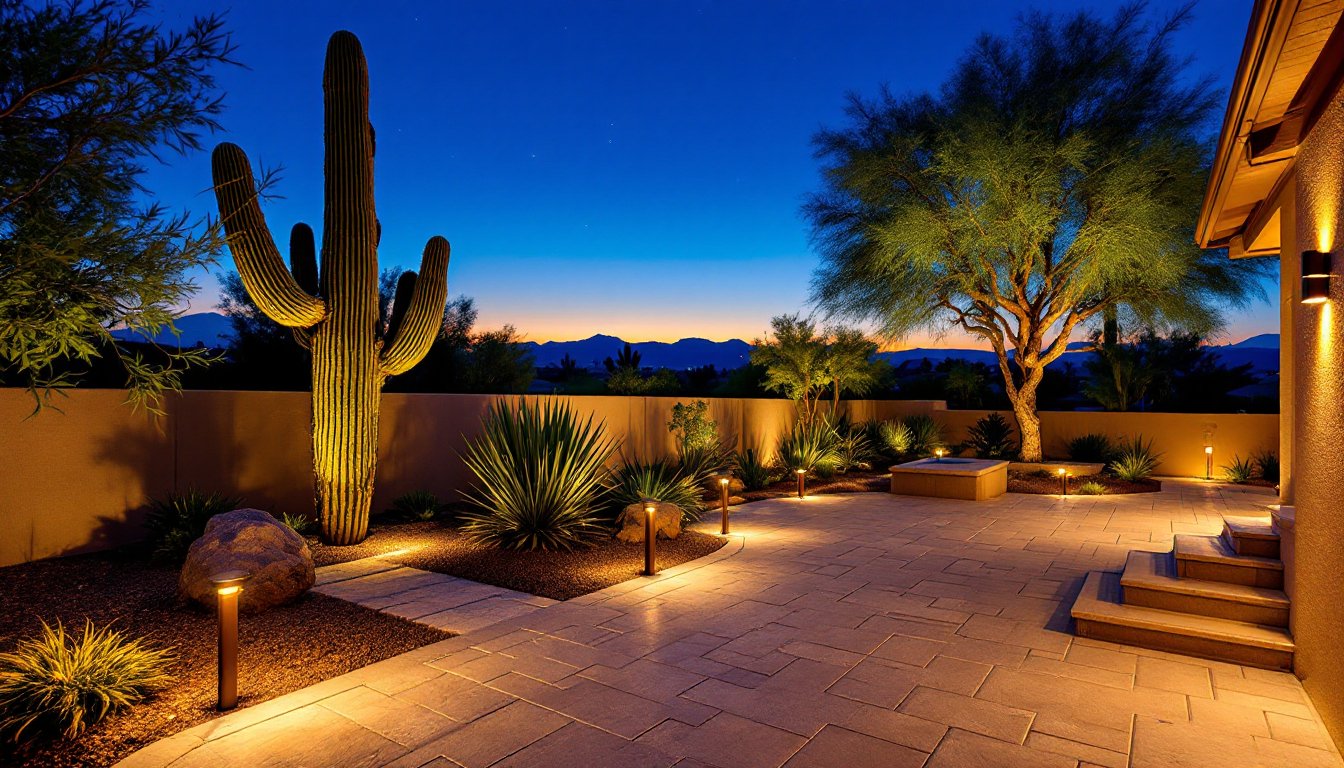
Curb appeal also plays a role, especially in neighborhoods where xeriscaping and native plantings are the norm. Uplighting on mature saguaros, palo verde trees, or architectural desert landscaping creates dramatic visual effects that highlight the region’s natural beauty. Real estate professionals in the Phoenix metro often note that quality outdoor lighting increases perceived home value, particularly in competitive resale markets.
The challenge lies in choosing products that survive Phoenix’s environment. Summer temperatures regularly exceed 110°F, and pavement or hardscape surfaces can radiate heat well into the night. UV degradation, thermal expansion, and dust infiltration all impact fixture longevity if homeowners don’t plan accordingly.
Popular Landscape Lighting Styles for Phoenix Homes
Phoenix landscape lighting typically falls into a few functional categories, each suited to the desert aesthetic and climate.
Path lighting uses low-profile fixtures, often 12-volt LED bollards or stake lights, spaced 8–10 feet apart along walkways, driveways, or pool decking. These provide wayfinding without overwhelming the visual field. In desert settings, fixtures with a bronze or dark bronze finish blend better with earth tones than bright brass or chrome.
Accent lighting highlights architectural plants like agave, ocotillo, or mesquite trees. Narrow-beam spotlights or bullet fixtures mounted at ground level create uplighting effects. Fixtures should be positioned so they don’t create glare at eye level when standing in the yard.
Hardscape lighting illuminates retaining walls, outdoor kitchens, or stucco columns. Recessed wall lights or integrated step lights work well on built structures. In Phoenix, stucco and concrete surfaces retain heat, so fixtures must be rated for high ambient temperatures.
Security and utility lighting covers garage entries, gates, and side yards. Motion-activated floodlights or wall-mounted sconces with dusk-to-dawn photocells offer practical coverage without leaving lights on all night.
Desert-Friendly Lighting Techniques
Desert landscaping benefits from restrained, targeted lighting rather than blanket illumination. Overlighting washes out the natural contrast that makes xeriscaping visually interesting.
Moonlighting involves mounting fixtures high in trees to cast diffuse, downward light that mimics natural moonlight filtering through branches. Palo verde and mesquite trees work well for this technique.
Grazing places narrow-beam fixtures close to textured surfaces, stacked stone, river rock walls, or adobe, casting shadows that emphasize depth and texture. This approach complements Southwestern architecture.
Silhouetting positions a light source behind a plant or sculptural element to create a dramatic outline against a wall or fence. Saguaros and large barrel cacti are classic subjects for this technique.
All three techniques work best with warm white LEDs (2700–3000K color temperature), which harmonize with desert tones and avoid the sterile look of cool white or daylight-spectrum bulbs.
Choosing the Right Fixtures for Arizona’s Extreme Weather
Phoenix’s outdoor conditions test lighting fixtures year-round. Heat, UV exposure, dust infiltration, and occasional monsoon downpours all take a toll on inferior products.
Material selection is critical. Avoid plastic housings, which crack and discolor under UV exposure within a few seasons. Brass, copper, and powder-coated aluminum hold up better. Brass develops a natural patina over time: powder-coated aluminum resists corrosion and stays cooler to the touch in direct sun.
IP ratings (Ingress Protection) indicate how well a fixture resists dust and water. For Phoenix, look for IP65 or higher. IP65 fixtures are dust-tight and protected against water jets, which matters during monsoon storms. IP67-rated products can withstand brief submersion, useful near pool decks or low-lying drainage areas.
Heat tolerance matters more in Phoenix than in most climates. Check manufacturer specs for maximum ambient operating temperature. Many consumer-grade fixtures are rated only to 104°F, which won’t cut it in a Phoenix summer. Commercial-grade LED drivers and housings often tolerate temperatures up to 122°F or higher.
LED vs. halogen: LEDs are the clear choice for desert installations. They generate less heat, draw a fraction of the power, and last 25,000–50,000 hours compared to halogen’s 2,000–4,000 hours. Halogen bulbs also attract insects more aggressively, which can be a nuisance in Phoenix’s outdoor spaces.
Fixtures should have sealed lens gaskets to keep dust out. Sonoran dust is fine and abrasive: it works its way into poorly sealed fixtures and degrades internal components or clouds lenses over time.
Professional Installation vs. DIY: What Phoenix Homeowners Should Know
Low-voltage landscape lighting (12-volt systems) is a realistic DIY project for homeowners comfortable with basic electrical work and hand tools. These systems use a transformer that steps household 120-volt AC power down to 12 volts, which is safer to handle and doesn’t require a licensed electrician in most Arizona jurisdictions. But, check local codes, some municipalities have specific requirements even for low-voltage outdoor installations.
DIY installation involves running low-voltage cable (typically 12- or 14-gauge wire) from the transformer to each fixture. Cable can be surface-mounted along walls or buried 6 inches deep in conduit or direct-burial-rated wire. Phoenix’s caliche-heavy soil can be tough to dig: a mattock or trenching spade works better than a standard shovel.
Homeowners should size the transformer correctly. Add up the wattage of all planned fixtures, then choose a transformer with at least 20% extra capacity to avoid overloading. For example, ten 3-watt LED fixtures need 30 watts: select a transformer rated for at least 36 watts, though going up to a 60- or 100-watt transformer offers room for future expansion.
Wire runs shouldn’t exceed 100 feet from the transformer without voltage drop becoming an issue. Longer runs require heavier gauge wire or multiple transformer zones. Use waterproof wire connectors rated for direct burial, not standard wire nuts.
Professional installation makes sense for homeowners who want integrated control systems, complex zoning, or fixtures tied into home automation. Licensed electricians can also handle line-voltage (120-volt) installations, which may be necessary for high-wattage floodlights or fixtures mounted on tall structures.
Permits typically aren’t required for low-voltage landscape lighting in Phoenix, but any work involving modifications to household electrical panels or new 120-volt circuits does require permits and a licensed electrician. Always verify current requirements with the local building department before starting work.
Energy Efficiency and Smart Lighting Solutions
Phoenix’s long cooling season and high electricity rates make energy-efficient outdoor lighting a practical choice. LED fixtures use 75–80% less energy than incandescent or halogen equivalents and generate minimal heat, which matters when fixtures are mounted near plantings or on structures that already absorb daytime heat.
Solar-powered fixtures appeal to some homeowners, but performance in Phoenix is mixed. While the region gets ample sun, solar panels on individual fixtures can accumulate dust quickly, reducing charging efficiency. Solar path lights work best in open areas away from walls or overhangs where panels receive unobstructed sunlight. For accent or security lighting, wired LED systems offer more reliable output.
Smart lighting controls add convenience and further reduce energy use. Options include:
- Photocell sensors that turn lights on at dusk and off at dawn, eliminating the need for manual timers.
- Motion sensors for security lighting around gates, garages, or side yards. These reduce runtime and extend fixture life.
- Wi-Fi or Zigbee-enabled controllers that integrate with home automation platforms (Amazon Alexa, Google Home, Apple HomeKit). Homeowners can set schedules, dim zones, or control lighting remotely via smartphone apps.
- Astronomical timers that adjust on/off times based on actual sunrise and sunset, which shift throughout the year.
For larger properties or multi-zone systems, a centralized controller with zone switching offers flexibility. Homeowners can run pathway lighting all night while setting accent lighting on a timer to shut off at midnight, balancing security with energy savings.
Maintenance Tips for Long-Lasting Outdoor Lighting
Phoenix’s environment demands regular maintenance to keep landscape lighting performing well.
Dust and debris removal should happen at least twice a year, ideally before and after monsoon season. Use a soft brush or microfiber cloth to clean lenses and housings. Avoid abrasive cleaners or pressure washers, which can damage seals or coatings.
Check wire connections annually. Moisture from irrigation overspray or monsoon rains can corrode connections even in waterproof enclosures. If a fixture stops working, inspect the connection first, corrosion is often the culprit. Replace corroded connectors with fresh waterproof wire nuts or heat-shrink butt connectors rated for outdoor use.
Trim plant growth around fixtures. Desert plants like agave or prickly pear can grow into or block light paths. Overgrown vegetation also traps heat around fixtures, accelerating component wear.
Inspect transformer and timer settings seasonally. Timers can drift or reset during power outages. Transformers should be mounted in shaded, ventilated locations, not in direct sun or enclosed spaces where heat buildup shortens their lifespan.
Replace LED drivers or bulbs as needed. Quality LEDs can last 20+ years, but drivers (the electronic components that regulate power) may fail sooner in high-heat environments. If a fixture dims or flickers, the driver is usually the issue, not the LED itself.
Adjust fixture angles after ground settling or landscape changes. Phoenix soil can shift slightly with seasonal moisture changes, especially in areas with expansive clay. Fixtures mounted on stakes may tilt over time and need repositioning.
Proper maintenance extends fixture life and keeps outdoor spaces looking sharp year-round. Given Phoenix’s climate challenges, a little attention twice a year prevents bigger headaches and replacement costs down the line.