Vintage bathroom lighting does more than illuminate, it sets the mood, anchors the design, and brings instant character to what’s often the most utilitarian room in the house. Unlike generic builder-grade fixtures, vintage-inspired lights offer warmth, craftsmanship, and a sense of history that modern minimalist designs can’t replicate. Whether someone’s restoring a period home or simply wants to add personality to a new build, the right fixtures can bridge decades of design while meeting today’s functional needs. This guide walks through the most popular vintage lighting styles, explains what makes them work in bathrooms, and covers the practical details needed to choose and install them correctly.
Table of Contents
ToggleKey Takeaways
- Vintage bathroom lighting adds warmth, craftsmanship, and visual interest using materials like brass, porcelain, and frosted glass that modern fixtures cannot replicate.
- Proper sconce placement at 60–66 inches from the floor and 36–40 inches apart eliminates shadows and provides balanced task lighting for grooming.
- Victorian, industrial, Art Deco, and farmhouse styles each offer distinct character; choose based on your bathroom’s existing design elements and ceiling height.
- Always verify wet or damp location ratings for bathroom fixtures—fixtures within 3 feet of tubs or showers require wet-rated fixtures to ensure safety.
- Hardwired installation requires shutting off power, securing the mounting bracket to solid framing, and connecting wires correctly; call a licensed electrician if wiring is cloth-covered or lacks grounding.
- Pair vintage lighting with warm-toned LED bulbs (2700K for Victorian styles, 3000K for Art Deco) to enhance the fixtures’ aesthetic while maintaining energy efficiency.
Why Vintage Lighting Is the Secret to an Elegant Bathroom
Vintage lighting brings three things modern fixtures often lack: visual weight, material quality, and design detail. Most contemporary bathroom lights prioritize efficiency and clean lines, which can feel cold in a space that benefits from warmth and texture. Vintage styles, whether authentic antiques or quality reproductions, use materials like brass, porcelain, frosted glass, and cast iron that age gracefully and catch light in ways that plastic and brushed nickel don’t.
From a practical standpoint, vintage fixtures also solve common lighting problems. Sconces flanking a mirror eliminate the harsh shadows created by overhead-only lighting, a setup that’s terrible for grooming tasks. Multi-bulb vanity bars spread light evenly across the face without glare. And because many vintage designs were created before the era of harsh, energy-hogging bulbs, they’re often perfectly suited to warm-toned LED Edison bulbs or dimmable options that make bathrooms feel less clinical.
Another advantage: vintage lighting pairs well with mixed finishes and materials. Someone can combine an Art Deco chrome fixture with subway tile, a clawfoot tub, and modern plumbing without the room feeling disjointed. The fixtures act as intentional focal points rather than afterthoughts, anchoring the design and giving the eye something interesting to land on.
Victorian-Inspired Sconces for Classic Sophistication
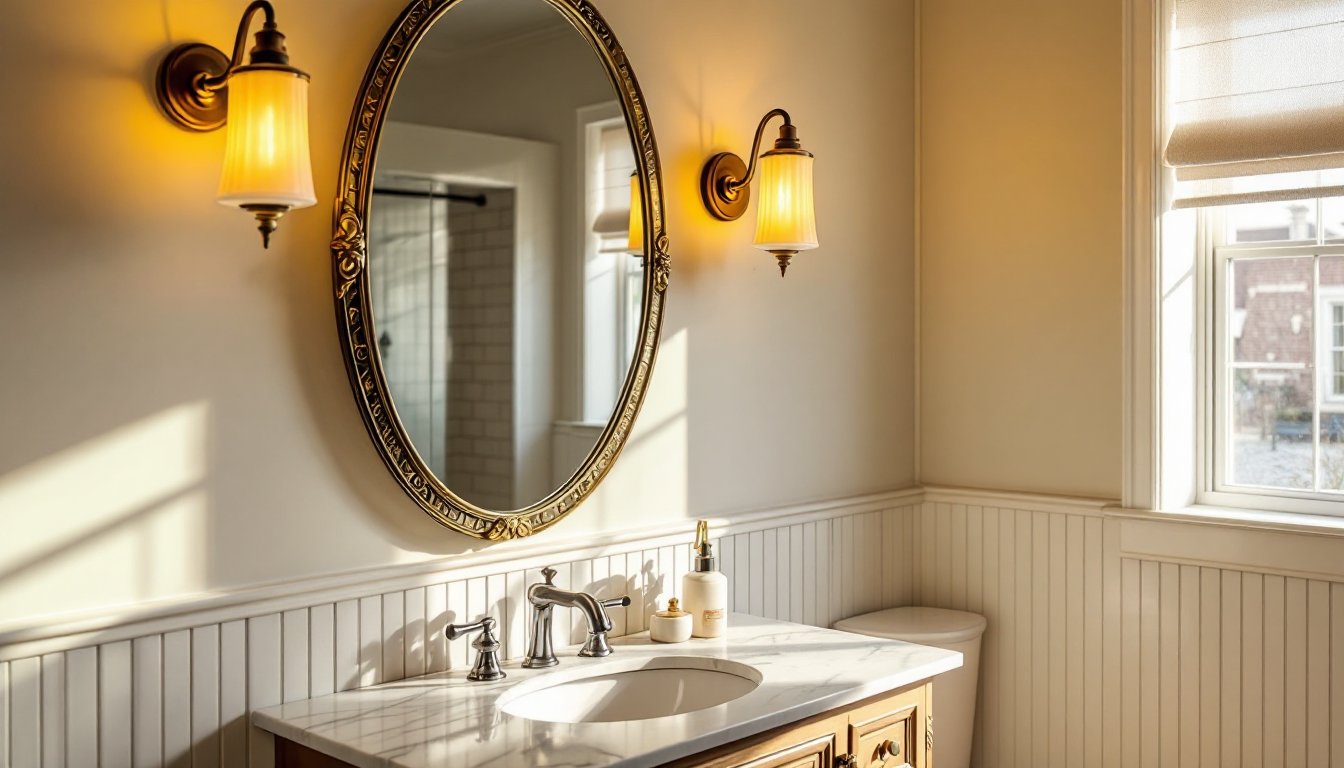
Victorian-era lighting is characterized by ornate metalwork, etched or frosted glass shades, and fixtures that look like jewelry for the walls. These sconces often feature scrollwork, floral motifs, and candelabra-style bulb holders that reference gas lighting from the 1880s–1900s. They work best in bathrooms with high ceilings, wainscoting, or other period details, but they can also create dramatic contrast in a simpler, modern space.
When selecting Victorian sconces, pay attention to backplate size. Ornate fixtures need visual breathing room, cramming them onto a narrow wall between a mirror and a doorway kills the effect. Ideally, mount them at least 60–66 inches from the floor (measured to the center of the fixture) and space them 36–40 inches apart for balanced task lighting on either side of a vanity mirror.
Glass shade condition matters. Reproduction frosted or seeded glass is widely available, but original antique shades may have chips, cracks, or discoloration. If buying vintage, inspect carefully and budget for replacements if needed. Most Victorian sconces were designed for low-wattage bulbs: using modern LEDs keeps heat down and prevents damage to old sockets or fragile shades.
These fixtures shine (literally) when paired with warm white bulbs in the 2700K range. Cooler color temperatures clash with the warmth of aged brass or oil-rubbed bronze finishes common in Victorian reproductions.
Industrial Vanity Lights That Add Character and Edge
Industrial lighting borrows from early 20th-century factories, warehouses, and workshops. Think exposed bulbs, metal cages, gooseneck arms, and finishes like matte black, galvanized steel, or antique brass. These fixtures bring texture and an unpolished, utilitarian vibe that works beautifully in lofts, farmhouse-modern hybrids, or bathrooms with concrete, subway tile, or reclaimed wood.
A popular choice is the multi-light vanity bar with cone or dome shades, typically mounted above the mirror. These range from two to five lights and provide broad, even illumination. For a grittier look, cage-style fixtures with Edison bulbs create dramatic shadows and emphasize the bulb filament as part of the design. Be aware that true Edison bulbs (incandescent) are energy hogs and produce heat: LED Edison-style bulbs mimic the look at a fraction of the wattage.
Installation tip: most industrial vanity bars are hardwired and relatively heavy due to metal construction. Make sure the electrical box is securely fastened to a stud or blocking, especially if the fixture weighs more than a few pounds. If replacing an old light, check that the box is rated for the new fixture’s weight.
Industrial fixtures are forgiving with mismatched hardware. Someone can mix black iron sconces, brushed nickel faucets, and copper accents without the room feeling chaotic, as long as there’s enough visual repetition (e.g., black appears in the mirror frame or shelving brackets).
Art Deco Fixtures for Glamorous, Old-Hollywood Vibes
Art Deco lighting peaked in the 1920s–1940s and is all about geometric shapes, streamlined forms, and luxe materials like chrome, glass rods, and polished nickel. Common motifs include sunbursts, chevrons, stepped profiles, and frosted glass globes. These fixtures evoke the glamour of ocean liners, movie palaces, and upscale hotels, a perfect fit for bathrooms aiming for elegance without Victorian fussiness.
Typical Art Deco bathroom fixtures include vertical glass tube sconces, tiered globe pendants, and horizontal vanity bars with ribbed or milk glass shades. The style works especially well with black-and-white tile, marble, or lacquered cabinetry. Because Art Deco emphasizes symmetry, fixtures are almost always installed in pairs or centered precisely above mirrors or sinks.
Lighting quality is critical here. Art Deco designs often use frosted or translucent glass to diffuse light softly, avoiding harsh shadows. Pair them with bulbs in the 3000K range for a crisp, clean white that complements chrome and glass without feeling too warm or too clinical.
One common pitfall: Art Deco reproductions vary wildly in quality. Cheap versions use thin glass and lightweight metal that looks flimsy once installed. Look for fixtures with solid brass or steel construction and hand-blown or molded glass, not plastic. If buying vintage originals, confirm that wiring has been updated to meet modern electrical codes, many antique fixtures have cloth-covered wire that’s a fire hazard.
Farmhouse and Rustic Lighting Options for Cozy Charm
Farmhouse and rustic lighting lean into simplicity, natural materials, and a lived-in aesthetic. Fixtures often feature wood accents, wrought iron, mason jar shades, wire baskets, or antler motifs. The goal is warmth and approachability, not perfection, these lights look best when they feel collected over time rather than bought as a matching set.
Popular options include barn-style sconces with angled shades, lantern pendants with seeded glass, and wagon wheel chandeliers (though the latter are typically too large for most bathrooms). For vanity lighting, a simple metal bar with exposed bulbs or bell-shaped enamel shades in white, black, or aged finishes provides both function and character.
Installation is usually straightforward, but moisture is a concern in bathrooms. Make sure any wood components are sealed or finished to resist humidity, especially near tubs and showers. If using fixtures with Edison bulbs or open cages, ensure they’re rated for damp locations at minimum: enclosed shower areas require wet-rated fixtures.
Farmhouse lighting is forgiving with DIY installation. Most sconces and vanity bars mount to standard 4-inch round or rectangular electrical boxes, and the wiring is typically simple: black to black (hot), white to white (neutral), and green or bare copper to ground. Always shut off power at the breaker and use a voltage tester before touching any wires.
These fixtures pair naturally with shiplap, beadboard, concrete countertops, and vessel sinks. They also work as a counterbalance to sleek, modern elements, think a rustic sconce next to a frameless mirror and matte black faucet.
How to Choose and Install Vintage Bathroom Lighting
Start by measuring the space and the mirror. For sconces flanking a mirror, measure the mirror width and subtract 8–12 inches total to find the spacing between fixtures. Mount them at eye level (60–65 inches from the floor) for best task lighting. If installing a single fixture above the mirror, center it and mount it 75–80 inches from the floor, leaving at least 3–6 inches of clearance above the mirror frame.
Check the electrical box location. If there’s no existing box where the new fixture needs to go, adding one may require cutting drywall and running new wire, a job that’s code-compliant DIY in most areas but benefits from basic electrical knowledge. Make sure any new or existing box is securely fastened to solid framing, not just hanging on drywall. Use a stud finder to locate blocking or joists.
Verify the fixture’s rating. Bathrooms are damp or wet locations depending on proximity to water. Fixtures within 3 feet of a tub or shower need a wet location rating: elsewhere in the bathroom, a damp rating is usually acceptable. Check the fixture label or specs before purchasing.
Bulb compatibility and wattage limits are printed inside most fixtures. Don’t exceed the listed wattage, even with LEDs (which run cooler). For dimmable setups, confirm that both the fixture and the LED bulbs are dimmer-compatible, not all LEDs play nicely with older dimmer switches.
Hardwired installation steps:
- Shut off power at the breaker and confirm with a voltage tester.
- Remove the old fixture and inspect the box and wiring.
- Attach the mounting bracket (usually included) to the electrical box.
- Connect wires: hot to hot (black or red), neutral to neutral (white), ground to ground (green or bare copper). Use twist-on wire connectors and wrap connections with electrical tape.
- Tuck wires neatly into the box, attach the fixture to the bracket, and secure with screws.
- Install bulbs, restore power, and test.
If the existing wiring is cloth-covered, frayed, or lacks a ground, call a licensed electrician. Vintage wiring isn’t safe to reuse, and most jurisdictions require grounding for metal fixtures.
Permits: Most simple fixture replacements don’t require a permit if you’re swapping like for like on an existing circuit. Adding new circuits or relocating boxes typically does. Check local building codes before starting.
Conclusion
Vintage bathroom lighting transforms a functional space into one with personality and warmth. Whether someone’s drawn to Victorian elegance, industrial grit, Art Deco glamour, or farmhouse charm, the right fixtures do the heavy lifting in setting the tone. With attention to mounting height, electrical ratings, and quality materials, these lights deliver both style and performance that’ll outlast trends.