Outdoor rope lighting offers a simple, versatile way to add ambiance, safety, and functional illumination to exterior spaces without running conduit or hiring an electrician for complex wiring. These flexible lighting systems consist of small bulbs encased in durable plastic tubing, allowing them to bend around corners, follow railings, and outline architectural features. Whether a homeowner wants to highlight a deck perimeter, brighten a pathway, or create a festive atmosphere on a patio, rope lights deliver consistent, even lighting that’s easier to install than traditional fixtures. They’re weatherproof, energy-efficient when choosing LED options, and forgiving enough for first-time DIYers to tackle confidently.
Table of Contents
ToggleKey Takeaways
- Outdoor rope lighting is a flexible, easy-to-install lighting system with small bulbs inside protective PVC tubing that can be shaped around corners, railings, and architectural features without hiring an electrician.
- LED rope lights are far more efficient and cost-effective long-term than incandescent options, drawing 1–2 watts per foot and lasting over 50,000 hours compared to 3–4 watts and 3,000 hours for traditional bulbs.
- Outdoor rope lighting excels at safety applications on stairs, walkways, and deck perimeters by reducing trip hazards without harsh glare while remaining weather-resistant across temperatures from -20°F to 140°F.
- Solar-powered rope lighting options eliminate the need for outlets and wiring but deliver lower brightness (30–50 lumens per foot) and shorter runtime (6–8 hours), making them unsuitable for primary safety lighting.
- Proper installation requires GFCI-protected outlets, secure clips every 12–18 inches on straight runs, protection of connections with silicone tape, and avoiding sharp bends that can damage internal wiring.
- Annual seasonal inspection, including cleaning with mild soap and water plus checking clips and tubing for damage, ensures outdoor rope lighting maintains performance and can reliably serve homes for years.
What Is Outdoor Rope Lighting and How Does It Work?
Outdoor rope lighting is a linear lighting system where small bulbs (LED or incandescent) are spaced evenly inside a flexible PVC or polyethylene tube, typically 1/2 inch to 3/4 inch in diameter. The tubing protects bulbs from moisture, dust, and minor impacts while maintaining flexibility for shaping around curves and edges.
Most rope lights connect to standard 120-volt AC outlets via a power cord and controller, though low-voltage and solar options exist. The bulbs fire in sequence along the length, producing a continuous glow rather than distinct points of light. Spacing between bulbs ranges from 1 inch to 2 inches, affecting brightness and uniformity, tighter spacing creates a smoother line of light.
Outdoor-rated rope lights carry an IP65 or IP44 rating (ingress protection), meaning they resist water jets and splashing but shouldn’t be submerged. The tubing is UV-stabilized to prevent cracking and fading under sun exposure. Most systems come in 12-foot to 150-foot lengths with cut points every 3 to 6 feet, marked by scissor icons, allowing customization without damaging the circuit. Severing rope light outside these cut points breaks the electrical path and renders the remaining length unusable.
Key Benefits of Using Rope Lights in Outdoor Spaces
Safety lighting on stairs and walkways ranks among the top uses. Rope lights installed along step edges or pathway borders reduce trip hazards at night without the glare of floodlights. Their low profile prevents snagging and doesn’t obstruct views.
Energy efficiency with LED rope lights cuts operating costs significantly. LED versions draw 1 to 2 watts per foot compared to 3 to 4 watts for incandescent equivalents, extending bulb life from 3,000 hours to over 50,000 hours. Over a five-year span, the electricity savings more than offset the higher upfront cost of LED systems.
Flexible installation means homeowners can wrap rope lights around columns, tuck them under railings, or snake them through lattice without drilling multiple mounting holes. Plastic mounting clips (spaced every 12 to 18 inches) secure the rope with a single screw or adhesive pad, making removal or repositioning straightforward.
Weather resistance allows rope lights to stay installed year-round. Quality outdoor rope lights handle temperature ranges from -20°F to 140°F, shrugging off rain, snow, and humidity. This durability eliminates the seasonal hassle of taking down and reinstalling lights.
Low-voltage options (12V or 24V) reduce electrical hazards near pools, fountains, or ground-level installations. They require a transformer but deliver safer operation in wet environments, though they still need proper outdoor-rated components.
Types of Outdoor Rope Lighting to Consider
LED vs. Incandescent Rope Lights
LED rope lights dominate the market for good reason. They produce 90 to 100 lumens per foot with minimal heat output, staying cool to the touch even after hours of operation. Color options extend beyond warm white and cool white to RGB (red, green, blue) models with remote-controlled color-changing modes, useful for holidays or themed events. LEDs maintain brightness over their lifespan without the gradual dimming that plagues incandescent bulbs.
Incandescent rope lights cost less upfront, often 30% to 40% cheaper than comparable LED lengths, and emit a warmer, more amber glow that some homeowners prefer for traditional aesthetics. But, they run hotter (the tubing can reach 140°F under load), consume triple the energy, and require replacement every two to three seasons with regular use. If budget is tight and the installation is temporary (holiday lighting, event décor), incandescent rope lights are adequate. For permanent fixtures, LEDs pay off.
Solar-Powered Rope Lighting Options
Solar rope lights integrate small photovoltaic panels that charge internal batteries during daylight, powering LED bulbs after dusk. Most systems deliver 6 to 8 hours of runtime on a full charge, sufficient for evening illumination but not all-night coverage.
The trade-off is lower brightness, solar rope lights typically output 30 to 50 lumens per foot, roughly half that of plug-in LEDs, and dependency on sunlight. Shaded yards, overcast climates, or winter months can cut runtime to 3 to 4 hours. Panel placement matters: panels need unobstructed southern exposure (in the Northern Hemisphere) for optimal charging.
Solar rope lights eliminate the need for outdoor outlets, making them ideal for remote sheds, fence lines, or garden beds far from power sources. Installation is faster since there’s no wiring or transformer to mount. But, their lower output and variable performance make them a poor fit for primary safety lighting on stairs or pathways where consistent brightness is non-negotiable.
Creative Installation Ideas for Your Outdoor Areas
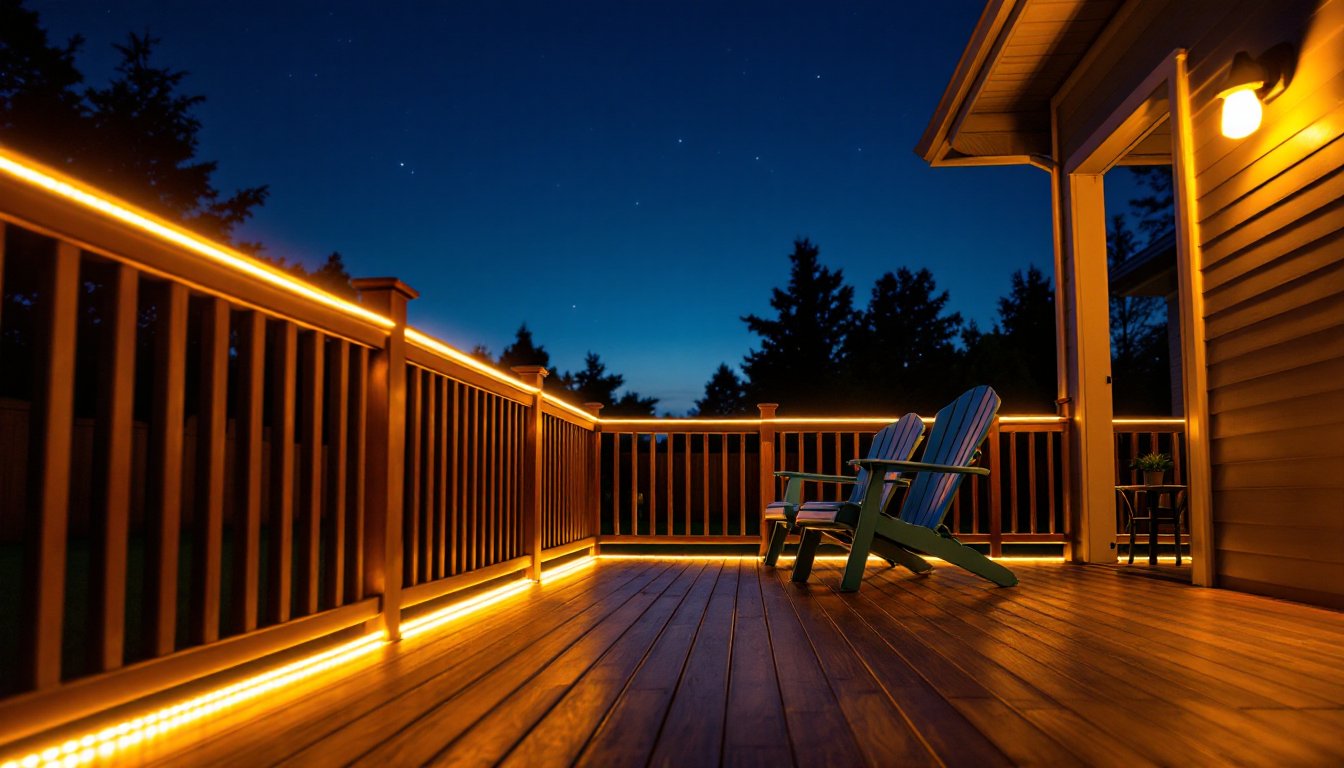
Deck and patio perimeters: Run rope lights along the underside of deck railings or beneath the top cap, creating a floating glow that defines edges without intrusive fixtures. Secure with mounting clips every 12 inches, ensuring the rope sits snug against the surface to prevent sagging.
Stair tread lighting: Install rope lights in a routed channel along the front edge or underside of each tread for uniform step illumination. If routing isn’t an option, use aluminum channels (available at hardware stores) to recess the rope flush, preventing toe-catching and protecting the tubing from foot traffic.
Landscape borders and garden paths: Stake rope lights along flower beds or walkway edges using U-shaped wire stakes. Keep the rope 2 to 3 inches off the ground to avoid soil contact and allow mulch or gravel to settle underneath. This placement highlights plantings and guides foot traffic without spotlighting weeds.
Gazebos and pergolas: Wrap rope lights around posts, beams, or rafters, spiraling upward for visual interest. Use UV-resistant zip ties (not standard indoor ties, which degrade in sun) every 10 to 12 inches to prevent slippage. For a cleaner look, route rope lights inside decorative trim or behind lattice panels.
Fence lines and privacy screens: Zigzag rope lights along horizontal fence rails or weave them through chain-link fabric for security lighting. This method brightens dark corners and deters intruders without the harsh glare of motion-sensor floods.
Pool and water features: Low-voltage (12V or 24V) rope lights can accent pool coping, waterfall edges, or pond perimeters, never submerge standard rope lights. Use only systems rated for wet locations and pair with a GFCI-protected transformer.
Essential Tips for Installing and Maintaining Rope Lights
Use GFCI-protected outlets for all plug-in rope lights. Ground Fault Circuit Interrupter outlets cut power if they detect moisture or short circuits, preventing shock hazards. If the nearest outlet lacks GFCI protection, install a GFCI adapter plug (available for $15 to $25) or have an electrician upgrade the outlet.
Plan the route before cutting. Measure the installation path, accounting for corners and vertical transitions, then add 10% extra length for slack and adjustments. Remember: rope lights can only be cut at designated cut points (marked every 3 to 6 feet). Cutting elsewhere breaks the circuit permanently.
Test the full length before mounting. Plug in the entire rope light and inspect for dead sections, flickering, or dark spots. Some kinks or tight bends can damage internal wires, straighten and retest. Fixing issues before installation saves time and avoids dismantling finished work.
Secure with appropriate mounting hardware. Plastic clips work for wood, vinyl, and composite surfaces: use adhesive-backed clips on metal or painted finishes to avoid drilling. Space clips every 12 to 18 inches on straight runs, and every 6 to 8 inches around curves to prevent drooping. Over-tightening clips can pinch and crack the tubing, snug, not crushed.
Protect connections from moisture. Wrap plug ends, controller boxes, and splices with self-fusing silicone tape (not electrical tape, which degrades outdoors) and tuck them under eaves or inside weatherproof junction boxes. Even outdoor-rated connectors benefit from extra sealing.
Avoid sharp bends. Rope lights tolerate gentle curves (minimum 5-inch radius for most models) but kinking strains internal wires and creates hot spots. Use elbow connectors at 90-degree turns rather than forcing the rope.
Seasonal inspection and cleaning. Once a year, wipe down rope lights with mild soap and water to remove pollen, dirt, and mildew that can dull brightness. Check clips for cracks, inspect tubing for UV damage (chalky texture or brittleness), and replace worn sections before they fail. Store extra lengths indoors during off-seasons to maximize lifespan.
Dimming and timers extend bulb life and cut energy use. Plug rope lights into an outdoor-rated timer (analog or digital) to automate on/off cycles. LED rope lights work with most LED-compatible dimmers, verify specifications before purchasing, as some low-wattage systems flicker with standard dimmer switches.
With proper planning, outdoor rope lighting delivers years of reliable service, transforming patios, pathways, and landscapes into inviting, safely lit extensions of the home.