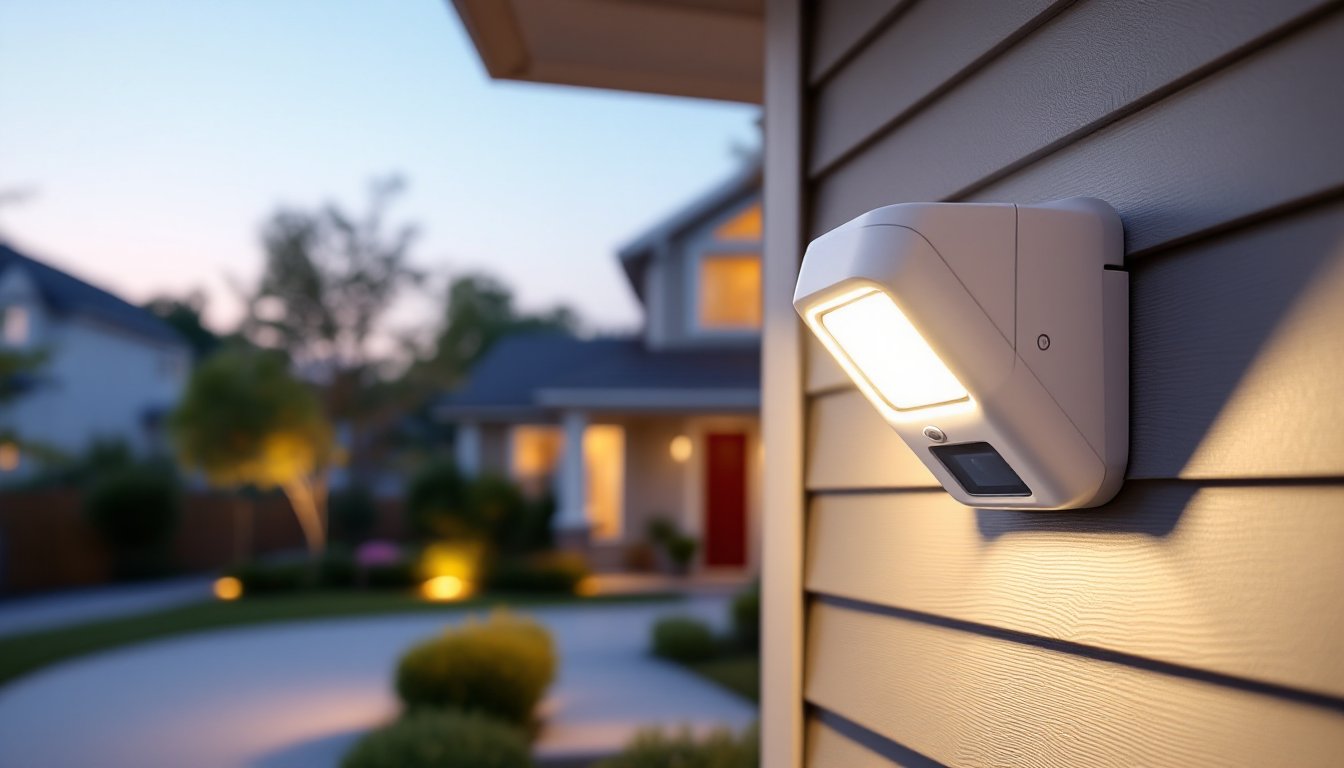
Motion-activated outdoor lighting isn’t just about convenience, it’s about security, energy savings, and making a home’s exterior functional after dark. Whether someone’s unloading groceries at midnight or deterring prowlers, motion sensors transform dumb fixtures into responsive safety tools. The technology has evolved far beyond the flickering, over-sensitive floodlights that plagued yards in the ’90s. Modern motion sensors offer adjustable sensitivity, customizable timers, and integration with smart home systems. This guide breaks down how they work, which types suit different applications, and what features actually matter when wiring up a safer, smarter outdoor lighting system.
Table of Contents
ToggleKey Takeaways
- A motion sensor for outdoor lighting detects infrared radiation or microwave signals to automatically trigger lights when movement is detected, enhancing security by startling intruders and signaling occupancy.
- Motion-activated outdoor lighting reduces energy consumption by 80% or more compared to always-on fixtures, with LED bulbs consuming only 8–12 watts while saving $30–40 annually per light.
- Passive Infrared (PIR) sensors are the most common and affordable option ($15–30) for residential applications, offering low power draw and minimal false triggers in typical coverage areas up to 40 feet.
- Proper installation at 6–10 feet high with a 15–20 degree downward angle, away from heat sources and reflective surfaces, is critical for reliable motion sensor performance and coverage.
- Choose sensors with adjustable sensitivity, timer duration of at least 30 seconds to 10 minutes, lux adjustment for daylight detection prevention, and IP65+ weather resistance for outdoor durability.
- Dual-technology sensors combining PIR and microwave detection dramatically reduce false activations in large areas or challenging environments, though they cost more ($40–80) and suit commercial or high-security applications.
What Is a Motion Sensor for Outdoor Lighting and How Does It Work?
A motion sensor for outdoor lighting is an electronic device that detects movement within a defined area and triggers connected lights to turn on automatically. Most sensors operate by monitoring changes in infrared radiation, microwave frequencies, or a combination of both.
Passive Infrared (PIR) sensors, the most common type, detect heat signatures from warm bodies moving through their field of view. When a person, vehicle, or animal crosses the sensor’s coverage zone, the shift in infrared radiation triggers the light. PIR sensors don’t emit energy: they passively monitor what’s already present, making them energy-efficient and reliable in most residential applications.
The sensor unit typically includes a detection module, a timer circuit, and a relay or solid-state switch that controls power to the light fixture. Key adjustable parameters include sensitivity (how much motion triggers activation), duration (how long the light stays on after detecting movement), and lux level (the ambient light threshold that prevents daytime activation).
Installation locations matter. Sensors work best when mounted 6–10 feet high and angled slightly downward to cover walkways, driveways, or entry points. Avoid aiming them directly at heat sources like HVAC vents, reflective surfaces, or busy streets where passing traffic causes false triggers.
Key Benefits of Installing Motion Sensor Outdoor Lights
Motion sensor lights deliver measurable advantages beyond the novelty of hands-free operation.
Enhanced security tops the list. Studies show that well-lit exteriors deter opportunistic break-ins. A sudden flood of light startles intruders and signals occupancy, even when no one’s home. Motion activation is more effective than always-on lighting because the sudden change draws attention, from neighbors, passersby, and anyone casing the property.
Energy savings add up quickly. A standard 60-watt incandescent bulb burning all night consumes about 0.72 kWh daily: over a year, that’s roughly 263 kWh, or $30–40 depending on local rates. Motion sensors reduce runtime to minutes per day instead of hours, cutting energy use by 80% or more. Pair them with LED bulbs (8–12 watts for equivalent brightness), and the savings compound.
Convenience isn’t trivial. Fumbling for keys in the dark, navigating uneven steps, or hauling garbage bins at dusk all become safer when lights trigger automatically. Motion sensors eliminate the need to remember switches or install timers that don’t adapt to seasonal daylight shifts.
Extended bulb life follows naturally from reduced runtime. LEDs rated for 25,000 hours last decades when only active a few minutes daily, versus a few years under constant use. Fewer replacements mean less ladder work and lower long-term costs.
Types of Motion Sensors: Which Technology Is Right for Your Home?
Not all motion sensors operate the same way. Understanding the differences helps match technology to application.
Passive Infrared (PIR) Sensors
PIR sensors dominate residential outdoor lighting because they balance performance, cost, and energy efficiency. They detect infrared radiation emitted by warm objects, people, pets, vehicles, and ignore static background heat.
Strengths include low power draw, minimal false triggers from wind-blown foliage, and affordable pricing (units start around $15–30). PIR sensors work well in temperate climates and typical residential coverage areas up to 40 feet.
Weaknesses surface in extreme conditions. Cold weather reduces detection range because the temperature differential between a warm body and frigid air shrinks. Direct sunlight heating walls or pavement can create false positives. PIR sensors also struggle with motion directly toward or away from the unit, they detect best when movement crosses the field of view laterally.
Best applications: front porches, garage entries, side yards, and any location where human traffic follows predictable paths.
Microwave and Dual-Technology Sensors
Microwave sensors emit continuous low-power radio waves and measure reflections bouncing back. When something moves within range, the frequency shift (Doppler effect) triggers activation. Unlike PIR, microwave sensors detect motion in any direction, penetrate lightweight materials like glass or thin wood, and maintain performance regardless of temperature.
The tradeoff? Higher false trigger rates. Microwave sensors can “see” through walls, picking up activity from neighboring yards or passing cars. They also consume slightly more power.
Dual-technology sensors combine PIR and microwave detection, requiring both to register motion before triggering lights. This dramatically reduces false activations but can delay response slightly and costs more, typically $40–80 per unit.
Best applications: large open areas like driveways or parking pads where coverage needs exceed 40 feet, or locations plagued by false triggers from wildlife or environmental factors. Dual-tech sensors suit commercial settings or high-security residential applications where reliability justifies the premium.
Essential Features to Look for When Choosing a Motion Sensor
Not all motion sensor units deliver equal performance. Key features separate reliable workhorses from frustrating compromises.
Adjustable sensitivity lets users fine-tune detection thresholds. Set it too high, and squirrels trigger the lights: too low, and people must wave their arms to get noticed. Quality sensors offer dial or app-based controls spanning small pets to vehicles.
Timer duration settings control how long lights remain on after detecting motion. Typical ranges span 30 seconds to 10 minutes. Shorter durations save energy: longer periods suit task lighting for unloading vehicles or completing outdoor chores. Look for units with at least three timer increments.
Lux adjustment (photocell threshold) prevents lights from activating during daylight. This extends bulb life and avoids wasted energy. Better sensors allow users to set the activation threshold, useful when preferring lights trigger at dusk versus full darkness.
Detection range and angle define coverage area. Residential sensors typically cover 20–50 feet in a 90–180-degree arc. Corner-mount units with 180–270-degree coverage eliminate blind spots. Match the sensor’s specs to the actual coverage needed, oversized range invites false triggers from adjacent properties.
Weather resistance ratings matter outdoors. Look for IP65 or higher (dust-tight, protected against water jets). Cheaper sensors with IP44 ratings fail within a year in wet climates.
Manual override options let users force lights on or off regardless of motion detection, helpful when working outside for extended periods or troubleshooting installation.
Smart home integration isn’t essential but adds flexibility. Wi-Fi or Z-Wave compatible sensors enable remote control, scheduling, and integration with security systems. Expect to pay $60–120 for smart-enabled units versus $15–40 for standalone models.
Installation Tips for Maximum Performance and Coverage
Proper installation determines whether a motion sensor works flawlessly or triggers randomly, or not at all.
Mounting height and angle significantly affect performance. Install sensors 6–10 feet above grade, angled downward 15–20 degrees to cover walkways and entry zones. Mounting too high reduces sensitivity to small movements: too low invites tampering and limits range.
Avoid heat sources and reflective surfaces. Don’t aim PIR sensors at HVAC exhausts, dryer vents, hot chimneys, or metal garage doors that absorb and radiate heat. Position them away from windows and glass doors where indoor heat creates false readings.
Test coverage before final wiring. Most sensors include a test mode that keeps lights on briefly after each trigger. Walk the coverage area to confirm detection across entry paths. Adjust angle and sensitivity as needed before sealing junction boxes.
Electrical requirements vary. Standalone motion sensor fixtures wire directly to existing outdoor junction boxes using standard 120V AC wiring (black hot, white neutral, green or bare ground). Follow NEC Article 410 guidelines for outdoor fixture installation, ensuring weatherproof boxes and proper conduit. If replacing an existing fixture, confirm the box is rated for the new fixture’s weight.
Retrofit motion sensor switches install inside existing wall boxes and convert any outdoor light to motion-activated. These require a neutral wire (white), which older homes sometimes lack in switch boxes. Check local codes, some jurisdictions require GFCI protection for outdoor lighting circuits.
PIR sensor placement for maximum coverage: mount in corners to monitor two perpendicular walls, position above and to one side of doors (not directly above where someone stands), and avoid aiming across open lawn areas where wind-blown debris causes false positives.
Safety reminders: Shut off power at the breaker before any wiring work. Use a non-contact voltage tester to confirm circuits are dead. Outdoor electrical work typically requires permits in most jurisdictions, check with local building departments before running new circuits or replacing service-rated components. Wear safety glasses when drilling mounting holes in siding or masonry. If working above 8 feet or dealing with service-entrance conductors, hire a licensed electrician.