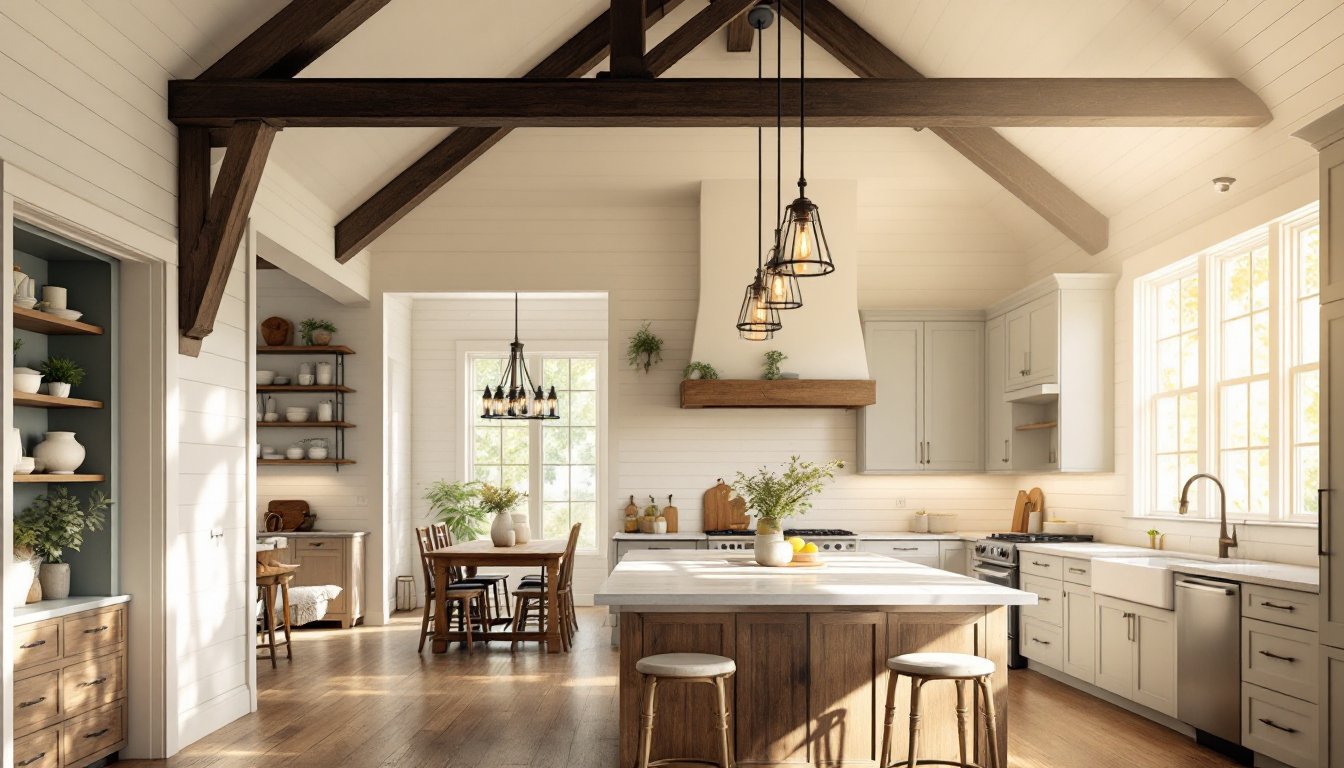
Farmhouse kitchen lighting blends practical function with timeless style, think exposed bulbs, wrought iron frames, and fixtures that look like they’ve been pulled from a vintage barn. But choosing the right lights for a modern farmhouse kitchen means more than grabbing something rustic off the shelf. It requires understanding how fixture types, materials, and placement work together to create both task lighting and ambiance. Whether remodeling a century-old home or adding character to new construction, the right lighting sets the tone for the entire space.
Table of Contents
ToggleKey Takeaways
- Farmhouse kitchen lighting combines rustic aesthetics with practical functionality, featuring exposed bulbs, wrought iron frames, and weathered finishes that prioritize durability and timeless style.
- Pendant lights should be hung 30–36 inches above countertops and sized 12–15 inches in diameter for proper visual weight, with 2–3 pendants spaced 24–30 inches apart over standard islands.
- Kitchen layout dictates fixture placement—islands suit dramatic farmhouse pendants, galley kitchens need centered flush or semi-flush lights with under-cabinet task lighting, and open-concept spaces benefit from combined pendants, chandeliers, and recessed lighting.
- Warm color temperatures (2700K–3000K) complement farmhouse kitchens best, while oil-rubbed bronze and matte black finishes hide fingerprints and age gracefully without looking overly distressed.
- Verify that electrical boxes are properly rated for fixture weight (ceiling fan-rated boxes support 70–90 pounds for heavier farmhouse chandeliers), and ensure wooden components are sealed to prevent warping in humid kitchen environments.
- A total of 5,000–7,500 lumens is needed for a 100–150 square foot kitchen, achieved through a combination of statement fixtures, under-cabinet lighting, and ambient ceiling lights rather than relying on any single light source.
What Defines Farmhouse Kitchen Lighting Style?
Farmhouse lighting draws from rural, agricultural aesthetics, fixtures that prioritize durability and simplicity over ornate decoration. The style evolved from utilitarian farm buildings where lighting needed to be functional first, decorative second.
Key characteristics include exposed Edison bulbs, metal cages or wire frames, weathered wood accents, and finishes like matte black, oil-rubbed bronze, or galvanized steel. Unlike industrial lighting (which leans heavily on raw metal and factory elements), farmhouse fixtures often incorporate softer touches: seeded glass shades, distressed paint, or mason jar-inspired designs.
Authentic farmhouse lighting avoids high-gloss chrome or sleek minimalism. Instead, it embraces visible hardware, hand-forged details, and a slightly worn or aged appearance. That doesn’t mean fixtures should look damaged, quality farmhouse lights are built to last, but they shouldn’t look mass-produced or overly polished.
Modern farmhouse lighting (a popular 2026 trend) merges these traditional elements with cleaner lines and contemporary finishes. It might pair a classic barn-style pendant with matte white powder coating, or combine shiplap-inspired backplates with integrated LED technology. The result feels fresh but rooted in history.
When evaluating fixtures, look for proportions that feel substantial without being clunky. Farmhouse kitchens often have higher ceilings (8–10 feet or more), so undersized fixtures disappear visually. A pendant over an island should be at least 12–15 inches in diameter for proper visual weight.
Best Types of Farmhouse Kitchen Light Fixtures
Pendant Lights and Chandeliers
Pendant lights are the workhorses of farmhouse kitchen lighting, especially over islands and dining areas. They provide focused task lighting while serving as visual anchors. For a standard 6–8 foot island, installing two to three pendants spaced 24–30 inches apart (measured center to center) creates balanced illumination.
Hang pendants 30–36 inches above the countertop to avoid head bonks while maintaining adequate light spread. If the homeowner is particularly tall (over 6’2″), add another 2–3 inches. For ambient lighting rather than task-focused work, raise them slightly higher.
Popular farmhouse pendant styles:
- Barn pendants: Metal shades with downward-facing light, often with gooseneck arms. Classic for sink areas.
- Cage or basket pendants: Wire frames surrounding Edison bulbs. These cast interesting shadows and work well in multiples.
- Seeded glass globes: Textured glass diffuses light softly while maintaining a vintage feel.
- Wooden beam chandeliers: Horizontal beams with multiple pendant drops, ideal for longer islands (8+ feet).
Chandeliers work best over kitchen tables or in larger open-concept spaces where the kitchen flows into a dining area. A five- to six-light chandelier with wagon wheel or candelabra styling provides both uplight and downlight. Size it so the diameter is roughly half the width of the table, a 4-foot table calls for a 24-inch chandelier.
Wire chandeliers on a dimmer switch. Task lighting needs full brightness during meal prep, but lower levels create better ambiance for dining. Standard incandescent dimmers won’t work with all LED bulbs: check compatibility or use a universal dimmer rated for LED loads.
Flush Mount and Semi-Flush Ceiling Lights
Flush mount fixtures sit directly against the ceiling, while semi-flush mounts hang 4–12 inches down on a short stem. Both are essential for kitchens with 8-foot ceilings or areas where pendants would obstruct movement, think narrow galleys or in front of upper cabinets.
Farmhouse flush mounts typically feature drum shades in linen or burlap, metal frames with vintage Edison bulbs visible through clear glass, or painted metal in distressed finishes. Semi-flush designs might include small cage frames or schoolhouse glass globes.
These fixtures won’t provide enough light for an entire kitchen on their own. They’re best used in combination with under-cabinet lighting, recessed cans, or pendants. A 100–150 square foot kitchen needs roughly 5,000–7,500 lumens total (about 50 lumens per square foot for task areas, 30 for ambient zones).
For ceiling boxes located in the center of the room but not over the island, a semi-flush mount provides general illumination without competing visually with statement pendants elsewhere. Choose fixtures with multiple bulb sockets (three to five) for better light distribution, or pair with LED bulbs that offer 800+ lumens per bulb.
How to Choose the Right Farmhouse Lighting for Your Kitchen Layout
Kitchen layout dictates fixture placement more than aesthetics. Start by identifying work zones: prep/cook areas, cleanup (sink), and dining or gathering spaces. Each needs appropriate lighting levels and fixture types.
Galley kitchens (two parallel counters) work best with a single row of flush or semi-flush ceiling lights down the center, supplemented by under-cabinet task lighting. Pendants don’t fit well here unless ceilings are 9+ feet and the galley is wide enough (5+ feet) to avoid head clearance issues.
L-shaped or U-shaped layouts benefit from pendants over any peninsula or partial island, plus recessed lighting or track lights over perimeter counters. If there’s a kitchen table in one corner, add a chandelier or cluster of smaller pendants above it.
Open-concept kitchens with islands are ideal for dramatic farmhouse lighting. Use 2–3 large pendants over the island (spacing noted earlier), a chandelier over the adjacent dining table, and recessed cans for general ambient light. Make sure pendant placement doesn’t block sightlines between the kitchen and living areas, raise fixtures or use open cage designs that don’t obstruct views.
Ceiling height affects fixture scale and hanging length. For ceilings above 9 feet, add 3 inches of hanging length per additional foot of ceiling height. A fixture hung 30 inches over a counter at 8-foot ceilings should hang 36 inches at 10-foot ceilings to maintain proper visual proportion.
Electrical box placement is often the limiting factor. If the existing box is off-center or in an awkward spot, a licensed electrician can add new boxes, but this requires opening the ceiling and possibly rerouting wiring. In older homes, verify that wiring is up to current NEC (National Electrical Code) standards before hanging heavy chandeliers. Boxes must be rated for the fixture’s weight: standard retrofit boxes are rated for 50 pounds, but many farmhouse chandeliers with wood beams exceed that. Use a ceiling fan-rated box (supports up to 70–90 pounds) for heavier fixtures.
Consider color temperature when selecting bulbs. Farmhouse kitchens typically use 2700K–3000K (warm white) to complement wood tones and create a cozy atmosphere. Cooler temperatures (3500K+) feel too clinical and clash with rustic finishes.
Popular Materials and Finishes for Farmhouse Kitchen Lights
Material choice affects durability, maintenance, and how well fixtures age over time. Farmhouse lighting leans on a few core materials, each with practical trade-offs.
Wrought iron and steel are the most common metals for farmhouse fixtures. They’re durable, easy to shape into scrollwork or cage designs, and accept powder coating or distressed finishes well. Oil-rubbed bronze and matte black are top finish choices, they hide fingerprints and light scratches better than glossy or brushed metals. Steel rusts if the finish chips, so inspect fixtures near sinks or high-humidity areas annually.
Galvanized steel (metal coated with zinc) offers built-in rust resistance and has an authentic barn aesthetic. The finish is slightly textured and develops a patina over time. It’s ideal for wet areas like over the sink.
Wood elements, beams, backplates, or canopies, add warmth but require proper sealing. Most farmhouse fixtures use pine, reclaimed barn wood, or engineered wood. Unsealed wood can warp in kitchens with fluctuating humidity. Check that wooden components are sealed with polyurethane or similar coating, especially if the fixture hangs near a range or dishwasher.
Glass shades come in several farmhouse-appropriate styles: seeded glass (bubble texture), clear glass (shows off Edison bulbs), and frosted or milk glass (softens glare). Seeded glass is harder to clean, dust settles in the texture, but it diffuses light beautifully. Clear glass requires decorative bulbs since everything inside is visible.
Finish mixing is acceptable in modern farmhouse design. Pairing matte black metal with warm brass accents or combining galvanized pendants with oil-rubbed bronze cabinet hardware creates visual interest without clashing, as long as the overall color temperature (warm vs. cool tones) stays consistent.
Avoid overly distressed or “shabby chic” finishes that look artificially aged. Quality farmhouse lighting should feel honest, metal that looks like metal, wood that looks like wood. If a finish is meant to mimic rust or weathering, it should be subtle, not theatrical.
Conclusion
Farmhouse kitchen lighting succeeds when it balances character with function. Choosing the right fixtures means matching style to layout, selecting materials that withstand kitchen conditions, and placing lights at heights and spacing that actually illuminate work zones. Start with the kitchen’s structure, island length, ceiling height, and electrical box locations, and build the lighting plan from there. The best farmhouse lighting feels intentional, not decorative afterthought.