Mid century modern design has made a roaring comeback, and nowhere is it more impactful than in the bathroom. The right lighting can transform a dated space into a sleek, retro-inspired retreat. Mid century modern bathroom lighting blends form and function with clean lines, geometric shapes, and materials like brass, glass, and matte black metal. These fixtures deliver both ambient and task lighting while serving as statement pieces. Whether renovating a full bath or updating a powder room, choosing the right fixtures means understanding what makes this style distinct, and how to apply it without turning the space into a museum piece.
Table of Contents
ToggleKey Takeaways
- Mid century modern bathroom lighting features clean lines, geometric shapes, and warm metals like brushed brass and matte black to create a balanced aesthetic that is both sculptural and functional.
- Proper placement is critical: vanity sconces should mount at 60-66 inches from the floor and spaced 36-40 inches apart, while pendant lights need 30-36 inches clearance above countertops and adequate ceiling height to avoid cramped spaces.
- Bathrooms require 70-80 lumens per square foot for task areas, making LED bulbs ideal for achieving the necessary 3,500-4,000 lumens in a 50-square-foot space without excessive heat or energy use.
- Choose warm white bulbs (2700K-3000K) and verify fixtures are rated for damp locations with an IP44 rating if installed within three feet of water sources to ensure safety and longevity.
- Coordinate mid century modern bathroom lighting with supporting elements like floating vanities, geometric tile, frameless mirrors, and consistent metal finishes to create an authentic, cohesive design.
- Avoid over-theming by mixing vintage-inspired fixtures with modern functionality like LED technology, heated floors, and contemporary plumbing for a bathroom that feels curated rather than costume-like.
What Defines Mid Century Modern Bathroom Lighting?
Mid century modern lighting emerged in the 1940s through 1960s, characterized by minimalist design, organic shapes, and an emphasis on functionality. The style rejects ornate detailing in favor of simple geometry, spheres, cones, cylinders, and starburst patterns.
Key materials include brushed brass, aged bronze, matte black steel, opal glass, and occasionally wood accents. Finishes tend toward warm metals rather than polished chrome, though satin nickel works in certain applications. Glass shades are typically frosted or opal white to diffuse light evenly, avoiding the harsh glare of exposed bulbs.
Authentic mid century fixtures often feature exposed bulbs with minimal shading, articulating arms, or geometric cages. Think Sputnik-style multi-arm designs scaled down for bathroom use, or simple globe pendants with brass fittings. The design philosophy prioritizes clean lines and symmetry while allowing materials to speak for themselves.
In bathrooms, this translates to fixtures that provide adequate illumination for grooming tasks without sacrificing style. Unlike traditional bathroom lighting that often leans utilitarian or overly decorative, mid century pieces strike a balance, they’re sculptural without being fussy, and practical without being boring.
Best Types of Mid Century Modern Bathroom Light Fixtures
Vanity Lights and Sconces
Vanity lighting is critical in bathrooms, and mid century design offers several approaches. Horizontal bar lights with multiple globe or cone shades remain a classic choice. These typically mount above the mirror and provide even illumination across the face, minimizing shadows during grooming tasks.
For a more authentic period look, dual sconces flanking the mirror deliver better shadow reduction than overhead lighting alone. Mount them at 60-66 inches from the floor (roughly eye level) and space them 36-40 inches apart for optimal coverage on a standard vanity. Choose sconces with opal glass globes or conical metal shades in brass or matte black.
Articulating arm sconces add functionality, allowing users to adjust light direction as needed. These work especially well in smaller bathrooms or powder rooms where a single fixture must serve multiple purposes.
When selecting vanity lights, verify the fixture is rated for damp locations (required for bathrooms). Check the IP (Ingress Protection) rating if installing near a shower or tub, fixtures within three feet of a water source should have at least an IP44 rating.
Pendant Lights and Chandeliers
Pendant lights and small chandeliers bring drama to bathrooms with higher ceilings or separate vanity areas. Single globe pendants with brass or black hardware work well above freestanding tubs, while mini Sputnik chandeliers (typically 12-18 inches in diameter) can center a master bath or hang above a vanity island.
Mounting height matters: pendant lights should hang 30-36 inches above a countertop or vanity surface, and at least 7 feet above the finished floor in walkways to meet building codes and prevent head strikes.
Pendants require adequate ceiling height, at least 8 feet, preferably 9 feet or more, to avoid a cramped feeling. In standard 8-foot bathrooms, stick with flush-mount or semi-flush ceiling fixtures in mid century styles: look for designs with brass or wood accents and opal or frosted glass diffusers.
Consider the lumens output when choosing decorative fixtures. Bathrooms need 70-80 lumens per square foot for task areas. A 50-square-foot bathroom requires roughly 3,500-4,000 lumens total from all fixtures combined. LED bulbs have made this easier, a single 9-12 watt LED produces 800-1,100 lumens, equivalent to old 60-75 watt incandescent bulbs.
How to Choose the Right Fixtures for Your Bathroom
Start by assessing the bathroom’s size and layout. Small powder rooms (under 30 square feet) typically need only one or two fixtures, a vanity light or a pair of sconces. Larger master baths may require multiple lighting layers: task lighting at the vanity, ambient lighting overhead, and accent lighting for architectural features or freestanding tubs.
Measure carefully before purchasing. Note the vanity width, mirror dimensions, and ceiling height. For vanity lights, the fixture should span two-thirds to three-quarters of the mirror width for proportional balance. Oversized fixtures overwhelm small spaces: undersized ones look incomplete.
Consider the existing finishes and colors. Brass and warm metals pair naturally with white subway tile, terrazzo, and wood vanities, all mid century staples. Matte black works with monochromatic palettes or colorful geometric tile. Avoid mixing too many metal finishes in one small space: pick one or two and repeat them across fixtures, hardware, and accessories.
Bulb type and color temperature significantly impact the final look. Mid century fixtures often use Edison-style bulbs or globe bulbs that become part of the design. Choose 2700K-3000K (warm white) for a flattering, period-appropriate glow. Avoid cool white (4000K+) unless the bathroom has a lot of natural light and leans modern rather than vintage.
Check whether fixtures are hardwired or plug-in. Most bathroom lighting requires hardwiring and may need an electrician, especially if moving junction boxes or adding circuits. If the existing wiring is aluminum (common in homes built 1965-1973), hire a licensed electrician, aluminum wiring requires special connectors and techniques to meet current NEC standards.
Finally, don’t skip the dimmer switch. Installing a compatible dimmer (LED-rated if using LED bulbs) allows adjustment for different tasks and times of day. It also extends bulb life and saves energy.
Styling Tips to Achieve an Authentic Mid Century Look
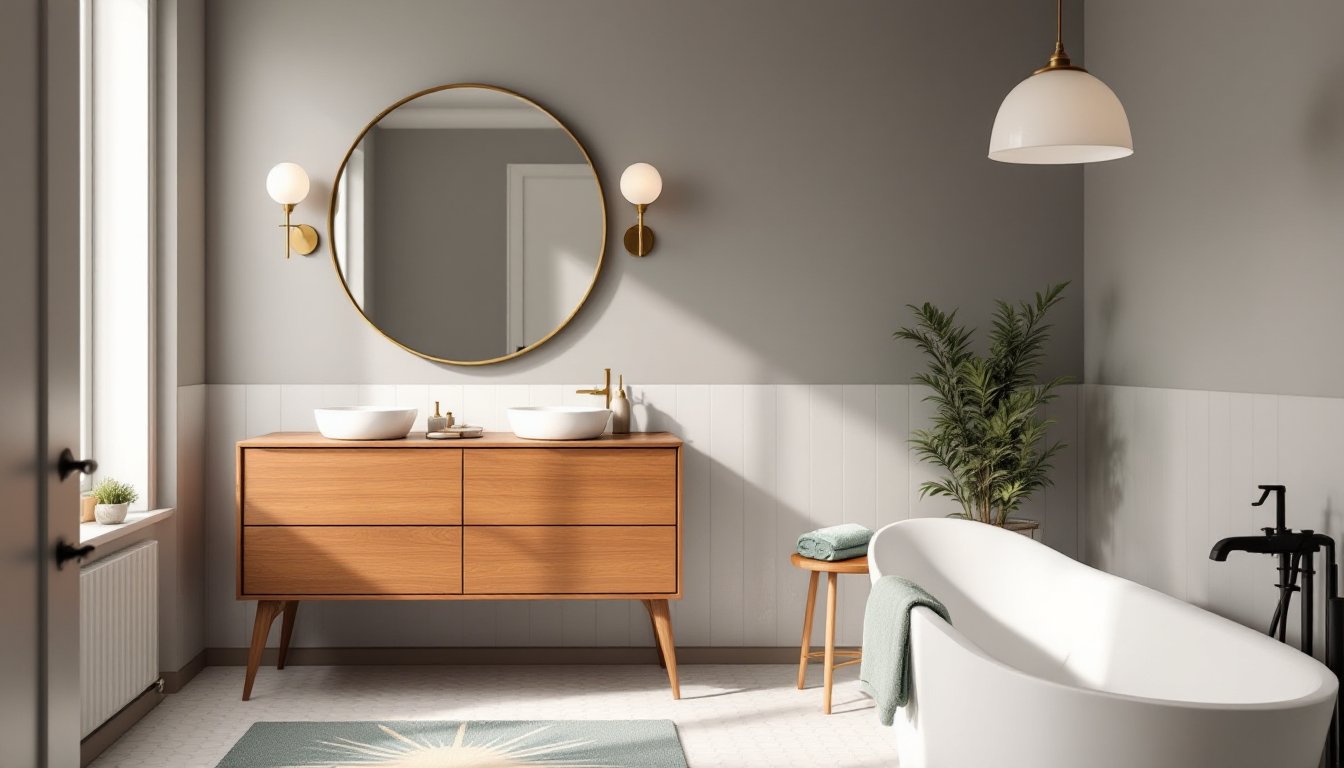
Lighting sets the tone, but the full mid century aesthetic requires supporting elements. Pair fixtures with clean-lined vanities, think tapered wood legs, flat drawer fronts, and minimal hardware. Floating vanities in walnut or teak enhance the period feel while making small bathrooms appear larger.
Geometric tile is a signature mid century element. Hexagon, penny round, or large-format square tiles in white, gray, or muted pastels work well. For boldness, add a feature wall in starburst or atomic-era patterns. Keep grout lines tight and consistent: sloppy tile work ruins the clean aesthetic.
Mirrors should be frameless, round, or rectangular with thin metal frames. Oversized round mirrors in brass or matte black frames are especially popular and complement globe or cone-shaped light fixtures. Mount mirrors 4-6 inches above the vanity backsplash for proper scale.
Incorporate open shelving or shadow boxes for display. Mid century design embraces a lived-in look, neatly arranged toiletries, folded towels, and a few plants (pothos, snake plants, or ferns) add life without clutter.
Paint choices matter. Soft whites, warm grays, sage green, or muted mustard align with mid century palettes. Avoid stark white or cool grays, which lean too contemporary. If using bold color, limit it to one accent wall or lower cabinets.
Hardware should echo the lighting finish. Swap out chrome cabinet pulls and towel bars for brass, bronze, or matte black alternatives. Consistency across metal finishes creates a cohesive, intentional design.
Finally, resist the urge to over-theme. Mid century modern works best when it feels curated, not costumey. Mix vintage-inspired fixtures with contemporary function, heated floors, LED bulbs, modern plumbing, to create a bathroom that’s both stylish and livable.
Conclusion
Mid century modern bathroom lighting combines timeless design with practical function, transforming everyday spaces into stylish retreats. By selecting fixtures with clean lines, warm metals, and geometric shapes, and pairing them with thoughtful finishes and layout, any bathroom can capture that iconic 1950s-60s aesthetic. Focus on proper placement, adequate lumens, and cohesive styling to make the look work in real life, not just in photos.