LED recessed lighting kits have transformed how homeowners approach ceiling lighting. Unlike older incandescent or halogen can lights that required separate housings, trim rings, and bulbs, today’s kits bundle everything needed into one package, housing, integrated LED module, and trim. They’re designed for retrofit installations in existing ceilings or new construction, cutting installation time while delivering decades of energy-efficient light. For DIYers ready to upgrade dated fixtures or add ambient lighting without the guesswork of matching components, LED recessed kits offer a straightforward path. This guide covers what’s inside these kits, how to choose the right ones, and what to watch for during installation.
Table of Contents
ToggleKey Takeaways
- LED recessed lighting kits are all-in-one packages that bundle housing, integrated LED module, and trim, cutting installation time and eliminating the need for separate bulbs or components.
- These kits use 75–80% less energy than halogen alternatives and provide lifespans of 50,000+ hours, reducing both electricity costs and maintenance hassles over decades of use.
- When selecting LED recessed lighting kits, verify IC rating for insulated ceilings, measure ceiling clearance, calculate lumens needed (40–50 per square foot for ambient lighting), and confirm dimmer compatibility to avoid flickering.
- Remodel kits use spring clips for retrofit installations in existing ceilings, while new construction housings attach directly to joists; choosing the wrong type leads to installation failure.
- Common mistakes include ignoring IC ratings, mismatching color temperatures in the same room, overlooking ceiling depth, and neglecting moisture ratings in bathrooms or exterior areas.
- Turn off power at the breaker, use painter’s tape to mark fixture locations spaced 4–6 feet apart, fish power carefully, and test each fixture before finishing to ensure proper operation.
What Are LED Recessed Lighting Kits?
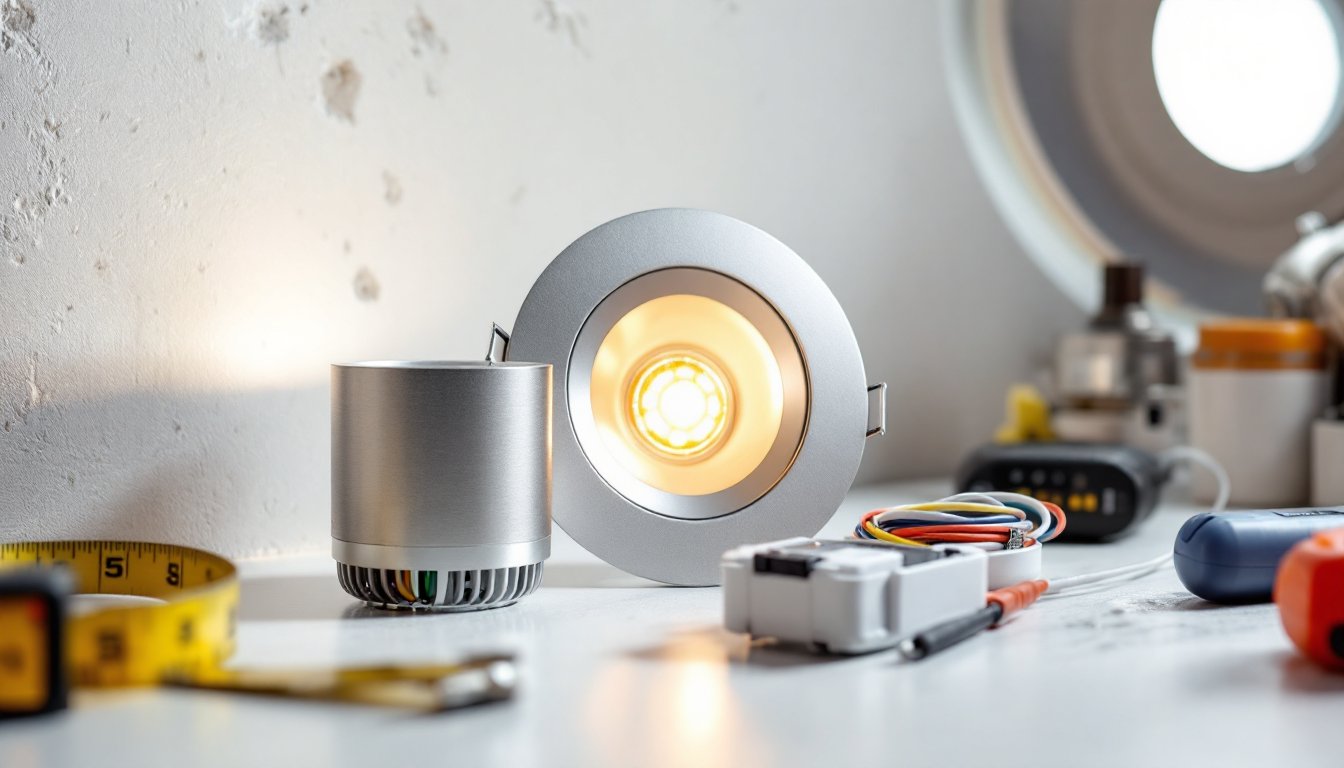
An LED recessed lighting kit is an all-in-one package that includes the housing (the canister that sits above the ceiling), an integrated LED light module, and the trim (the visible ring or baffle at ceiling level). The key difference from traditional recessed lighting is that the LED is built into the fixture, there’s no separate bulb to replace.
Most kits come in standard sizes: 4-inch, 5-inch, or 6-inch diameter openings. The housing may be IC-rated (safe for direct contact with insulation) or non-IC, and it’ll specify whether it’s suitable for remodel (retrofit into existing ceilings) or new construction (installed before drywall goes up).
Remodel kits use spring clips or toggle brackets that grab the drywall from above, eliminating the need to access the ceiling cavity from below. New construction housings nail or screw directly to joists. Some kits are designed for both applications.
The integrated LED module typically has a rated lifespan of 50,000 hours or more, roughly 25 years at three hours per day. When the LED eventually dims, the entire module is replaced, not just a bulb. Most kits include a junction box built into the housing for hardwiring to house circuits.
Key Benefits of LED Recessed Lighting Kits
Energy efficiency tops the list. LED recessed kits use 75–80% less energy than equivalent halogen cans. A 12-watt LED kit produces the same lumens as a 65-watt incandescent, slashing electricity costs over the fixture’s lifetime.
Reduced heat output makes them safer around insulation and wooden framing. Halogen cans can reach 300°F: LEDs stay cool to the touch within minutes of operation, lowering fire risk and reducing HVAC load in summer.
Longevity means fewer ladder trips. With lifespans measured in decades, homeowners avoid the hassle and cost of frequent bulb replacements, especially valuable in high ceilings or hard-to-reach areas.
Dimming and color control are often built in. Many kits work with standard dimmers (check compatibility, not all do), and color-selectable models let users toggle between 2700K warm white, 3000K soft white, and 4000K cool white via a switch on the fixture, adapting to room function without changing hardware.
Slim profiles suit shallow ceiling cavities. Some ultra-thin kits require less than 2 inches of clearance above the drywall, making them ideal for installations where ductwork or joists limit space.
Simpler installation compared to piecing together housings, trims, and bulbs separately. The kit arrives pre-wired and ready to mount, reducing errors and cutting install time by half.
Types of LED Recessed Lighting Kits Explained
Remodel vs. New Construction
Remodel (retrofit) kits are designed for existing ceilings. They feature clips or brackets that secure the housing by gripping the drywall from above. Installers cut a hole, fish power to the location, and push the fixture into place, no attic access required.
New construction kits have adjustable metal bars that span between joists. They’re screwed or nailed in place before drywall installation. These are the choice for ground-up builds or major renovations where ceiling framing is exposed.
IC-Rated vs. Non-IC
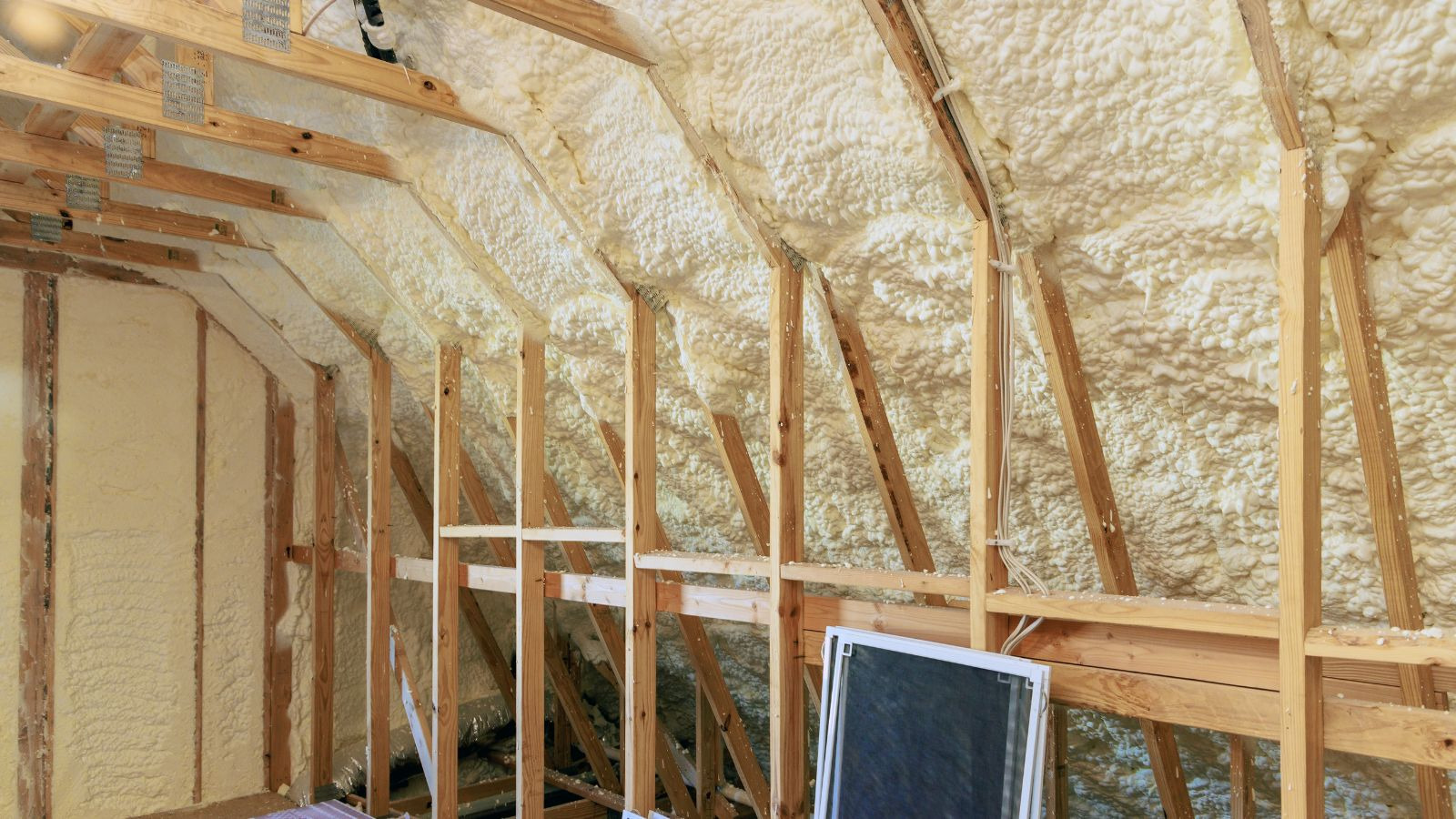
IC-rated housings can be covered with insulation without overheating. This is essential in insulated ceilings to maintain energy efficiency. Non-IC housings require a 3-inch clearance from insulation, creating thermal gaps that waste energy.
Fixed vs. Adjustable (Gimbal)
Fixed downlights aim straight down, ideal for general ambient lighting. Adjustable or gimbal kits have a pivoting inner ring that tilts up to 30–40 degrees, letting users aim light at walls, artwork, or specific task areas.
Standard vs. Slim (Wafer)
Wafer kits are ultra-thin units, often under 1 inch thick, that mount directly to the drywall using a slim junction box. They’re perfect for shallow ceilings but typically lack the light output and beam control of full-depth housings.
Color Temperature Options
Some kits offer selectable color temperature, with a toggle switch on the fixture or a remote to shift between warm and cool white. Others are fixed at one color temp, choose based on room use and preference.
How to Choose the Right LED Recessed Lighting Kit for Your Space
Start with ceiling type. For retrofit jobs in finished rooms, a remodel kit is non-negotiable. New construction or open-ceiling scenarios call for housings that attach to framing.
Check clearance above the ceiling. Measure the space between drywall and any obstructions, joists, ducts, or roofing. Full-depth housings need 5–7 inches: wafer kits work in as little as 1.5–2 inches.
Confirm IC rating if insulation is present. Code often requires it, and skipping this detail leads to overheating or fire hazards.
Lumens determine brightness. For general ambient lighting, aim for 40–50 lumens per square foot. A 120-square-foot room needs roughly 4,800–6,000 lumens total. A 750-lumen kit means six to eight fixtures. Task areas like kitchens benefit from higher output, 1,000+ lumens per fixture.
Color temperature affects mood. 2700K is warm and cozy (living rooms, bedrooms): 3000K is neutral and versatile (kitchens, bathrooms): 4000K is crisp and focused (garages, workshops). Selectable kits offer flexibility if unsure.
Dimming compatibility requires checking specs. Not all LED kits dim smoothly: some flicker or won’t go below 20%. Look for kits labeled compatible with standard TRIAC or ELV dimmers.
Beam angle shapes light distribution. Narrow beams (25–35 degrees) create focused spots: wide beams (80–110 degrees) spread light evenly for ambient coverage. Most residential kits default to 80–90 degrees.
Wet or damp ratings matter in showers, soffits, or covered patios. Standard housings aren’t rated for moisture exposure.
Installation Tips for LED Recessed Lighting Kits
Safety First
Turn off power at the breaker and verify it’s dead with a non-contact voltage tester. Wear safety glasses and gloves when cutting drywall or handling wiring.
Plan Fixture Placement
Space fixtures 4–6 feet apart for even ambient light. Keep them 24–30 inches from walls to avoid shadowing and hot spots. Use painter’s tape to mark locations before cutting.
Cut the Ceiling Opening
Most kits include a template. Trace it on the ceiling, then cut with a drywall saw or hole saw (a 6-inch hole saw for 6-inch kits). Work slowly near joists or wiring to avoid accidental damage.
Fish and Connect Power
Remodel jobs often require fishing 14/2 or 12/2 NM cable from an existing junction box or switch. Use a fish tape or flexible drill bit for long runs. Strip wire ends and connect to the fixture’s junction box using wire nuts, black to black (hot), white to white (neutral), bare copper to ground. Some kits use push-in connectors instead.
Secure the Housing
For remodel kits, push the housing into the ceiling opening until mounting clips engage the drywall. Tighten any screws to lock it in place. New construction housings attach to joists with nails or screws per manufacturer instructions.
Test Before Finishing
Restore power and test each fixture. Confirm dimming works if applicable, and check for flickering. If problems arise, verify dimmer compatibility and wire connections.
When to Call a Pro
If the project involves adding new circuits, upgrading the electrical panel, or working in uninsulated attics with limited clearance, hire a licensed electrician. Most jurisdictions require permits for new circuits, and improper wiring creates fire hazards.
Common Mistakes to Avoid When Buying LED Recessed Lighting Kits
Ignoring IC rating is the top error. Non-IC housings in insulated ceilings create code violations and energy loss. Always verify the rating matches ceiling conditions.
Overlooking ceiling depth leads to kits that don’t fit. Measure clearance before ordering, returns are a hassle, especially after cutting holes.
Mismatched color temperatures create an uneven look. Mixing 2700K and 4000K fixtures in the same room feels disjointed. Stick to one temp or buy selectable kits for consistency.
Skipping dimmer compatibility checks results in flickering or non-functional dimmers. Confirm the kit works with the dimmer type (TRIAC, ELV, or 0–10V) before purchase.
Buying too few lumens leaves rooms dim and uninviting. Calculate total lumens needed and divide by fixture output to determine quantity. It’s easier to dim overly bright lights than compensate for insufficient coverage.
Choosing fixed downlights for accent tasks limits functionality. If highlighting art or task areas is the goal, gimbal kits offer flexibility fixed lights can’t match.
Neglecting moisture ratings in bathrooms or exterior soffits risks early failure. Check for damp or wet location certification where humidity or water exposure is likely.
Conclusion
LED recessed lighting kits simplify upgrades while delivering efficiency and longevity that older systems can’t match. By understanding kit types, selecting appropriate specs for the space, and following installation best practices, homeowners can achieve professional results without the markup. Pay attention to IC ratings, clearance requirements, and dimming compatibility, these details prevent costly missteps. With the right kit and a methodical approach, modern recessed lighting transforms any room into a well-lit, energy-efficient space.