Designer pendant lighting has evolved beyond simple overhead fixtures into focal points that define a room’s character. Unlike mass-market options, designer pendants combine quality materials, intentional engineering, and striking aesthetics that elevate both function and form. Whether updating a dated kitchen island or adding drama to a dining room, choosing the right pendant requires understanding what separates high-quality design from commodity hardware store fixtures. This guide walks through the key considerations, from identifying quality construction to sizing correctly for impact, so homeowners can invest in lighting that performs as well as it looks.
Table of Contents
ToggleKey Takeaways
- Designer pendant lighting is distinguished by craftsmanship, superior materials like hand-blown glass and solid brass, and electrical components with proper UL or ETL certification that ensure durability beyond 10+ years.
- Kitchen designer pendants require 75–100 lumens per square foot of work area with shades that direct light downward, while dining rooms demand scaled fixtures (one-half to two-thirds the table width) hung 30–36 inches above the surface for both function and ambiance.
- Proper sizing uses the room’s length plus width in feet, converted to inches for fixture diameter, and spacing pendants 24–30 inches apart (center to center) over islands ensures even light distribution and visual balance.
- Designer pendant styles dominate in two categories: minimalist/Scandinavian with clean lines and natural materials, and industrial/modern farmhouse with exposed hardware and reclaimed elements, each suited to different interior aesthetics.
- Authentic designer pendant lighting should be purchased from specialty retailers, direct manufacturers, or trade showrooms to verify certifications and avoid counterfeits, with LED-compatible dimmers required to prevent flickering and ensure proper performance.
- Installation requires matching the electrical box to the fixture’s weight, using LED filament bulbs for efficiency, and consulting local codes when relocating electrical boxes or adding new circuits to ensure safety and compliance.
What Makes Pendant Lighting ‘Designer’ Quality?
Designer pendant lighting isn’t just about a higher price tag. It’s defined by craftsmanship, material integrity, and engineering that commodity fixtures skip.
Start with materials. Designer pendants use hand-blown glass, powder-coated steel, solid brass, or sustainably sourced wood rather than thin stamped metal or plastic. The difference is tangible: thicker gauge materials resist denting, finishes hold up to humidity and heat cycles, and components don’t warp or corrode after a year.
Electrical components matter too. Quality fixtures feature UL or ETL-listed electrical assemblies, solid-core wiring, and metal canopies with proper strain relief. Check for adjustable cord or rod lengths, most designer pendants offer customization for ceiling height. Cheaper fixtures use fixed-length cords with no adjustment hardware, limiting placement flexibility.
Designer brands invest in lamp holder quality. Look for ceramic or porcelain sockets rated for higher wattages, not flimsy plastic that melts or cracks. Shades or diffusers should be replaceable: integrated LED units are fine if the brand offers long-term parts support.
Finally, design longevity separates designer pendants from trends. Quality pieces avoid fleeting styles and focus on proportions, scale, and thoughtful details, welded seams instead of glued joints, balanced weight distribution, and shade geometry that controls glare. Homeowners can expect these fixtures to remain relevant for 10+ years, not just match this season’s catalog.
Popular Designer Pendant Lighting Styles for Modern Homes
Designer pendant styles range widely, but two categories dominate residential installations in 2026: minimalist/Scandinavian designs and industrial/modern farmhouse fixtures. Both work across open-concept layouts but require different approaches.
Minimalist and Scandinavian Designs
Minimalist pendants emphasize clean lines, muted tones, and organic materials. Expect to see cone or dome shades in matte white, soft gray, or natural linen. Scandinavian-inspired fixtures often incorporate light wood accents, ash, oak, or beech, paired with metal in brushed brass or matte black.
These fixtures excel in spaces with neutral palettes and uncluttered sightlines. They provide ambient light without visual competition, making them ideal over kitchen islands, breakfast nooks, or entryways. The downside: many minimalist designs lack adjustable shielding, so direct bulb exposure can cause glare. Opt for frosted or opal glass diffusers if the pendant hangs at eye level.
Key features to look for include exposed Edison-style bulbs (use LED filament versions for efficiency), fabric-wrapped cords, and geometric shapes, spheres, cylinders, or asymmetrical forms. These pendants work best in sets of two or three, spaced evenly for visual rhythm.
Industrial and Modern Farmhouse Pendants
Industrial pendants lean into raw materials: aged metal, wire cages, exposed hardware, and reclaimed wood. Modern farmhouse hybrids soften the look with distressed finishes, seeded glass, or galvanized steel.
These fixtures suit spaces with exposed beams, shiplap, brick, or concrete. They add texture and contrast, especially in kitchens with white cabinetry or open shelving. Industrial pendants typically direct light downward with barn-style shades or mesh guards, making them practical for task lighting over counters or workbenches.
Watch for weight and mounting requirements. Many industrial-style pendants are heavier than minimalist options. Verify the electrical box is rated for the fixture’s weight: standard plastic boxes support up to 50 pounds, but larger metal fixtures may require a ceiling fan-rated box or additional bracing between joists. If the existing box isn’t adequate, installing a retrofit brace (like an Arlington F101 or similar) is a straightforward fix for accessible attics.
Popular finishes include oil-rubbed bronze, matte black, brushed nickel, and weathered zinc. Pair with warm-temperature LEDs (2700K–3000K) to enhance the vintage aesthetic.
How to Choose the Right Designer Pendant for Each Room
Matching pendants to room function prevents costly mistakes. Kitchens, dining rooms, and living spaces each demand different light output, scale, and placement.
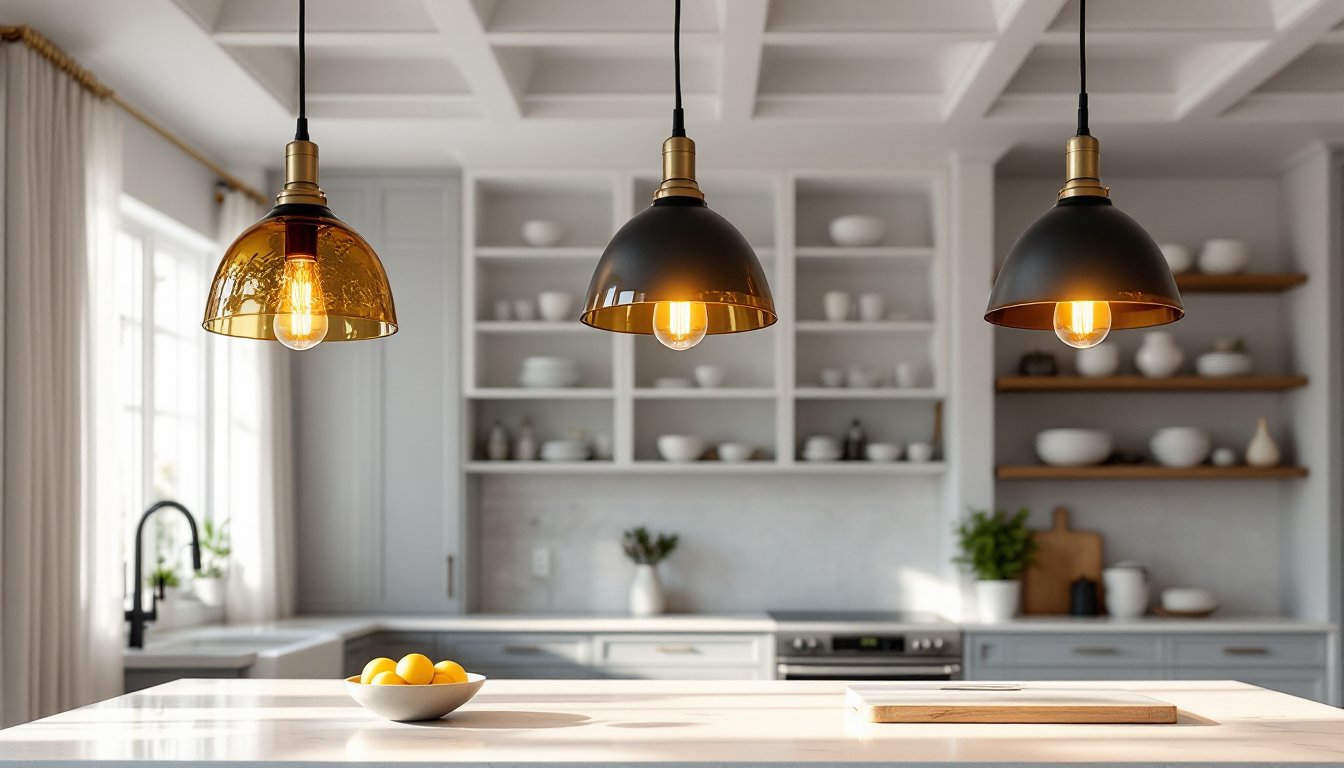
Kitchens: Prioritize task lighting over island counters or prep zones. Designer pendants here should deliver 75–100 lumens per square foot in the work area. For an island that’s 4 feet by 8 feet (32 sq ft), aim for 2,400–3,200 lumens total, split across two or three pendants. Choose shades that direct light downward, metal cones, glass bell jars, or drum shades with bottom diffusers. Avoid open-top pendants that cast shadows on work surfaces.
Dining Rooms: Focus on ambiance and scale. A pendant (or chandelier-style multi-pendant) should be roughly one-half to two-thirds the width of the table for visual balance. For a 36-inch-wide table, a pendant diameter of 18–24 inches works well. Hang the bottom of the fixture 30–36 inches above the tabletop, high enough to avoid head knocks, low enough to create intimacy. Dimmable fixtures are non-negotiable here: install a quality dimmer rated for LED loads if the pendant uses LED bulbs.
Living Rooms and Entryways: Designer pendants in these spaces serve as focal points. Go larger and bolder, statement pieces with sculptural forms, clustered multi-pendants, or oversized single fixtures. In two-story entryways, pendants can hang from heights of 10+ feet: ensure the bottom clears head height (minimum 7 feet from floor to lowest point) and that the fixture remains visible from the main entry angle.
Bathrooms and Hallways: Choose smaller pendants with enclosed shades. Bathrooms require fixtures rated for damp locations (UL Damp or Wet rating, depending on proximity to showers). Hallways benefit from evenly spaced pendants or linear fixtures that guide traffic without overwhelming narrow sightlines.
Installation and Sizing Considerations for Maximum Impact
Proper installation and sizing turn a good pendant into a well-integrated design element. Mistakes here are visible every day.
Sizing: Use the room dimensions to guide fixture size. A common rule: add the room’s length and width in feet, then convert to inches for the fixture diameter. A 12 ft × 14 ft dining room (12 + 14 = 26) suits a pendant around 26 inches in diameter. For multi-pendant installations, divide that total across the number of fixtures.
Spacing matters as much as size. Over a kitchen island, space pendants 24–30 inches apart (center to center) for even light distribution. For linear arrangements, an odd number (three or five) often looks more balanced than pairs.
Mounting and Wiring: Most designer pendants replace an existing ceiling fixture, reusing the same electrical box and wiring. Before starting, shut off power at the breaker and verify with a non-contact voltage tester. If the pendant is heavier than the old fixture, confirm the box is securely fastened, wobbling indicates inadequate support.
Adjustable pendants use a cord, cable, or rod system. Adjust before final installation: cutting cord or chain afterward is easier than adjusting wiring slack inside the canopy. Safety note: Always wear safety glasses when working overhead and use a sturdy ladder or scaffolding, not a chair or stacked boxes.
For pendants requiring dimming, match the dimmer to the bulb type. Standard incandescent dimmers won’t work correctly with LED bulbs, invest in an LED-compatible dimmer (brands like Lutron Diva or Leviton Decora are reliable choices). Flickering or buzzing indicates a mismatch.
Code and Permit Notes: Replacing a fixture on an existing circuit usually doesn’t require a permit, but adding new circuits or relocating electrical boxes does. Check local requirements. If moving a pendant away from an existing box or installing in new construction, hire a licensed electrician or pull the appropriate permit and follow NEC guidelines for box support and wire gauge (typically 14 AWG for 15-amp circuits, 12 AWG for 20-amp).
Where to Buy Authentic Designer Pendant Lighting
Sourcing authentic designer lighting requires knowing where to look and how to verify quality before purchase.
Specialty Lighting Retailers: Stores like YLighting, Lumens, and Design Within Reach stock verified designer brands, Flos, Tom Dixon, Louis Poulsen, Artemide, and offer detailed specs, installation support, and return policies. Prices reflect the quality, but seasonal sales (often 15–20% off) make designer pieces more accessible.
Direct from Manufacturer: Many designers sell through their own sites or authorized dealers. Buying direct ensures authenticity and access to the full catalog, including custom finishes or sizing. Brands like Schoolhouse Electric, Cedar & Moss, and Rich Brilliant Willing offer American-made fixtures with transparent sourcing.
Trade Showrooms: Design trade showrooms (often open to the public or accessible with a designer) stock high-end lines and provide hands-on viewing. Seeing scale, finish, and light quality in person prevents ordering mistakes that photos can’t catch.
Avoiding Counterfeits: Designer lighting knockoffs flood online marketplaces. Red flags include prices far below MSRP, vague product descriptions, and missing UL/ETL certification. Verify seller reputation and check for serial numbers or brand stamps on the fixture. Authentic designer pendants include detailed installation instructions, branded packaging, and warranty cards.
Architectural Salvage and Vintage Dealers: For unique or discontinued designs, salvage yards and vintage lighting specialists offer restored pieces. Ensure any vintage fixture has been rewired to current electrical standards, old cloth wiring and outdated sockets are fire hazards.
Buying designer lighting is an investment, but quality fixtures retain value and performance far beyond mass-market alternatives. Prioritize authorized sources, verify certifications, and don’t compromise on electrical safety for aesthetics.