Low voltage landscape lighting transforms a yard after dark, but when fixtures start flickering, going dim, or not lighting at all, the problem often feels mysterious. The good news? Most low voltage lighting failures trace back to a handful of fixable issues, corroded connections, damaged wire insulation, or an overtaxed transformer. Unlike line-voltage electrical work that demands a licensed electrician, low voltage systems (typically 12V or 24V) are safer and more DIY-friendly. With basic tools and systematic troubleshooting, homeowners can diagnose and repair most problems in an afternoon, saving the cost of a service call and restoring curb appeal before the next evening.
Table of Contents
ToggleKey Takeaways
- Most low voltage landscape lighting repair issues stem from corroded connections, damaged wire insulation, or an overtaxed transformer, and can be diagnosed and fixed by homeowners using basic tools and systematic troubleshooting.
- Start low voltage lighting repair at the power source by testing the transformer output voltage (should read 10–12V for 12V systems), checking wattage load capacity, and verifying the GFCI outlet hasn’t tripped.
- Corroded or loose wire connectors are the most common failure point—inspect all connections, replace them with waterproof silicone-filled wire nuts or heat-shrink connectors, and avoid standard twist-on connectors not rated for wet locations.
- Voltage drop along the cable run can be corrected by shortening the wire run, upgrading to thicker gauge wire (14AWG to 12AWG), or splitting the circuit into two separate transformer runs.
- Call a licensed electrician only for transformer connections inside the breaker panel, repeated GFCI faults, or signs of arcing or burnt components near the main power connection.
- Prevent recurring low voltage landscape lighting failures by using marine-grade heat-shrink connectors, thicker 10AWG wire for long runs, and upgrading to fixtures with better gaskets to resist water intrusion.
Common Signs Your Low Voltage Landscape Lighting Needs Repair
Recognizing the symptoms early makes troubleshooting easier. Here are the telltale signs a low voltage lighting system needs attention:
- Fixtures won’t turn on at all. Complete outage usually points to transformer failure, tripped breaker, or a severed main cable.
- Lights are dim or flickering. Voltage drop from corroded connections, undersized wire gauge, or too many fixtures on one run causes this.
- Some fixtures work, others don’t. Indicates localized issues, bad bulb, damaged socket, or broken wire segment between fixtures.
- Lights turn on briefly, then shut off. Often a sign the transformer is overloaded or overheating due to too much wattage on the circuit.
- Intermittent operation. Water intrusion in wire connectors or fixtures creates sporadic contact, especially after rain.
- Burn marks or melted connectors. Evidence of poor connections causing arcing, address immediately to prevent fire risk.
Ignoring these symptoms can lead to bigger headaches, like corroded wiring that requires full cable replacement or a fried transformer. Most issues worsen with exposure to moisture and soil movement, so prompt repair pays off.
Diagnosing the Problem: Step-by-Step Troubleshooting
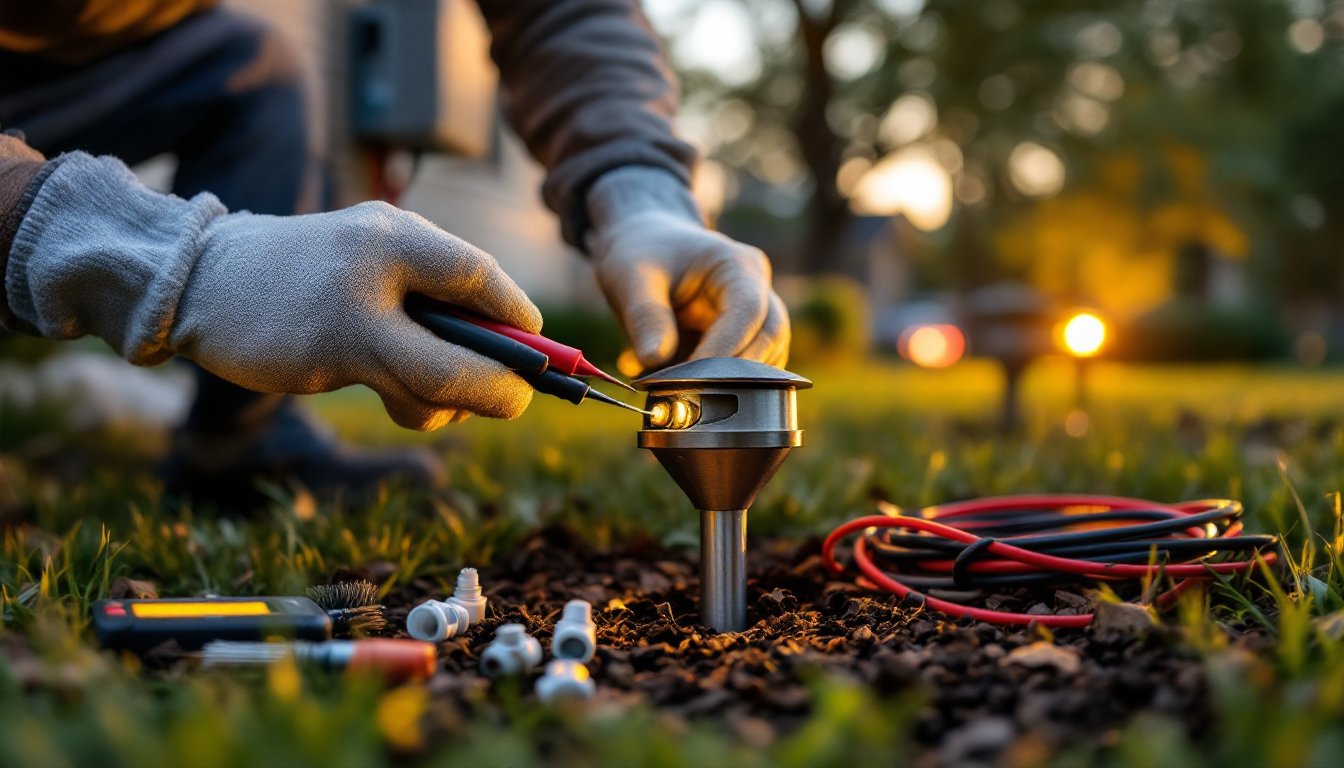
A methodical approach saves time and prevents unnecessary part replacements. Start at the power source and work outward toward the fixtures. Wear work gloves and use a multimeter, essential for measuring voltage.
Testing Your Transformer and Power Supply
The transformer steps down 120V household current to safe 12V or 24V for landscape lights. Begin here:
- Check the breaker or GFCI outlet. Reset if tripped. If it trips again immediately, there’s likely a short in the system, don’t proceed until it’s found.
- Inspect the transformer for damage. Look for rust, melted housing, or burnt smells. Transformers typically mount to an exterior wall or post and should be weatherproof.
- Measure output voltage. Set the multimeter to DC voltage, touch probes to the transformer’s output terminals (usually marked + and –). It should read within 10–12V for a 12V system (11V–13V is normal under load). Readings below 10V indicate transformer failure or severe overload.
- Calculate total wattage. Add up the wattage of all connected bulbs. The transformer should handle at least 20% more than the total load. For example, a 100W transformer shouldn’t power more than 80W of fixtures. Overloading is a common DIY mistake.
- Check the timer or photocell. If voltage is present but lights don’t activate, the timer mechanism or light sensor may be faulty. Most can be replaced separately without swapping the whole transformer.
If the transformer checks out, the problem lies downstream.
Inspecting Wiring and Cable Connections
Low voltage cable, typically 12/2 or 14/2 direct burial wire, runs from the transformer to each fixture. Connections are the most common failure point.
- Trace the wire run visually. Look for areas where a shovel, edger, or animal may have cut the cable. Fresh mulch or soil settling can expose or damage wire.
- Examine all wire connectors. Most systems use gel-filled or grease-filled wire nuts or piercing connectors that clamp onto the cable without stripping. Over time, these corrode. Disconnect each, inspect for green corrosion or burnt contacts, and clean with a wire brush. Replace corroded connectors with new waterproof types, DBR/Y connectors or silicone-filled wire nuts are reliable upgrades.
- Check for voltage drop along the run. Measure voltage at the transformer, then at the farthest fixture. If the distant fixture reads below 10.5V, voltage drop is excessive. Solutions: shorten the wire run, increase wire gauge (go from 14AWG to 12AWG), or split the circuit into two runs.
- Inspect fixture bases and sockets. Unscrew the bulb and check the socket for corrosion, moisture, or damaged contacts. A corroded socket won’t conduct current even if the bulb is good. Replace the socket or the entire fixture if it’s integrated.
- Test individual fixtures. Disconnect a suspect fixture from the main line and connect it directly to the transformer with a short test wire. If it lights, the fixture is fine, the issue is in the wiring or connection between it and the transformer.
Keep a log of what you find. Patterns (like corrosion only on north-facing connections) can reveal bigger issues like poor drainage or low-quality connectors.
Fixing the Most Common Low Voltage Lighting Issues
Once the diagnosis is clear, repairs are usually straightforward. Here’s how to tackle the most frequent problems:
Corroded or loose wire connections: Strip back damaged wire about 1 inch, twist strands together tightly, and use a fresh silicone-filled wire nut or heat-shrink butt connector. Avoid standard twist-on wire nuts, they’re not rated for wet locations and will fail again.
Severed or nicked cable: Cut out the damaged section and splice in a new length of 12/2 direct burial cable using waterproof connectors. Bury splices at least 6 inches deep (check local code) to prevent future damage. If the entire run is old and brittle, replacing it is more reliable than multiple patches.
Dim or failing bulbs: Swap in new LED bulbs rated for low voltage landscape use. LEDs draw less wattage, run cooler, and last years longer than halogen. Match the voltage (12V or 24V) and base type (wedge, bi-pin, bayonet). Mixing bulb types on the same run can cause uneven brightness.
Overloaded transformer: Either reduce the number of fixtures or upgrade to a higher-capacity transformer. A 150W or 200W transformer handles typical residential runs of 10–15 fixtures. Install a second transformer if you’re adding zones or expanding coverage. Don’t daisy-chain transformers.
Water intrusion in fixtures: Disassemble the fixture, dry all components, and apply dielectric grease to socket contacts and O-rings before reassembly. If the fixture lacks a good gasket, it’s time to upgrade to a better-sealed model.
Faulty photocell or timer: Most plug into the transformer and are easy to replace. Bring the old unit to a home center to match specs. Some transformers allow manual override, useful for testing.
For recurring issues, consider preventive upgrades: marine-grade heat-shrink connectors, thicker 10AWG wire for long runs, or dusk-to-dawn transformers with built-in surge protection.
When to Call a Professional vs. DIY Repairs
Low voltage lighting is beginner-friendly, but certain situations warrant professional help:
Call a licensed electrician if:
- The transformer connects directly to household wiring inside a breaker panel (not a standard plug-in). This is line-voltage work and requires a permit in most jurisdictions.
- A GFCI outlet trips repeatedly and you can’t isolate the short. Persistent ground faults can indicate dangerous wiring problems.
- You’re installing a new transformer and need a dedicated outdoor outlet or circuit added.
- There are signs of arcing, melted insulation, or burnt components near the main power connection.
Consider a landscape lighting pro for:
- System redesigns or expansions that require load calculations and multiple transformer zones.
- Burial depth or wire routing that conflicts with irrigation lines, underground utilities, or hardscaping.
- Warranty work on high-end systems (many manufacturers require certified installers for warranty claims).
DIY is safe and appropriate for:
- Replacing bulbs, cleaning fixtures, and swapping out corroded connectors.
- Troubleshooting voltage drop and adding wire runs from an existing transformer.
- Replacing a plug-in transformer or timer module.
- Repairing or relocating individual fixtures.
Low voltage systems operate at safer levels than household current, but always shut off the transformer before working on wiring, and never work in wet conditions. If a repair feels beyond your skill level, there’s no shame in hiring out, it’s cheaper than redoing botched work or dealing with a fire hazard.
Conclusion
Most low voltage landscape lighting repairs come down to cleaning connections, replacing worn components, or right-sizing the transformer to match the load. With a multimeter, basic hand tools, and patience, homeowners can restore a flickering system to reliable operation. Tackle problems as they arise, upgrade connectors and wire when sections fail, and the investment in good outdoor lighting will keep paying off in safety, security, and curb appeal for years.