When landscape lighting stops working, it’s more than an inconvenience, it affects curb appeal, safety, and security. Whether it’s a single flickering fixture or an entire zone that won’t turn on, homeowners need to know when they can troubleshoot themselves and when to call in a professional. Searching for “landscape lighting repair near me” typically means something’s already gone wrong, and time matters. This guide walks through the most common lighting failures, how to find qualified local repair services, what a service call involves, and how to evaluate whether a repair is worth the cost or if it’s time for an upgrade.
Table of Contents
ToggleKey Takeaways
- Landscape lighting repair near me requires understanding common failures like transformer burnout, severed wiring, corroded connections, and photocell malfunctions before hiring a professional.
- Confirm that a landscape lighting repair technician holds a valid electrician’s license, liability insurance, and manufacturer certifications before scheduling a service call.
- Most professional landscape lighting repair service calls last 1-2 hours and typically cost $75-$150 for diagnostics plus $80-$120 per hour in labor, with diagnostic fees sometimes waived if repairs proceed.
- Simple DIY fixes like replacing bulbs, cleaning photocell sensors, and resetting timers can save money, but transformer replacement, extensive wiring issues, and corrosion in junction boxes require professional expertise.
- Request written estimates from at least two qualified contractors and ask about warranties (typically 90 days to one year) to ensure quality landscape lighting repair work and fair pricing.
Common Landscape Lighting Problems That Require Professional Repair
Most landscape lighting systems operate on low-voltage circuits (typically 12V or 24V) powered by a transformer. While simpler than household 120V wiring, these systems still experience failures that demand professional diagnosis.
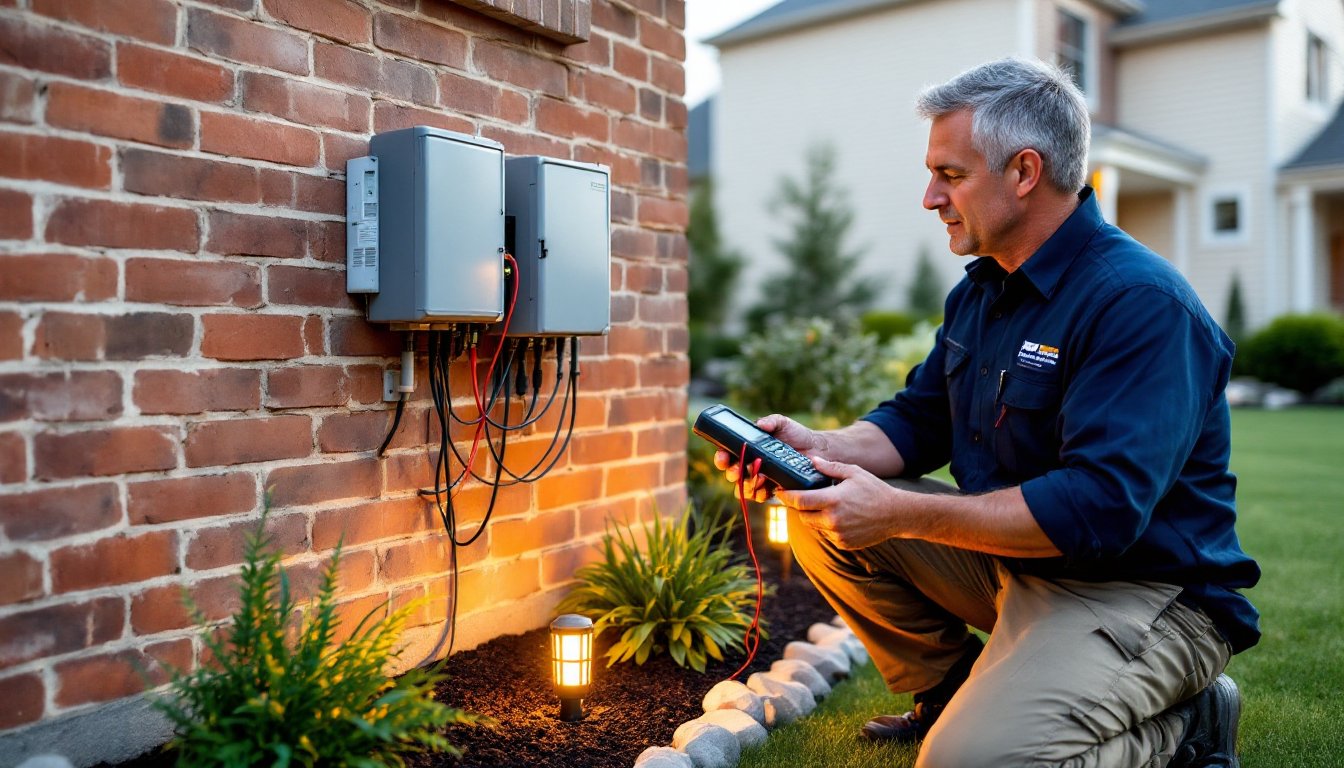
Transformer failures top the list. A transformer converts 120V household current to safe low voltage. When a transformer burns out, often due to power surges, overloading, or age, the entire lighting zone goes dark. Testing requires a multimeter and knowledge of acceptable voltage drop across the circuit. Homeowners who aren’t comfortable working around 120V connections should call a pro.
Severed or damaged wiring is common in high-traffic areas or where landscape maintenance crews operate. A single cut wire can disable multiple fixtures downstream. Professionals use wire tracers and voltage testers to locate breaks buried underground or hidden in mulch.
Corroded connections plague outdoor lighting. Even with waterproof wire connectors, moisture infiltrates over time, especially in systems using twist-on wire nuts or poorly sealed junction boxes. Corroded connections create intermittent failures, lights work sometimes, then quit. Repairing these often means replacing connectors with direct-burial splice kits rated for wet locations.
Fixture failures themselves can stem from socket corrosion, failed LED drivers, or cracked lenses allowing water intrusion. Some fixtures use proprietary bulbs or integrated LED modules that require manufacturer-specific parts.
Photocell or timer malfunctions prevent lights from turning on automatically. If the photocell sensor is painted over, obstructed, or simply worn out, the system won’t respond to darkness. Timers can lose programming after power outages or fail mechanically.
Professionals bring diagnostic tools, multimeters, voltage testers, wire tracers, and the experience to isolate problems quickly, often solving in an hour what might take a homeowner an entire weekend of guesswork.
How to Find Qualified Landscape Lighting Repair Services in Your Area
Not all electricians specialize in landscape lighting, and not all landscapers understand electrical troubleshooting. Finding someone who does both well requires a targeted search.
Start with local electricians who list landscape or outdoor lighting as a service. Check state licensing databases to confirm they hold a valid electrician’s license, most states require one for working on 120V transformer connections. While low-voltage wiring doesn’t always require a license, the feed from the house panel does.
Landscape lighting installers often offer repair services for systems they didn’t install. Look for companies certified by manufacturers like FX Luminaire, Kichler, or WAC Lighting, certification means they’ve been trained on system design and troubleshooting for those brands.
Online directories and reviews help narrow choices. Google Business listings, Yelp, and Angi (formerly Angie’s List) provide ratings and project photos. Pay attention to reviews mentioning diagnostic skills and follow-through, a repair pro who returns calls and explains problems clearly is worth their rate.
Local hardware and lighting showrooms sometimes keep referral lists of contractors they trust. Staff at specialty lighting stores often know who does quality work because they see the pros regularly.
Ask neighbors or community social media groups. Someone within a few blocks has likely needed the same service. Local Facebook groups or Nextdoor threads often yield faster, more candid recommendations than online review sites.
Request at least two estimates unless dealing with an emergency. A good repair tech will offer a diagnostic visit, sometimes for a flat trip charge, before committing to repair costs.
What to Expect During a Professional Lighting Repair Service Call
A professional landscape lighting repair typically starts with a system walkthrough. The technician will ask when the problem started, which zones are affected, and whether any recent digging, storms, or electrical issues occurred.
Next comes voltage testing at the transformer. The tech checks output voltage with no load, then with fixtures connected, looking for proper voltage (usually 10.8V to 12V on a 12V system). Significant voltage drop indicates a wiring fault, overloaded circuit, or failing transformer.
Fixture-by-fixture inspection follows. The technician examines bulbs, sockets, and connections at each light, testing continuity and checking for corrosion. On LED systems, they may test the driver module inside the fixture.
If wiring is suspected, the tech traces the circuit, checking connections at junction boxes or splice points. They’ll dig carefully around fixtures if needed, following wire paths to locate breaks.
Photocell and timer checks involve testing sensors and reviewing programming. Technicians verify the photocell isn’t obstructed and that timer settings match the homeowner’s intentions.
Once the problem is diagnosed, the tech explains findings and quotes the repair. Simple fixes, replacing a bulb, tightening a connection, resetting a timer, may be completed on the spot. More involved repairs, like replacing a transformer or running new wire, may require a follow-up visit if parts must be ordered.
Expect the visit to last one to two hours for straightforward issues, longer for complex diagnostics or extensive wiring problems. Professionals should clean up any digging and restore landscaping as closely as possible.
Cost Factors for Landscape Lighting Repairs
Repair costs vary widely based on problem type, labor rates, and parts availability. Understanding the factors helps homeowners budget and evaluate quotes.
Diagnostic or service call fees typically range from $75 to $150. Some companies waive this if the homeowner proceeds with the repair: others charge it separately.
Labor rates for licensed electricians run $80 to $120 per hour in most markets, higher in metro areas or for specialists with manufacturer certifications. Landscape lighting techs without electrical licenses may charge $60 to $90 per hour but can only work on low-voltage components.
Transformer replacement costs $150 to $400 depending on wattage and quality. A basic 300-watt transformer runs cheaper than a 600-watt multi-tap model with timer and photocell built in. Add labor for disconnecting 120V supply and mounting the new unit.
Wire replacement averages $2 to $4 per linear foot installed, including direct-burial 12- or 14-gauge cable. If the tech needs to trench and bury wire properly, costs rise. Homeowners can save by exposing the wire path themselves if they know where it runs.
Fixture repairs or replacements depend on the fixture type. Replacing a socket or bulb costs $20 to $50 in labor plus parts. A new fixture runs $40 to $200+, with designer or integrated LED models at the higher end.
Connection repairs, cleaning corrosion and re-splicing with quality connectors, cost $30 to $75 per junction, mostly labor.
Geographic location and seasonality affect pricing. Expect higher rates in winter or during peak landscaping season when demand is high. Rural areas may incur travel charges if the pro drives more than 20 miles.
DIY Troubleshooting vs. When to Call a Professional
Homeowners with basic electrical knowledge can handle several common lighting issues, but others demand professional help for safety and efficiency.
DIY-friendly tasks include:
- Replacing bulbs or LED modules if they’re accessible and the fixture design allows it. Always match voltage and wattage ratings.
- Checking and resetting GFCI outlets or breakers that feed the transformer. A tripped GFCI is a common culprit.
- Cleaning photocell sensors with a soft cloth. Dirt, paint, or spider webs can block the sensor.
- Tightening loose wire connections at fixtures if they’re above ground and accessible. Use a multimeter to confirm voltage first.
- Adjusting timer programming on the transformer. Consult the manual to reset schedules after power outages.
Safety gear matters. Even with low-voltage systems, wear gloves and eye protection, especially when handling corroded fixtures or digging around wiring.
Call a professional when:
- The transformer hums loudly, smells burnt, or shows scorch marks. This indicates a serious fault or overload.
- Multiple fixtures fail simultaneously, suggesting a wiring or circuit problem that requires tracing and testing.
- Digging is required to locate buried wiring or splice points. Pros know how to avoid damaging irrigation lines, gas, or telecom cables.
- The system uses 120V line-voltage fixtures rather than low-voltage. These require a licensed electrician and carry shock risk.
- Corrosion is widespread or connections are buried in junction boxes homeowners can’t safely access.
- The homeowner lacks a multimeter or electrical testing experience. Guessing at voltage or continuity wastes time and risks further damage.
Knowing the limits of DIY keeps projects safe and prevents turning a simple fix into a costly mess.
Questions to Ask Before Hiring a Local Lighting Repair Technician
Vetting a repair pro before they arrive saves time and ensures quality work. Ask these questions during the initial call:
- Are you licensed and insured? Confirm the tech holds a state electrical license (for 120V work) and carries liability insurance. Request proof if needed.
- Do you specialize in landscape lighting, or is it a side service? Specialists diagnose faster and carry common parts on their truck.
- What’s your diagnostic or service call fee? Clarify whether it’s waived if repairs proceed and what it covers.
- Can you work on my system’s brand? Some proprietary systems (especially older ones) require brand-specific knowledge or parts.
- Do you provide a written estimate before starting work? Reputable pros itemize labor and materials so homeowners know costs upfront.
- What’s your warranty or guarantee on repairs? A 90-day to one-year warranty on labor and parts is standard.
- How soon can you schedule a visit? For non-urgent repairs, wait times of a few days to a week are typical. Emergency service costs more.
- Will you restore landscaping after any digging? Clarify who replaces mulch, sod, or ground cover if the tech must excavate.
If the tech hesitates on licensing or insurance questions, move on. Landscape lighting repairs aren’t worth the liability risk of hiring an unqualified contractor.
Conclusion
Finding reliable landscape lighting repair doesn’t have to be stressful. By understanding common failure points, knowing what a service call involves, and asking the right questions, homeowners can quickly connect with qualified local pros who’ll diagnose and fix issues efficiently. Whether it’s a failed transformer, corroded wiring, or a simple bulb swap, the right technician brings the tools and expertise to restore both safety and curb appeal, often in a single visit.