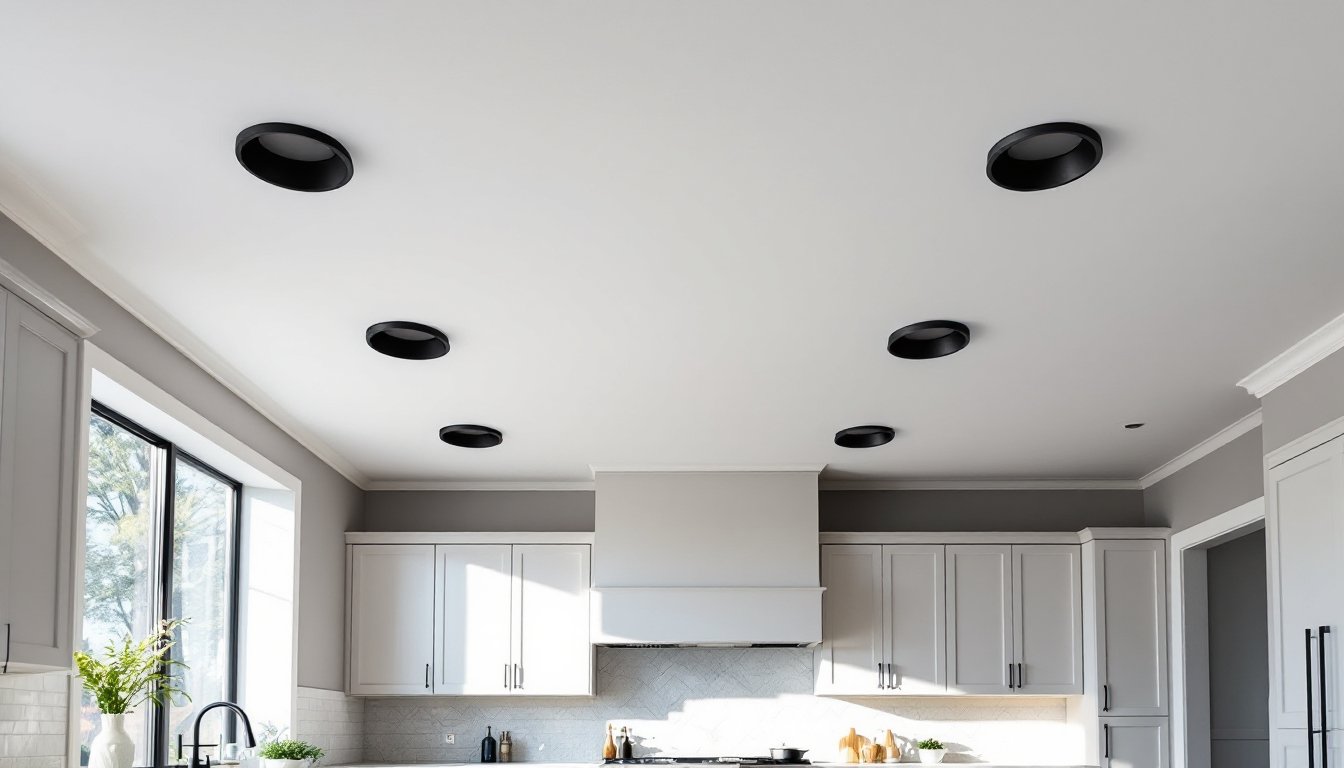
Black recessed lighting has shifted from specialty product to go-to choice for homeowners and designers who want fixture hardware that doesn’t disappear into white ceilings. Instead of blending in, black trims create intentional contrast, add architectural definition, and complement today’s darker hardware trends, matte black faucets, cabinet pulls, and window frames. This isn’t just about aesthetics. Black fixtures perform the same essential task as white ones, but they do it with visual weight that can anchor a room or emphasize ceiling lines. Whether upgrading a kitchen, finishing a basement, or installing new construction lighting, understanding how black recessed lights differ in appearance, installation, and design impact helps DIYers make informed choices that elevate a space.
Table of Contents
ToggleKey Takeaways
- Black recessed lighting creates intentional visual contrast and architectural definition while performing the same function as white fixtures, making it ideal for modern kitchens, bathrooms, and contemporary living spaces.
- The primary difference between black and white recessed lighting is finish, not function—black trims absorb light to appear more prominent, while careful spacing and layout become critical since poor placement is more visible than with white fixtures.
- Black recessed lighting options include new construction IC-rated housings, remodel/retrofit fixtures for existing ceilings, and adjustable gimbal trims for accent lighting, allowing homeowners to choose based on installation type and design goals.
- When selecting black recessed lights, match trim size to ceiling height (4–5 inches for 8-foot ceilings, 6 inches for higher spaces), choose appropriate color temperature (2700K for living areas, 3000K for kitchens, 4000K for task areas), and verify IC and wet-location ratings for your space.
- Black recessed lighting integrates seamlessly with modern hardware trends like matte black faucets and cabinet pulls, hides dust and paint overspray better during renovation, and reduces visual clutter by making multiple fixtures appear intentional rather than overdone.
- Retrofit LED kits offer the fastest and most affordable way to convert existing white recessed lights to black without replacing the housing, requiring only a new trim and adapter screwed into the old socket from below.
What Makes Black Recessed Lighting Different?
The core difference is finish, not function. Black recessed lights use the same housings, bulb types, and electrical connections as white fixtures. The visible trim ring, the part that sits flush with or slightly below the ceiling, comes powder-coated or painted in matte black, semi-gloss black, or occasionally textured black finishes.
Trim material matters. Aluminum trims resist rust and hold finish well, making them the most common choice. Steel trims cost less but may chip more easily during installation. Plastic trims work for budget retrofits but don’t deliver the same crisp edge detail.
Black absorbs light rather than reflecting it, so the fixture itself appears more prominent on the ceiling plane. White trims bounce some light back into the room and visually recede. Black trims create a dot pattern across the ceiling that reads as intentional design, not invisible infrastructure. This makes layout and spacing more critical, poorly planned black recessed lights look like mistakes, while evenly spaced ones look architectural.
Some manufacturers offer adjustable black trims with gimbal mechanisms, allowing the bulb to tilt and aim. These work well for accent lighting on artwork or architectural features. Fixed trims are simpler, cheaper, and better for general illumination.
Benefits of Choosing Black Over Traditional White Fixtures
Visual contrast is the primary advantage. Black trims stand out against white or light-colored ceilings, adding rhythm and structure. In rooms with dark ceilings, wood planks, painted navy, or charcoal, they disappear just like white trims do on white ceilings, but they coordinate better with other black finishes in the space.
Cohesion with modern hardware is another practical reason. If a kitchen already has black cabinet handles, black faucets, and black pendant lights, white recessed trims can look like an oversight. Matching the trim to the rest of the hardware package creates a unified look without additional effort.
Black fixtures also hide dust and paint overspray better than white ones. During construction or renovation, ceilings get messy. A bit of drywall dust on a black trim is far less visible than on a white one, and touch-up paint is easier to match.
Finally, black recessed lighting can reduce the appearance of fixture quantity. In rooms requiring many lights for adequate coverage, white trims can look busy or utilitarian. Black trims read as decorative elements, so higher fixture counts feel intentional rather than overdone.
Types of Black Recessed Lighting Fixtures
New Construction Housings
IC-rated housings are insulated ceiling (IC) approved, meaning they can be buried under insulation without overheating. These are essential in most residential attic installations. Non-IC housings require a 3-inch clearance from insulation, making them impractical for energy-efficient builds.
Airtight (AT) housings minimize air leakage between conditioned and unconditioned spaces, improving energy performance. Many IC-rated housings now include AT certification as well. Look for models rated for ceiling depths that match the joist cavity, typically 2×6 (5.5 inches actual), 2×8 (7.25 inches), or 2×10 (9.25 inches).
Remodel or Retrofit Fixtures
Remodel housings install from below, clipping into a hole cut in finished drywall. They use spring-loaded clips or bracket arms to secure the fixture without attic access. These work for adding lights to existing rooms or upgrading old fixtures.
Retrofit LED kits screw into existing recessed housings (even old white ones) and include a new black trim. They’re the fastest, cheapest way to convert white recessed lights to black without replacing the housing. Most use an Edison base adapter that screws into the old socket.
Adjustable and Gimbal Trims
Gimbal or eyeball trims tilt up to 35 degrees, letting the homeowner aim light at walls, artwork, or countertops. These are ideal for accent lighting but less effective for general illumination, since the trim itself becomes more visible when angled.
Integrated LED vs. Bulb-Based
Integrated LED fixtures have the LED module built into the housing. They’re energy-efficient and slim but require full fixture replacement when the LED eventually fails (usually 25,000–50,000 hours).
Bulb-based fixtures accept standard BR30, BR40, or PAR-style bulbs. They’re easier to service and allow for bulb upgrades, but the housing is typically deeper, which can be a problem in shallow ceiling cavities.
Best Rooms and Design Styles for Black Recessed Lights
Kitchens
Black trims pair well with modern or transitional kitchens featuring dark hardware, matte appliances, or contrasting cabinetry. They work especially well over islands and counters, where focused task lighting benefits from adjustable trims. In kitchens with white or light gray ceilings, black recessed lights create visual interest without competing with pendant fixtures.
Bathrooms
In master bathrooms, black recessed lights complement black-framed mirrors, matte black faucets, and dark tile. Wet-location-rated (or damp-location if outside the shower zone) housings are required. Black trims in small powder rooms can make the ceiling feel more finished, especially with a single fixture centered over a mirror.
Living Rooms and Basements
Black fixtures work in contemporary living rooms with exposed beams, dark accent walls, or industrial design elements. In finished basements, where ceiling heights are often lower, black recessed lights add dimension without dropping the ceiling further with surface-mount fixtures. They also hide better against exposed ductwork painted black or dark gray.
Bedrooms and Hallways
In bedrooms, black recessed lighting can replace outdated ceiling fans or provide ambient lighting without visual clutter. Dimmable LEDs are a must. In hallways, especially those with dark wood or painted ceilings, black trims maintain continuity and don’t interrupt sight lines.
Exterior Soffits
Black recessed lights rated for wet locations install in covered porch soffits or eaves. They coordinate with black exterior lighting and blend into dark soffit materials like stained wood or painted fiber cement.
Installation Considerations and Tips
Check local building codes before starting. Most jurisdictions require a permit for new recessed lighting installations, especially if running new circuits. Retrofitting existing fixtures with new trims typically doesn’t require a permit, but adding new housings does.
Plan layout carefully. Black trims are more visible than white, so uneven spacing or off-center placements stand out. Use a chalk line or laser level to mark rows, and measure from walls to keep margins consistent. Standard spacing is 4 to 6 feet apart for general lighting, closer for task lighting.
Account for joist direction and obstructions. Housings need to fit between joists (typically 16 inches on center). If a joist runs where a light needs to go, it must be relocated or the joist cut and headered (which may require an engineer’s approval for load-bearing ceilings). HVAC ducts, plumbing, and wiring also limit placement.
Wear proper PPE: safety glasses (debris falls when cutting), a dust mask (drywall and insulation particles), and gloves when handling housings or insulation.
Use a hole saw matched to the trim size. Most recessed lights use 4-inch, 5-inch, or 6-inch trims. The hole saw diameter should match the manufacturer’s template, usually printed on the housing box. For remodel housings, cutting too large means the trim won’t cover the gap: too small and the housing won’t fit.
Connect wiring properly. Most recessed housings have a junction box built into the side. Run 14/2 NM-B (Romex) for 15-amp circuits or 12/2 for 20-amp circuits. Use wire nuts rated for the wire gauge, and secure the cable with the built-in clamp. If daisy-chaining multiple fixtures, ensure the circuit can handle the total wattage.
Install retrofit kits from below. For remodel projects, snap off the old trim, unscrew the old bulb or socket adapter, and install the new LED retrofit module. Most use torsion springs that clip into the housing. Black retrofit kits are an easy weekend upgrade and don’t require attic access.
How to Choose the Right Black Recessed Lighting for Your Space
Match trim size to ceiling height and room scale. In rooms with 8-foot ceilings, 4-inch or 5-inch trims feel appropriately scaled. In great rooms or spaces with 10-foot or higher ceilings, 6-inch trims provide better light distribution and visual presence.
Select the correct color temperature. 2700K (warm white) works for living spaces and bedrooms: 3000K (soft white) suits kitchens and bathrooms: 4000K (cool white) is best for garages or task-heavy areas. Avoid mixing color temperatures in the same room, it looks unintentional.
Check lumen output to ensure adequate brightness. For general lighting, aim for 40-50 lumens per square foot. A 120-square-foot kitchen needs roughly 4,800-6,000 total lumens. If using 650-lumen bulbs, that’s 8-10 fixtures.
Choose dimmable LEDs if the room will have a dimmer switch. Not all LED retrofit kits or integrated fixtures dim smoothly. Look for compatibility with leading-edge or trailing-edge dimmers, depending on the switch type.
Consider adjustable trims for flexibility. Fixed trims work for ambient lighting, but gimbal trims allow repositioning light as furniture or artwork changes. They cost $10-$20 more per fixture but add versatility.
Verify IC, AT, and wet/damp ratings based on install location. Insulated ceilings require IC rating. Exterior soffits or shower ceilings need wet-location-rated housings. Bathrooms outside the shower zone can use damp-location fixtures.
Finally, buy an extra trim. Finishes vary slightly between batches and manufacturers. Having a spare ensures consistent color if a trim gets damaged or a future addition is needed.
Conclusion
Black recessed lighting delivers the same illumination as traditional white fixtures but adds deliberate design presence. Whether installing new construction housings or retrofitting existing cans, choosing the right trim size, color temperature, and fixture type ensures the lights perform well and look sharp. With careful layout, proper wiring, and attention to finish quality, black recessed lights become a functional architectural detail that ties a room’s hardware together and elevates the overall design without extra effort.