Outdoor lighting does more than illuminate walkways after dark, it defines architecture, extends living hours, and signals intentional design. But while many homeowners settle for builder-grade fixtures or solar stakes that fade within a season, elegant outdoor lighting elevates curb appeal and creates atmosphere that lasts for decades. The difference lies in deliberate fixture selection, quality materials, and strategic placement that balances function with aesthetics. Unlike trendy décor that feels dated in five years, timeless lighting design respects the home’s architecture while adding subtle drama. This guide walks through fixture types, design principles, material choices, and placement strategies that deliver professional results.
Table of Contents
ToggleKey Takeaways
- Elegant outdoor lighting combines safety, security, and aesthetic functions through layered fixtures that enhance curb appeal and extend usable outdoor living space.
- Quality materials and finishes—such as powder-coated aluminum, bronze, or marine-grade rated fixtures—ensure outdoor lighting systems remain timeless and durable for decades rather than seasons.
- Strategic placement of wall sconces at 65-70 inches above grade, path lights spaced 10-15 feet apart, and accent uplighting on specimen features creates professional dimension without glare or light pollution.
- Color temperature consistency (2700K-3000K) throughout elegant outdoor lighting prevents a chaotic appearance and harmonizes with interior lighting visible through windows.
- Low-voltage LED systems with dimming capability and downward-facing shielded fixtures offer both aesthetic control and compliance with dark sky ordinances.
- Elegant outdoor lighting requires the same intentional design planning as interior spaces, with fixture selection, spacing, and finish choices reflecting the home’s architectural style rather than appearing as afterthoughts.
Why Elegant Outdoor Lighting Matters for Your Home
Elegant outdoor lighting serves three critical functions that overlap but shouldn’t be confused. Safety lighting prevents trips, identifies steps, and marks grade changes, essential but often harsh when handled poorly. Security lighting deters intruders and eliminates blind spots, though motion-sensor floods rarely qualify as elegant. Aesthetic lighting showcases architecture, mature landscaping, and intentional design.
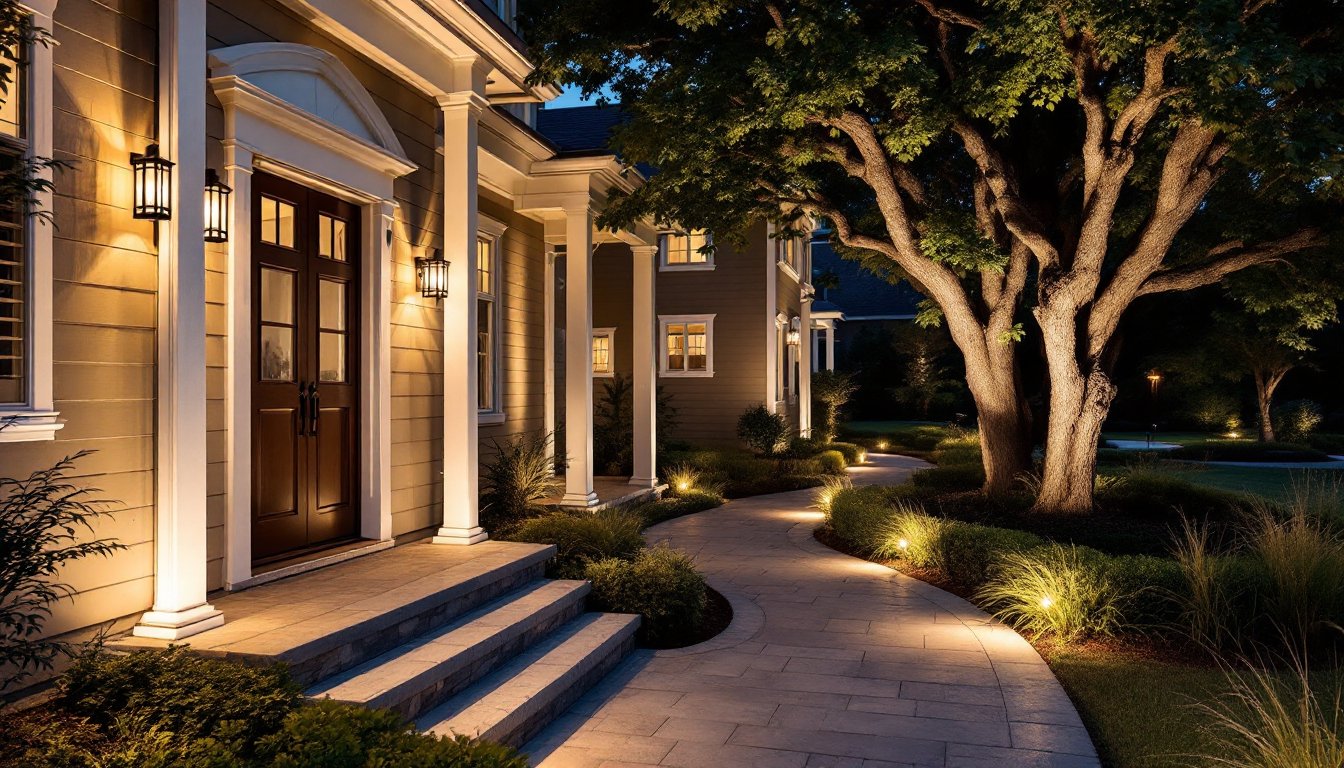
The best systems layer all three without announcing their utility. A well-placed wall sconce beside a front door provides wayfinding while highlighting trim details. Path lights prevent ankle-twisting stumbles and guide guests naturally toward entries. Uplighting a specimen tree adds depth to the landscape and increases perceived property boundaries.
Property value impacts are measurable. Real estate professionals consistently note that thoughtful exterior lighting enhances curb appeal and signals maintenance diligence, buyers assume attention to visible details extends to systems they can’t see. Beyond resale, homeowners report extended use of patios, decks, and garden areas when lighting makes outdoor spaces feel like rooms rather than voids.
Poor lighting choices create the opposite effect. Mismatched fixture styles, glaring bulbs, and randomly spaced lights read as afterthoughts. Elegant outdoor lighting requires the same planning as interior design: cohesive finish selections, appropriate scale for architectural features, and layered light sources that create dimension.
Essential Types of Elegant Outdoor Lighting Fixtures
Path and Landscape Lighting
Path lights should be selected for beam control, not decoration. Quality fixtures use downward-facing shielded bulbs or louvered designs that prevent glare at eye level. Spacing varies by fixture output, but 10-15 feet on center provides continuity without runway effect. Stake heights between 18-24 inches suit most residential scales, shorter fixtures disappear in dense plantings, taller ones look institutional.
Landscape lighting includes well lights (recessed into grade for uplighting trees or architectural features), bullet or spot lights (adjustable fixtures mounted on stakes or surfaces), and wash lights (wider beams that graze walls or spread across plantings). LED fixtures with integral transformers simplify installation compared to older halogen systems requiring separate transformers and extensive wire runs.
Uplighting mature trees creates dramatic silhouettes and draws eyes upward, expanding perceived space. Position well lights 2-3 feet from trunk bases, angling beams to highlight branching structure. Use warmer color temperatures (2700K-3000K) to enhance natural foliage tones, cooler LEDs read clinical.
Wall Sconces and Lanterns
Wall-mounted fixtures frame entries, illuminate house numbers, and add vertical layers to lighting design. Elegant sconces share proportions appropriate to door and trim scale, a fixture should be roughly one-quarter the height of the door it flanks. Mount sconces 65-70 inches above grade (near eye level) to minimize glare while washing walls effectively.
Lantern styles range from traditional carriage designs with beveled glass panels to minimalist modern fixtures with clean geometry. Authenticity matters: if the home has Colonial or Craftsman roots, fixture detailing should respect that vocabulary without appearing costume-like. Contemporary homes pair well with geometric forms, matte finishes, and minimal ornamentation.
Down-facing vs. multi-directional fixtures create different effects. Downlights provide focused illumination for tasks like unlocking doors, while lanterns with side glass panels cast ambient light and soften architectural lines. Seeded or frosted glass diffuses the bulb source, essential for elegance, as exposed bulbs always read as unfinished regardless of fixture quality.
Design Principles for Creating an Elegant Outdoor Lighting Scheme
Layering separates professional designs from amateur attempts. Relying solely on porch lights or path fixtures flattens the landscape. Effective schemes combine ambient lighting (overall illumination from wall sconces or post lights), task lighting (focused beams for steps, grills, or seating), and accent lighting (spotlights on focal points like water features, sculptures, or specimen plants).
Symmetry vs. asymmetry depends on architectural style. Formal Georgian or Federal homes benefit from balanced fixture placement, matching sconces flanking doors, evenly spaced path lights along straight walks. Informal cottage or contemporary designs allow staggered placement that follows sightlines and landscape contours rather than rigid geometry.
Color temperature consistency prevents a chaotic appearance. Mixing warm (2700K) and cool (4000K+) white LEDs in the same viewshed looks unintentional. Most elegant outdoor schemes use 2700K-3000K for cohesion with interior lighting visible through windows. Reserve higher color temps for security or work areas away from living spaces.
Beam angles control focus and spread. Narrow spots (15-25 degrees) highlight specific features: floods (60+ degrees) provide area coverage. Using a mix creates visual interest, tight beams on architectural details with broader washes filling surrounding areas. Avoid uniform beam widths across all fixtures, which flattens dimension.
Dimming capability extends ambiance control. Low-voltage LED systems (12V) easily integrate dimmers and timers. Line-voltage fixtures (120V) require compatible LED bulbs and switches. Even modest dimming (to 50-70% output) dramatically softens nighttime environments.
Choosing the Right Finishes and Materials for Timeless Appeal
Finish durability matters more outdoors than in any interior application. Coastal environments demand fixtures rated for salt exposure: humid regions accelerate corrosion on lower-grade metals. Powder-coated aluminum resists rust better than painted steel but shows scratches more readily. Solid brass and copper develop natural patinas that many homeowners prefer, though maintaining bright finishes requires periodic polishing.
Bronze finishes, oil-rubbed, aged, or architectural, suit traditional and transitional homes. They conceal minor weathering and pair well with earth-tone palettes. Black or matte black fixtures deliver clean lines for modern schemes and high contrast against light-colored siding. Brushed nickel or stainless finishes work for contemporary designs but show water spots in sprinkler zones.
Glass quality separates value fixtures from premium designs. Seeded glass (intentionally bubbled) softens light and adds texture suited to cottage or coastal themes. Clear beveled glass provides traditional elegance with brighter output. Frosted or etched glass reduces glare and suits minimalist fixtures where the housing, not decorative panels, provides visual interest.
Marine-grade ratings (wet location UL listing) are non-negotiable for fixtures exposed to direct weather. Even covered porch fixtures benefit from wet ratings in regions with wind-driven rain. Damp-rated fixtures suffice only for fully protected locations with no direct moisture exposure.
Avoid lacquered or thin-plated finishes marketed for outdoor use. They fail within 2-3 seasons, requiring full fixture replacement rather than bulb changes. Quality manufacturers specify finish warranties separately from electrical components, look for 5+ year finish coverage as a baseline indicator.
Strategic Placement Tips for Maximum Impact
Entry lighting should illuminate faces, not blind guests. Position sconces or pendants so the bottom of the fixture is 65-70 inches above the threshold, with bulbs recessed or shielded. If using a single overhead pendant, ensure it’s centered on the door, not the porch, off-center fixtures create awkward shadows.
Step lighting is a code issue in many jurisdictions and a liability concern everywhere. Illuminate the nosing (front edge) of each step to define tread depth. Options include recessed step lights (require cutting into risers, low-voltage wiring), strip lights mounted under nosings, or nearby path fixtures angled to wash treads. Never light from behind a person ascending stairs, shadows obscure footing.
Focal points benefit from focused beams and restrained quantity. Uplighting a single architectural feature or mature tree creates more impact than washing the entire facade. If highlighting columns or pilasters, place fixtures 12-18 inches from the base, aiming beams to graze surfaces and reveal texture.
Avoiding light pollution respects neighbors and preserves night sky visibility. Use fixtures with downward-facing shields and position spotlights so beams terminate on intended targets, not spilling into adjacent properties or upward. Many municipalities now enforce dark sky ordinances limiting uplight and glare, check local codes before installation.
Transformer and wiring placement for low-voltage systems requires access and weather protection. Mount transformers in garages, sheds, or weatherproof enclosures rather than exposed locations. Bury low-voltage cable 6-12 inches deep (check local requirements), using direct-burial rated wire. Mark wire runs before landscaping to avoid future severing during planting.
Line-voltage (120V) installations require GFCI protection and often permits. Hire a licensed electrician for any work extending circuits, adding junction boxes, or installing fixtures on structures. DIYers can handle low-voltage systems, but line-voltage outdoor work involves code compliance and shock hazards that justify professional installation.